Premium dark blue filter for detailed planetary observation
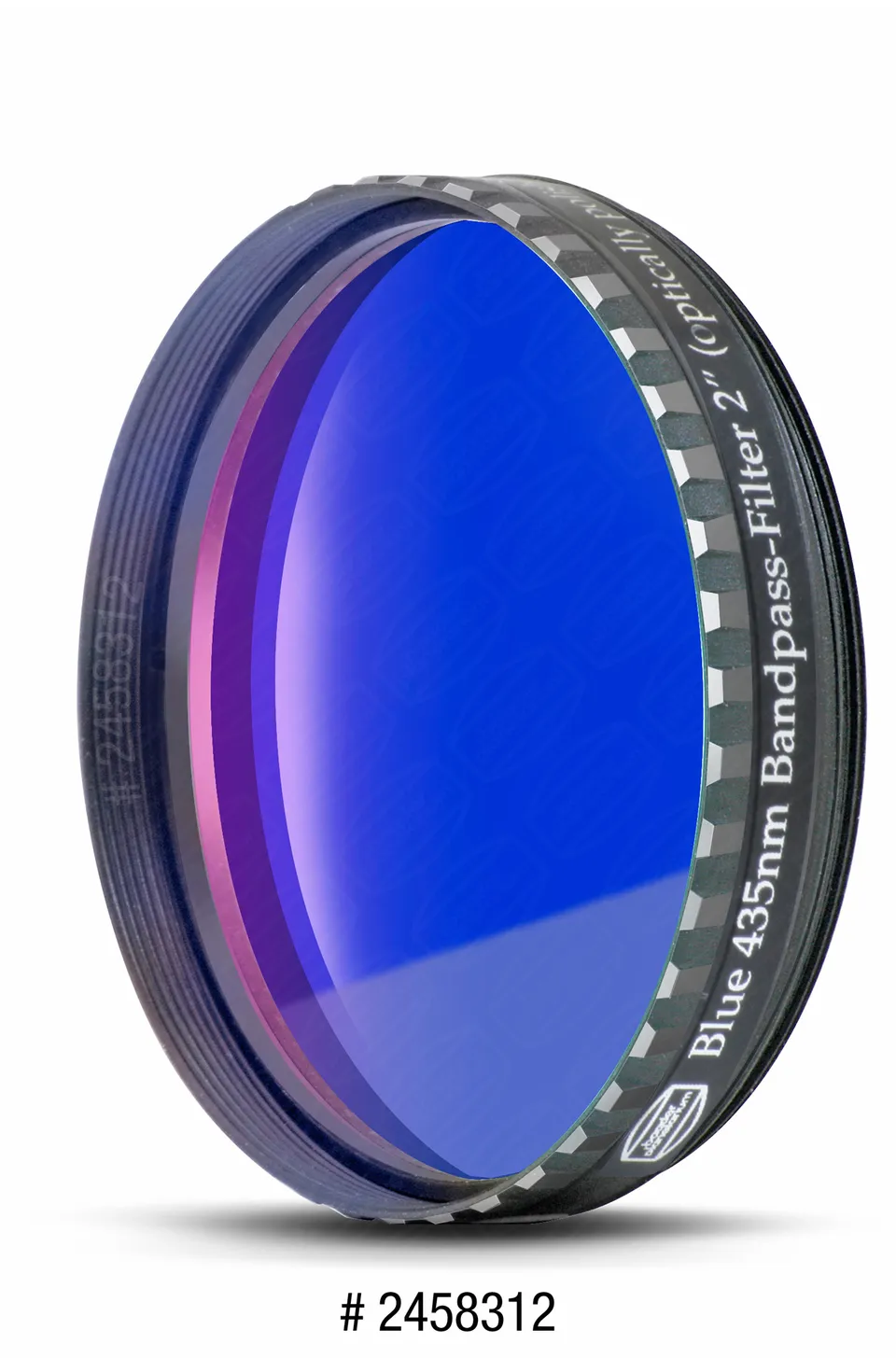
The Baader Planetarium Dark Blue (435 nm) Colour 2″ Filter is a precision optical accessory designed to improve contrast and reveal selected atmospheric features during lunar and planetary observation. By transmitting a carefully selected band of violet-blue and blue wavelengths, it alters the relative brightness of different planetary features, making subtle clouds, hazes and atmospheric structures easier to distinguish under favourable conditions. Its combination of fine-optically polished glass, advanced anti-reflection coatings and robust mechanical construction makes it particularly suitable for observers who demand excellent image quality at high magnification.
435 nm broadband bandpass transmission
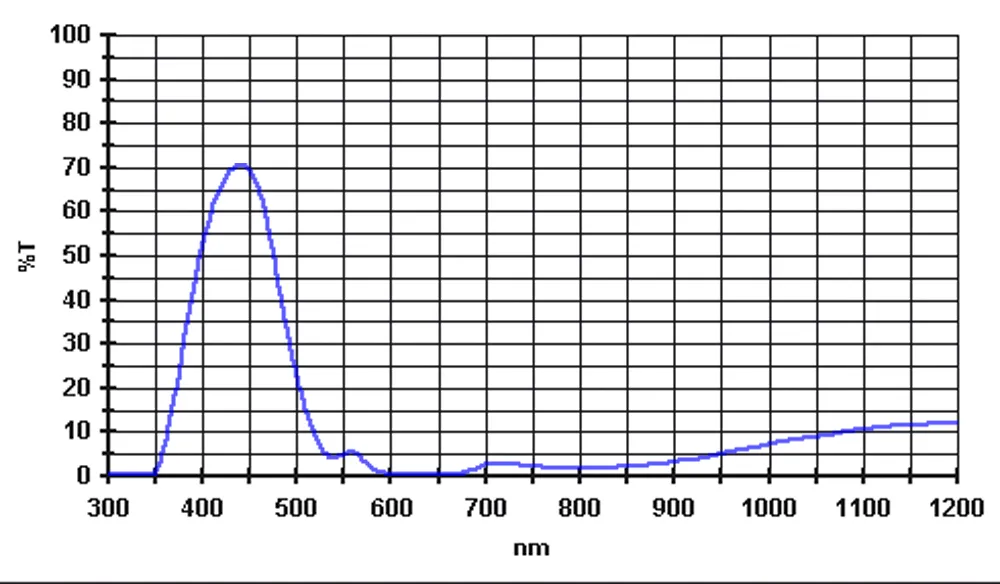
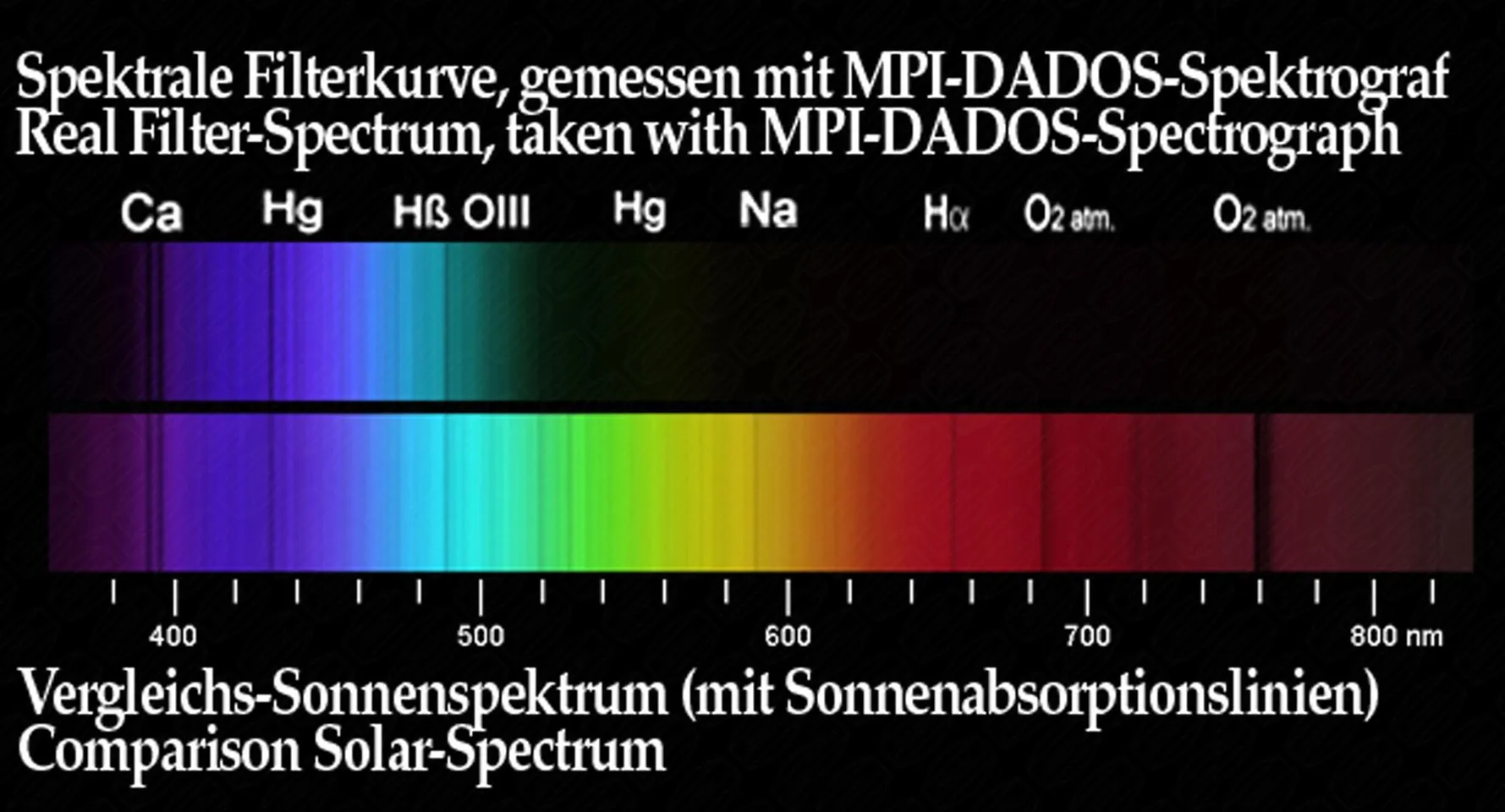
The filter has a nominal wavelength of approximately 435 nm, placing its principal transmission region towards the shorter-wavelength end of the visible spectrum. It is a genuine broadband bandpass colour filter rather than a longpass filter. Its transmission rises through the violet-blue region, reaches a maximum near its nominal wavelength and decreases towards longer visible wavelengths. Baader states that its three colour bandpass filters — Dark Blue, Light Blue and Green — achieve peak transmission approaching 70%. The exact lower and upper transmission limits and full width at half maximum (FWHM) for the Dark Blue filter should be determined from its own published transmission curve. The nominal 435 nm wavelength is not its bandwidth.
Observe clouds and hazes on Mars
The Dark Blue 435 nm filter is particularly useful for examining atmospheric phenomena on Mars. It can help distinguish bright clouds and hazes from the planet’s darker surface features, providing a complementary view to red and orange filters, which are more commonly used to emphasise Martian surface markings. The filter may also assist in observing the violet clearing phenomenon, in which Martian surface details become unusually visible at shorter wavelengths under certain atmospheric conditions. Results depend on atmospheric seeing, telescope aperture, observing conditions and the features present at the time.
Enhance Jupiter’s Great Red Spot and cloud structures
On Jupiter, dark blue filtering can increase the apparent contrast between reddish atmospheric structures and their surroundings. This can make the Great Red Spot, selected cloud belts and other atmospheric disturbances more conspicuous. By suppressing a substantial portion of the longer-wavelength visible light, the filter provides a different spectral perspective from unfiltered observation. Using the Dark Blue filter alongside Light Blue, Green and other planetary colour filters allows observers to compare how individual atmospheric features respond to different wavelengths.
Study Saturn and Venus
The filter can improve the visibility of selected atmospheric contrasts on Saturn, including differences between belts and zones. It may also be useful when examining the appearance and phase of Venus. For imaging detailed cloud patterns in Venus’s upper atmosphere, a dedicated ultraviolet filter remains the more specialised choice. Because the Dark Blue filter transmits a relatively restricted portion of visible light, it can produce a noticeably dimmer image than lighter colour filters, particularly in smaller telescopes or at very high magnification.
Precision-polished, plane-parallel optical glass
Baader uses fine-optically polished optical glass with an approximately 2 mm substrate thickness. The optical surfaces are manufactured to be highly plane-parallel, helping minimise wedge-related ghost images, astigmatism and other unwanted image degradation. This optical quality is particularly important for planetary observation, where high magnification can reveal even small imperfections in the light path. The filter can also be positioned ahead of compatible diagonals or binoviewers without the image-quality compromises associated with lower-grade coloured-glass filters.
Seven-layer Phantom Group Coating™
Both optical surfaces feature Baader’s seven-layer Phantom Group Coating™ anti-reflection treatment.The coating system is optimised for the transmission characteristics of the individual coloured-glass substrate and is designed to reduce residual reflections to approximately 0.25% per surface. Minimising scattered light and unwanted reflections helps preserve contrast when observing bright planets against the dark sky. The coating treatment complements the precision optical polish to maintain clarity and sharpness throughout demanding observing sessions.
Durable low-profile 2″ aluminium mounting
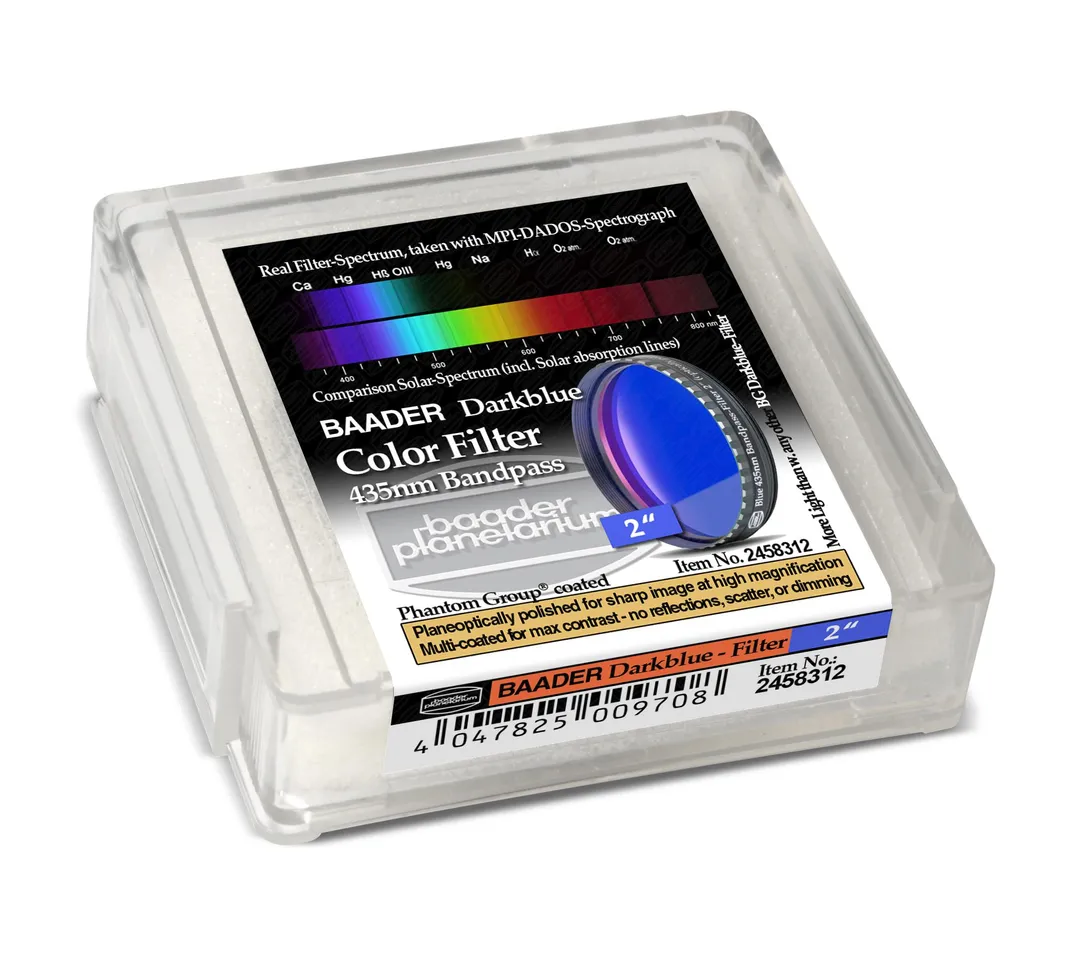
The Dark Blue 435 nm filter is supplied in a blackened aluminium cell with an approximately 6 mm low-profile design. Its standard M48 × 0.75 mm threads make it suitable for compatible 2″ eyepieces, diagonals, filter drawers and other astronomical accessories. Male and female filter threads allow compatible filters to be stacked, making it possible to experiment with more selective combined transmission characteristics. A protective storage case helps safeguard the optical surfaces between observing sessions.
An essential complementary planetary filter
The Baader Dark Blue (435 nm) Colour 2″ Filter is a valuable addition to a comprehensive planetary observing collection. It is particularly well suited to observers interested in Martian atmospheric phenomena, Jupiter’s reddish cloud features, Saturn’s atmospheric contrasts and the appearance of Venus. With premium coatings, precision-polished optics and a robust 2″ mounting cell, it offers the optical performance and versatility expected from Baader Planetarium’s specialist colour-filter range.


 Cookie policy
Reviews
There are no reviews yet.