Premium blue bandpass filter for planetary observation
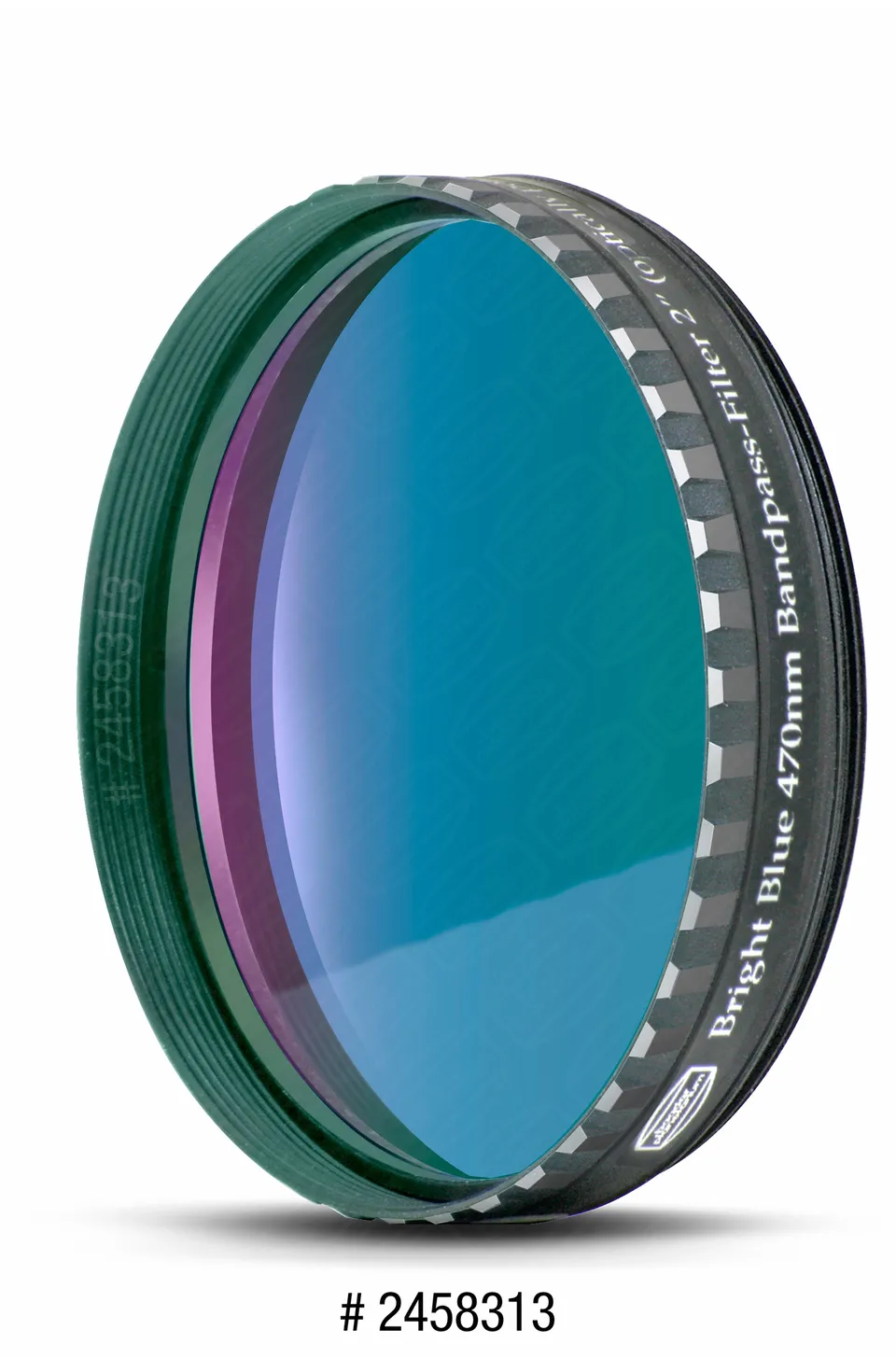
The Baader Planetarium Light Blue (470 nm) Colour 2″ Filter is a precision optical accessory developed to enhance contrast and reveal subtle details during lunar and planetary observation. Its carefully selected blue bandpass transmission helps distinguish atmospheric features that may otherwise be difficult to detect in unfiltered white light. Designed for serious visual observers and planetary imagers, this filter combines high-quality optical glass, advanced anti-reflection coatings and a durable low-profile mounting cell. It is particularly useful for studying the cloud structures and atmospheric characteristics of Jupiter, Saturn, Mars and Venus.
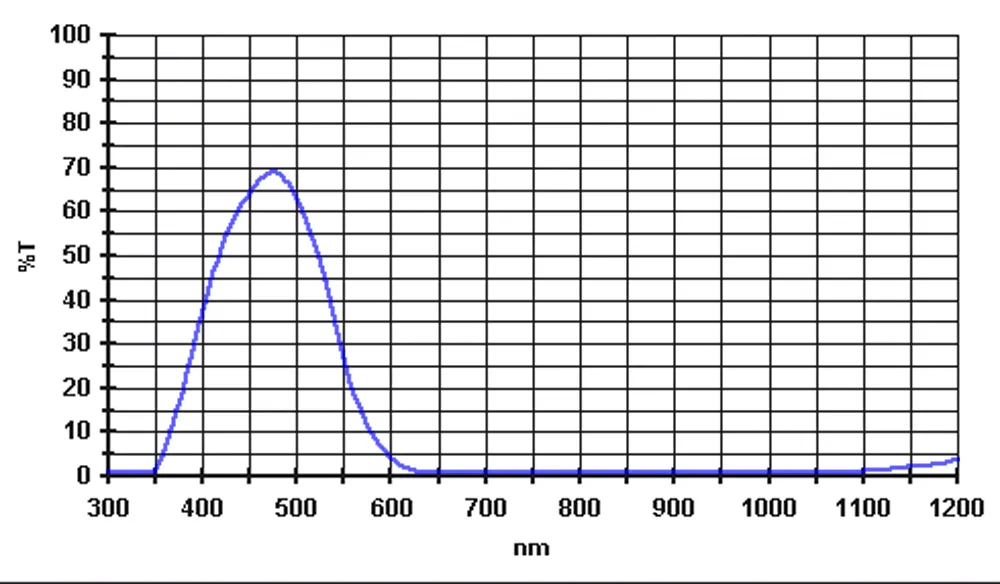
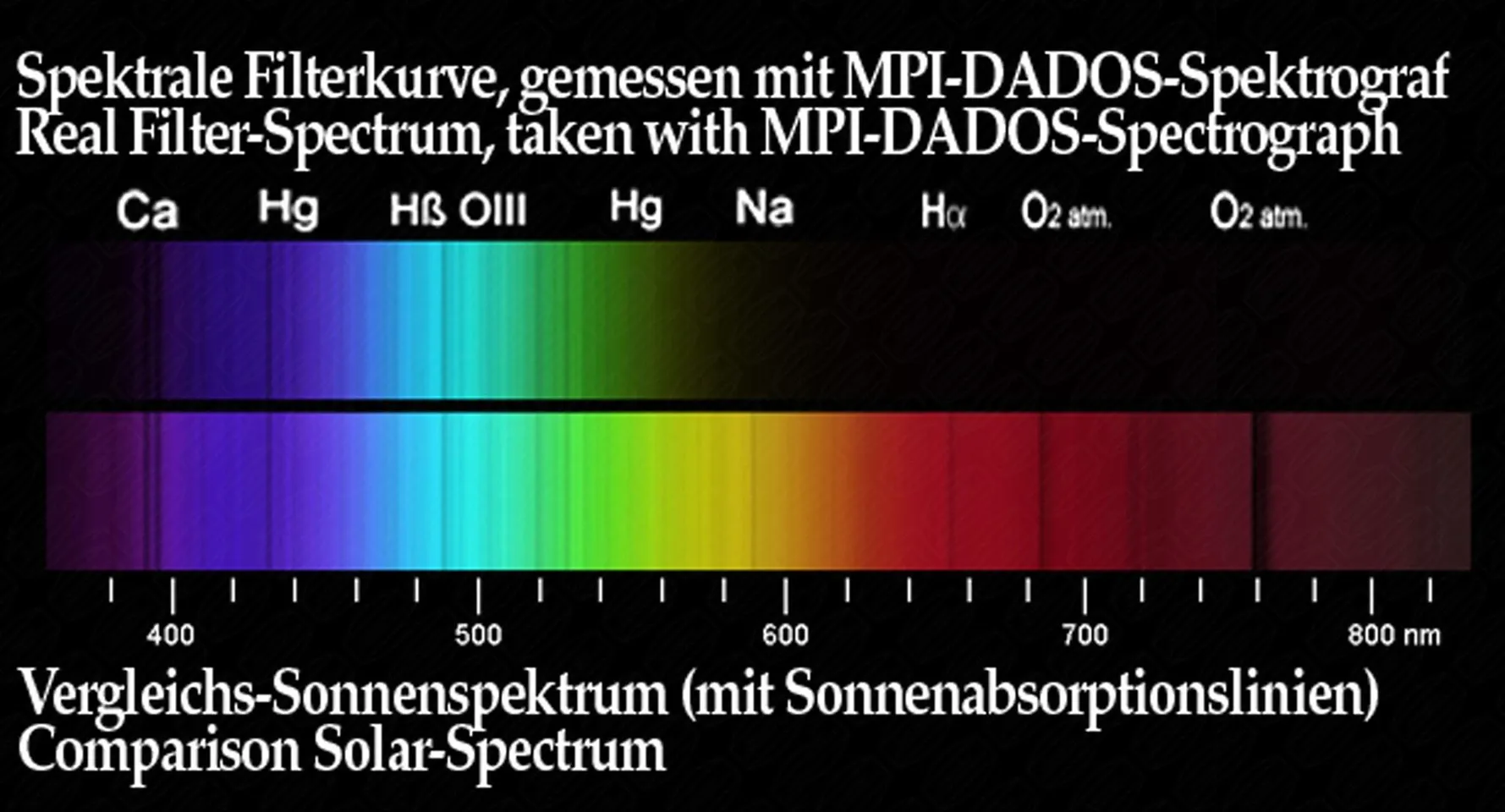
470 nm bandpass transmission
The filter features a nominal transmission peak centred around 470 nm, within the blue region of the visible spectrum. Unlike Baader’s Yellow 495 nm and Red 610 nm longpass filters, which transmit wavelengths above a specified transition, this blue bandpass filter transmits a broad region around its nominal central wavelength while attenuating shorter and longer wavelengths. Baader’s blue bandpass colour filters achieve approximately 70% peak transmission, helping preserve useful image brightness within the selected spectral region. The exact full width at half maximum (FWHM) bandwidth is not specified in the available manufacturer information and should not be confused with the 470 nm central wavelength.
Reveal atmospheric detail on Jupiter
The Light Blue 470 nm filter is particularly useful for examining Jupiter’s complex atmosphere. It can increase the apparent contrast between selected cloud belts and zones and may help improve the visibility of the Great Red Spot and other atmospheric disturbances. Blue-wavelength filtering can emphasise differences between bright and dark atmospheric regions, allowing observers to study features that may be less distinct in unfiltered views. The effectiveness of the filter depends on telescope aperture, atmospheric seeing, magnification and the brightness of the observed features.
Explore clouds and atmospheric structures on Mars, Saturn and Venus
On Mars, blue filters are useful for observing certain atmospheric clouds and hazes, helping distinguish them from the underlying surface. On Saturn, the filter can enhance contrast between selected atmospheric belts and regions of differing brightness. For Venus, blue-wavelength filtering may improve the visibility of subtle atmospheric contrasts under favourable conditions, although dedicated ultraviolet imaging filters are generally more effective for revealing high-altitude cloud structures. The filter is also suitable for selected lunar observations, where colour filtering can help emphasise tonal differences across the surface.
Precision-polished glass for high-magnification performance
Baader uses fine-optically polished, plane-parallel filter glass to preserve image sharpness during demanding high-magnification observation. The 2 mm optical substrate helps minimise unwanted wavefront errors and maintain optical performance when the filter is installed in different positions within the telescope’s optical path. Unlike inexpensive coloured-glass filters, Baader’s precision optical construction is designed to avoid introducing noticeable image degradation. The 2″ format is especially useful for larger eyepieces, telescope diagonals and certain binoviewer configurations.
Seven-layer Phantom Group Coating™
Both optical surfaces feature Baader’s seven-layer Phantom Group Coating™ anti-reflection treatment. The coatings are tailored to the optical characteristics of the coloured glass and are specified to achieve approximately 0.25% residual reflection per surface. By minimising unwanted reflections, ghost images and scattered light, the coatings help maintain contrast when observing bright planetary targets. The filter can also be combined with compatible Baader colour filters to create more selective transmission characteristics without significantly compromising optical sharpness.
Durable, low-profile 2″ aluminium mounting
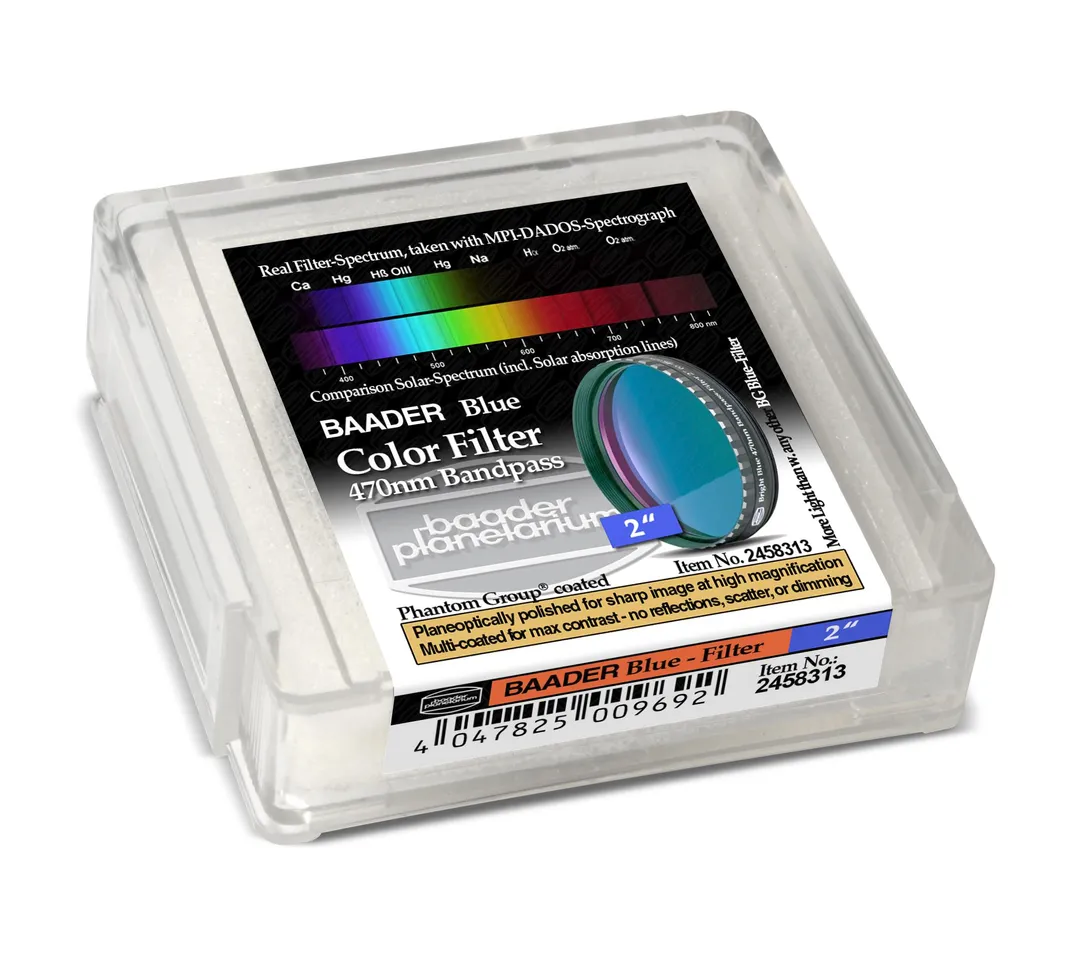
The filter is mounted in a blackened aluminium cell with an approximately 6 mm low-profile construction. Standard M48 × 0.75 mm threads allow installation in compatible 2″ eyepieces, telescope diagonals, filter drawers and other astronomical accessories. Male and female threads enable compatible filters to be stacked for specialised observing applications. The filter is supplied with a protective storage case to help keep its precision optical surfaces clean and secure between observing sessions.
A versatile addition to a planetary observing kit
The Baader Light Blue (470 nm) Colour 2″ Filter combines carefully selected blue bandpass transmission with premium optical quality and advanced coating technology. It is particularly valuable for observers interested in the atmospheric features of Jupiter, Saturn and Mars, while also providing additional flexibility for selected lunar and Venus observations. For astronomers seeking a high-quality alternative to basic coloured-glass filters, it offers dependable performance and versatility in a convenient 2″ format.


 Cookie policy
Reviews
There are no reviews yet.