Controlled Brightness for Comfortable Lunar Observation
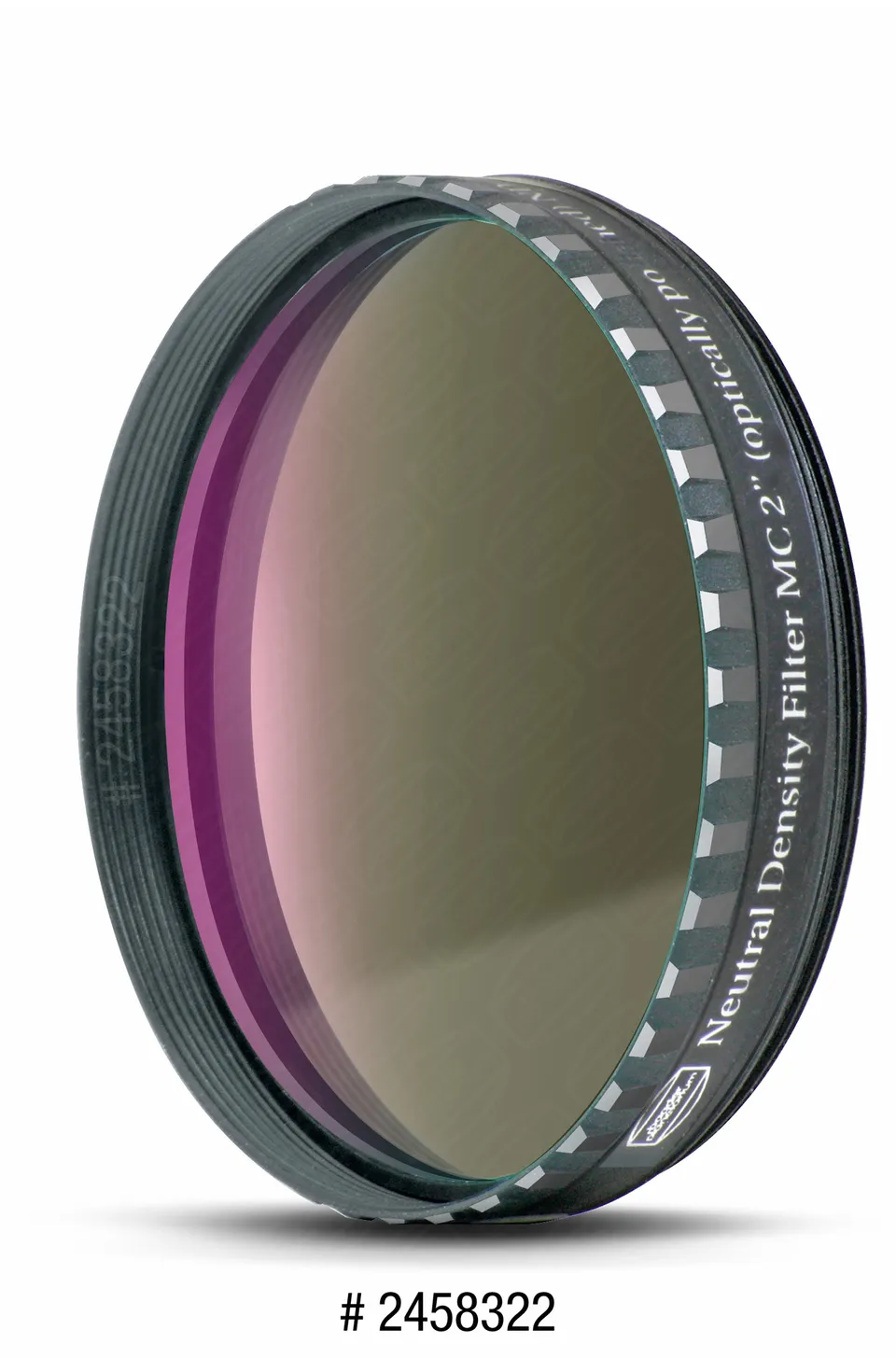
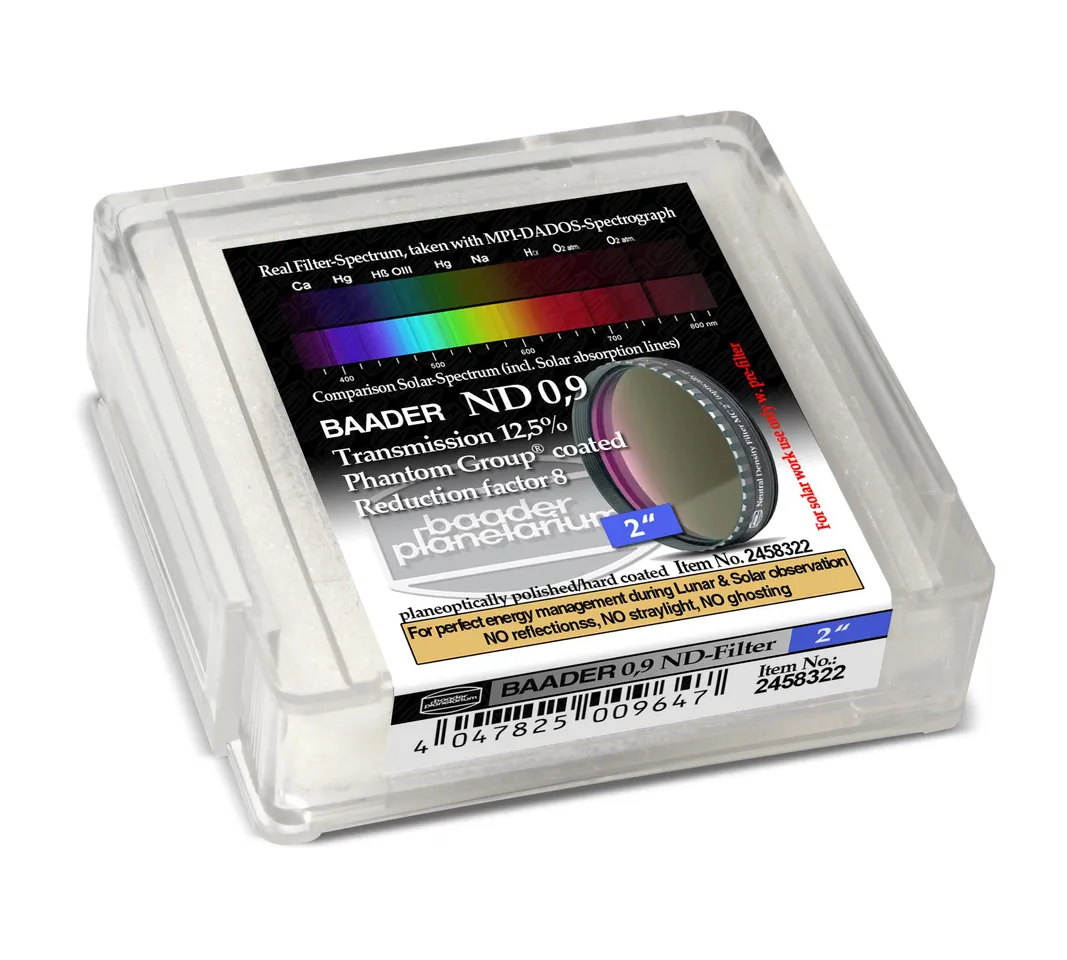
The Baader Planetarium Neutral Density (ND 0.9) 2″ Filter provides a straightforward way to reduce excessive image brightness when observing the Moon through a telescope. By transmitting just 12.5% of incoming light, it makes bright lunar views more comfortable while retaining a natural-looking colour balance. Unlike coloured contrast filters, a neutral density filter is designed to reduce light across the visible spectrum rather than selectively emphasising particular colours. This makes it particularly useful for observers who want to examine lunar surface features without introducing an artificial colour tint.
Significant Brightness Reduction
The ND 0.9 designation refers to the filter’s optical density, which determines how much light it transmits. With a transmission of approximately 12.5%, the filter reduces incoming light by a factor of eight. This substantial reduction is particularly useful when observing the Moon through medium- and large-aperture telescopes, where the image can appear uncomfortably bright at lower magnifications. By reducing glare and perceived brightness, the filter can make extended lunar observing sessions more comfortable, allowing observers to concentrate on craters, mountain ranges and other surface features.
Natural Colour Reproduction
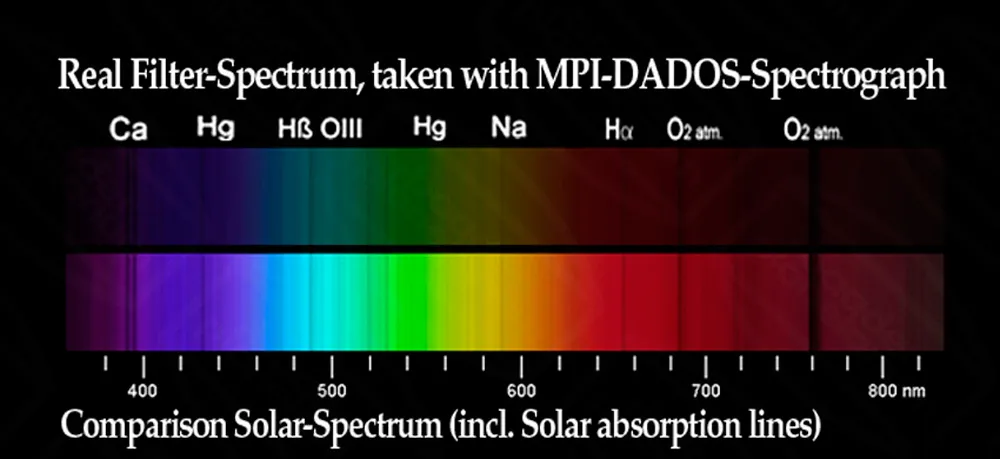
The filter’s neutral-density characteristics reduce overall brightness without intentionally favouring specific visible wavelengths. Unlike traditional coloured filters, which selectively transmit certain parts of the spectrum, the ND 0.9 filter maintains a more natural appearance of the lunar surface. It is important to distinguish brightness reduction from contrast enhancement. The filter does not selectively increase the contrast of particular lunar features, but reducing excessive brightness can make existing detail easier and more comfortable to examine.
Precision-Polished Optical Glass
Baader manufactures its neutral density filters using optically polished glass, rather than relying on ordinary untreated filter glass. The precision-polished surfaces are intended to minimise unwanted optical distortion, helping preserve the sharpness and fine detail delivered by the telescope. Multi-coated optical surfaces further help reduce unwanted reflections, supporting clear and consistent views.
Fixed Transmission for Predictable Results
With its fixed 12.5% transmission, the ND 0.9 filter provides a consistent level of brightness reduction. This makes it a practical choice for observers who prefer a simple, single-filter solution rather than an adjustable polarising filter. However, the appropriate level of brightness reduction depends on telescope aperture, magnification, observing conditions and personal preference. The ND 0.9 filter provides stronger dimming than an ND 0.6 filter, which transmits 25% of incoming light.
Compatibility and Solar Imaging Applications
The 2″ format is intended for use with compatible threaded astronomical eyepieces and accessories. In addition to lunar observation, Baader identifies the ND 0.9 filter as an optional brightness-control component for photographic use with certain Baader Herschel solar prisms.
Important: This filter is not a solar safety filter and must never be used on its own for direct solar observation. Solar use requires a properly configured, purpose-designed solar optical system, following the manufacturer’s instructions. In particular, the ND 0.9 filter must not replace the mandatory ND 3.0 filter in a Herschel prism configured for visual solar observation.


 Cookie policy
Reviews
There are no reviews yet.