Comfortable Lunar and Planetary Observation
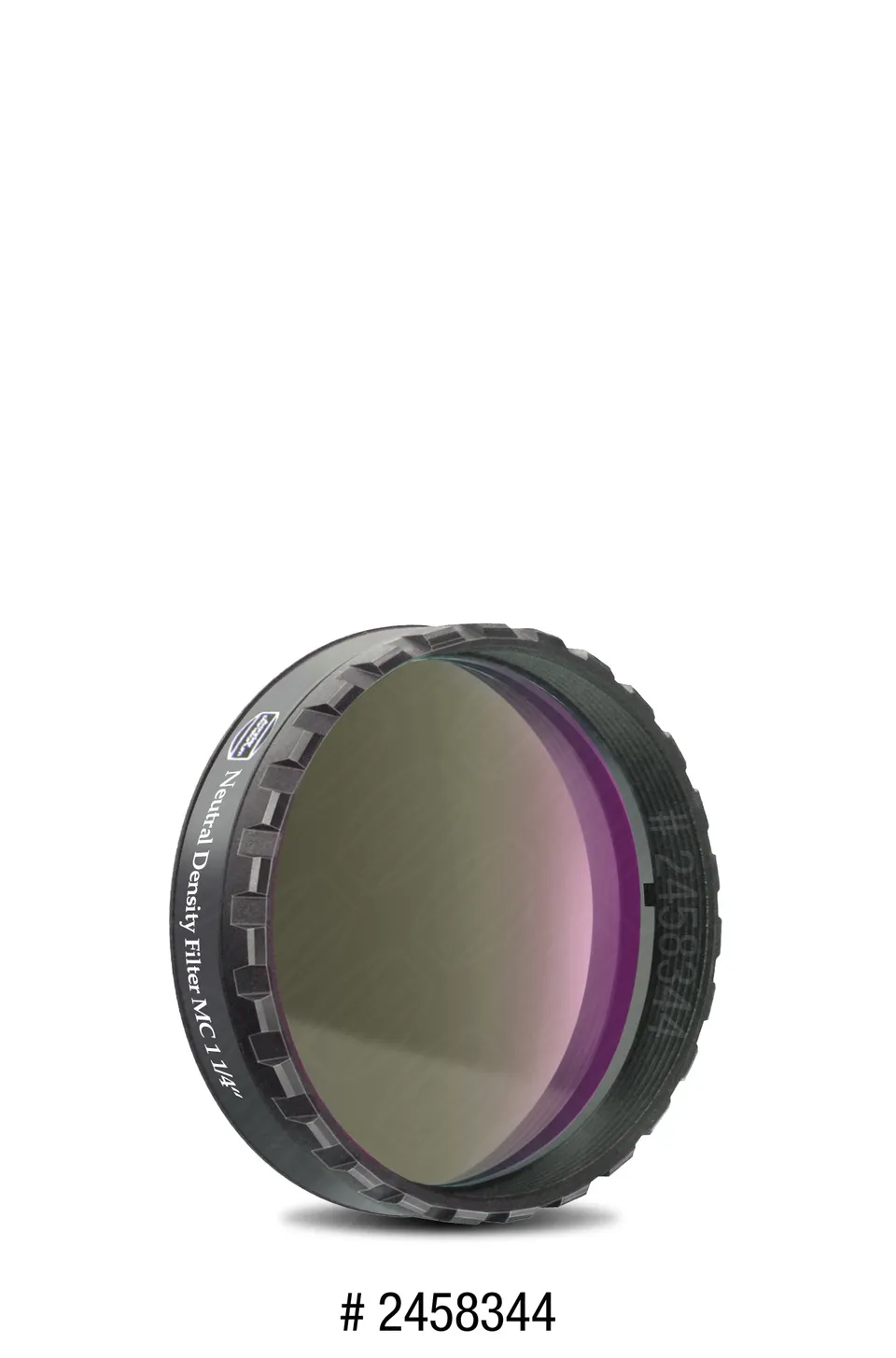
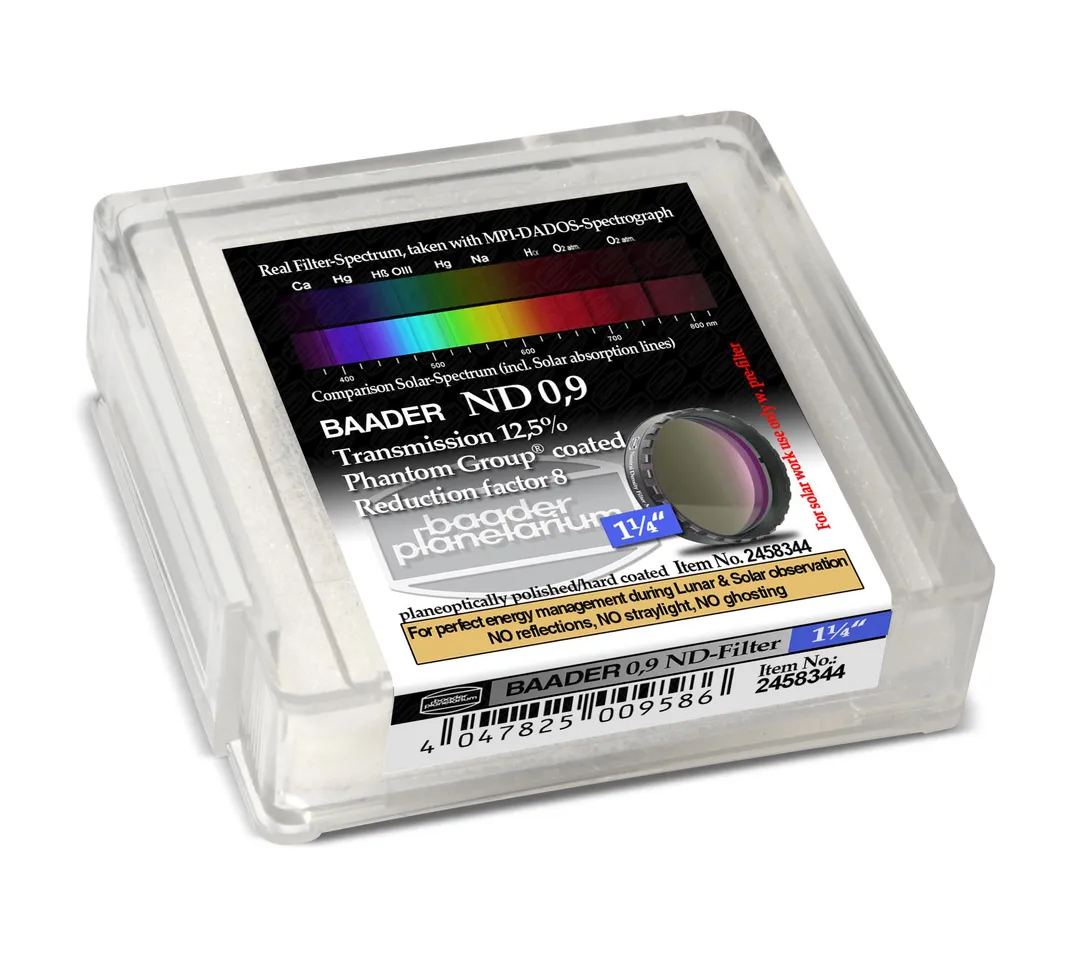
The Baader Planetarium Neutral Density (ND 0.9) 1.25″ Filter provides an effective way to reduce excessive brightness when observing the Moon and bright planets through a telescope. By transmitting just 12.5% of incoming light, it makes bright views more comfortable while maintaining a natural-looking colour balance. Unlike coloured contrast filters, a neutral density filter reduces light across the visible spectrum rather than selectively emphasising particular colours. This makes it particularly useful for observers who want to examine lunar surface features without introducing an artificial colour tint.
Significant Brightness Reduction
The ND 0.9 designation refers to the filter’s optical density, which determines how much light it transmits. With a transmission of approximately 12.5%, the filter reduces incoming light by a factor of eight. This level of attenuation is particularly useful when observing the Moon through medium- and large-aperture telescopes, where the image can appear uncomfortably bright, especially at lower magnifications. By reducing overall image brightness, the filter can make extended observing sessions more comfortable, allowing observers to concentrate on lunar craters, mountain ranges and other surface features. It can also be useful when observing bright planets, although the preferred level of brightness reduction depends on telescope aperture, magnification and observing conditions.
Natural Colour Reproduction
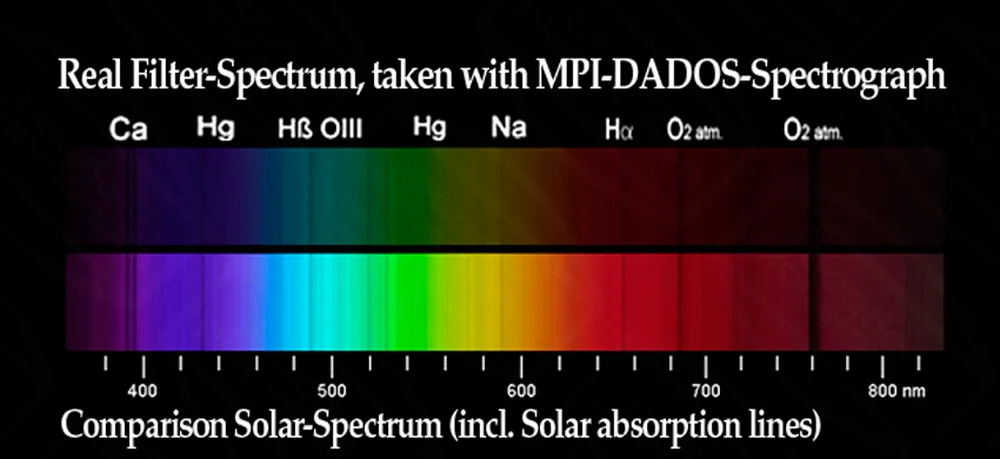
The filter’s neutral density characteristics reduce overall brightness without intentionally favouring particular visible wavelengths. Unlike traditional coloured filters, which selectively transmit certain parts of the spectrum, the ND 0.9 filter maintains a more natural appearance of the observed object. It is important to distinguish brightness reduction from contrast enhancement. The filter does not selectively increase the contrast of particular lunar or planetary features, but reducing excessive brightness can make existing detail easier and more comfortable to examine.
Precision-Polished Optical Glass
The filter uses high-precision, optically flat glass with finely polished surfaces, designed to minimise unwanted optical distortion and preserve the sharpness delivered by the telescope. Anti-reflection coatings help reduce unwanted reflections and stray light, particularly when observing bright objects such as the Moon. Together, these optical characteristics help maintain image clarity while the filter reduces the amount of light reaching the observer.
Fixed Transmission for Predictable Results
With its fixed 12.5% transmission, the ND 0.9 filter provides a consistent level of brightness reduction without requiring adjustment. This makes it a practical choice for observers who prefer a straightforward, single-filter solution rather than an adjustable polarising filter. For comparison, an ND 0.6 filter transmits 25% of incoming light, providing a less pronounced reduction in brightness. The appropriate filter depends on the brightness of the target, telescope aperture, magnification and personal observing preferences.
Compact 1.25″ Mount and Filter Compatibility
The filter is supplied in a threaded aluminium mounting cell designed for standard 1.25″ astronomical eyepieces and compatible accessories. Threads on both sides of the mounting allow it to be combined with other filters, such as coloured planetary filters, when additional selective contrast enhancement is desired. The 2 mm optical glass provides the same specified glass thickness as the larger 2″ version, while the smaller mounting makes it suitable for telescopes and accessories using the common 1.25″ format.
Solar Observation – Important Safety Information
Neutral density filters can also be used as additional brightness-control components in certain properly filtered solar observing or imaging systems, subject to the equipment manufacturer’s instructions. However, the ND 0.9 filter is not a solar safety filter and must never be used on its own for direct solar observation. It must not replace a certified front-aperture solar filter or the mandatory safety filters specified for a compatible Herschel prism. Solar observation requires a complete, correctly configured solar filtering system designed for that purpose.


 Cookie policy
Reviews
There are no reviews yet.