A complete imaging system in a compact body
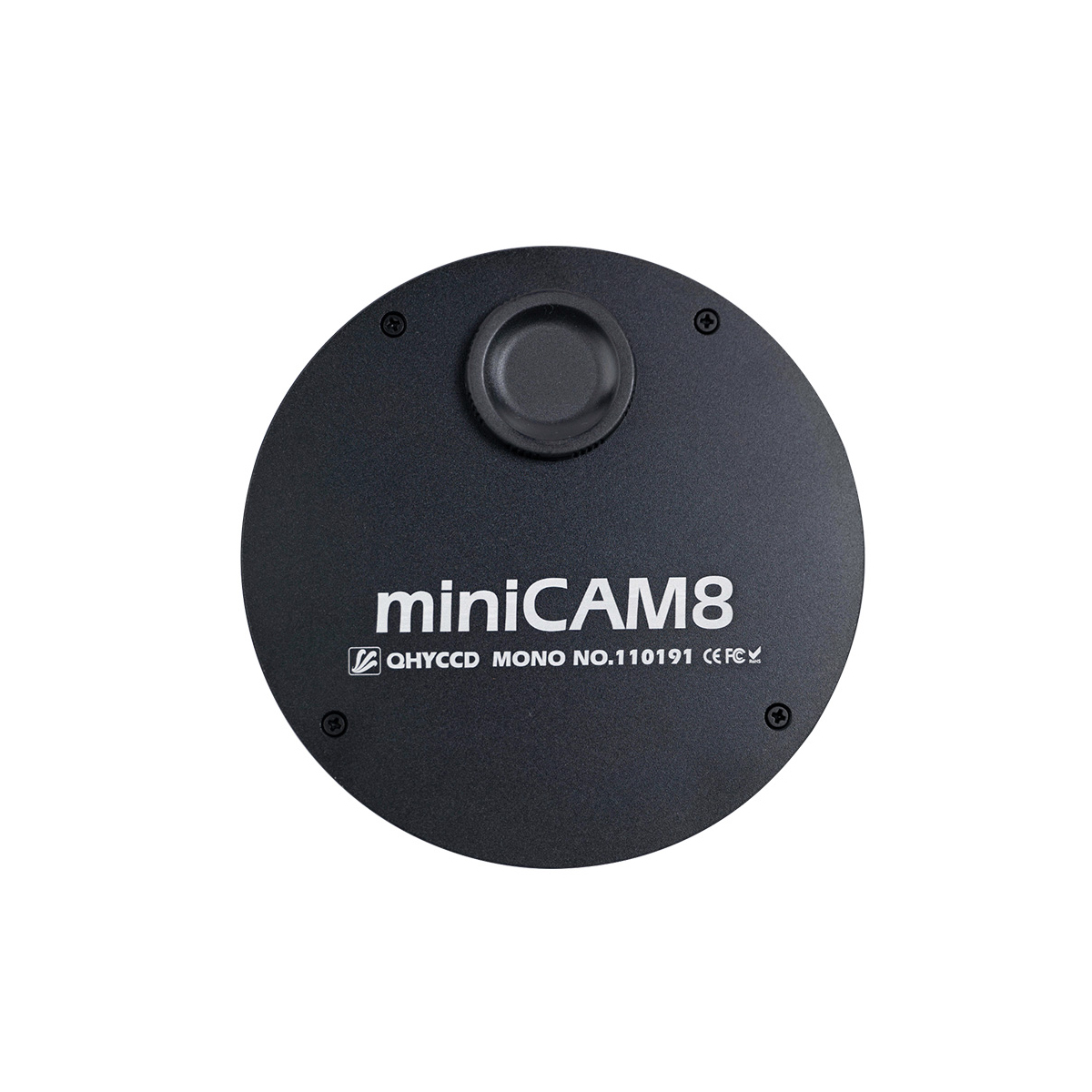
Traditional monochrome astrophotography systems often combine a cooled camera, a separate electronic filter wheel, adapters and several cables. The miniCAM8M integrates the camera and its eight-position filter wheel into one housing, simplifying the physical imaging train and reducing the number of components that need to be packed, mounted and connected.
This integrated design is particularly appealing for portable astrophotography. Whether you are taking a compact telescope on holiday, setting up at a dark-sky site or trying to keep a small imaging rig manageable, fewer separate components can mean less equipment to transport and less hardware to assemble in the dark.
The filter wheel is built into the camera body and controlled electronically, allowing compatible capture software to select filters automatically during an imaging sequence. The planetary combo includes seven filters, leaving one position available for another compatible filter or a suitable blank, subject to the wheel’s configuration.
Sony IMX585 monochrome sensor
At its heart is Sony’s IMX585 back-illuminated CMOS sensor, with 3840 × 2160 pixels, 8 megapixels and 2.9 μm pixel pitch. Its monochrome design records incoming light without a Bayer colour-filter array, making it well suited to imaging through individual colour and specialist filters.
The back-illuminated sensor structure helps light reach the photosensitive area efficiently. QHYCCD specifies a peak quantum efficiency of up to 92% in the visible spectrum for the IMX585 family, with the monochrome sensor’s response varying by wavelength. High sensitivity helps make the most of short planetary capture windows as well as faint deep-sky targets. The sensor also offers strong near-infrared response, which is useful for specialist planetary work. QHYCCD reports substantially improved near-infrared sensitivity compared with the earlier IMX485 generation.
An eight-position planetary filter system
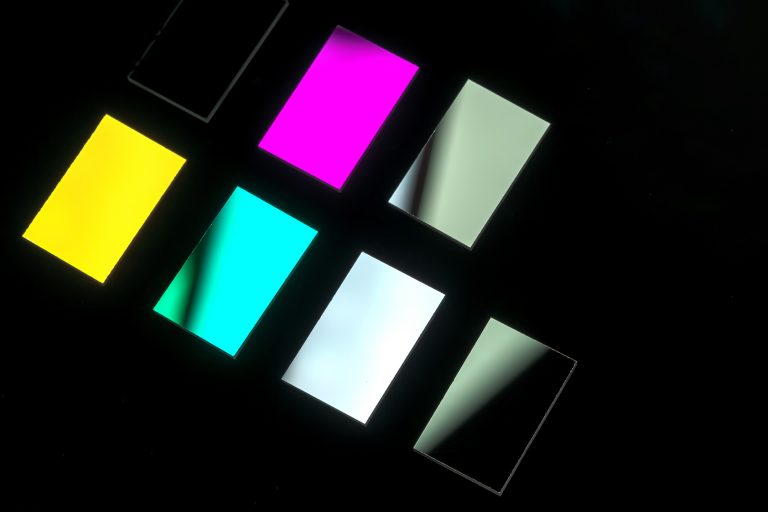
The Planetary Combo includes seven small-format filters, each measuring 19 × 12 × 1.1 mm. They are designed to cover the sensor area without the bulk of conventional large round filters.
The supplied filter set comprises:
- Luminance (L): A broad-band filter useful for capturing fine detail and monochrome luminance data.
- Red (R), Green (G) and Blue (B): Used separately to record planetary colour channels for combination during processing.
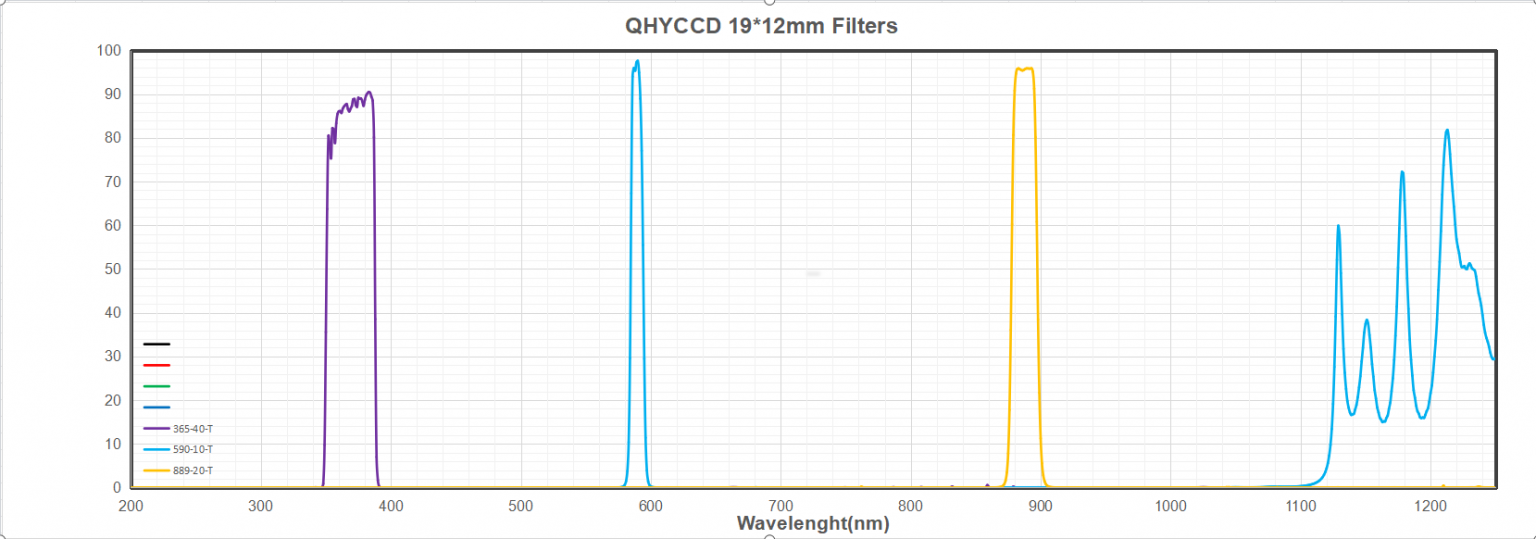
- Methane (CH₄), 20 nm: Designed for imaging near the methane absorption band, commonly used to study atmospheric features on gas giants such as Jupiter and Saturn.
- Ultraviolet (UV), 40 nm: Supports ultraviolet planetary imaging where the target, optics and observing conditions permit.
- Sodium (Na), 10 nm at 589 nm: A specialist filter for imaging around the sodium spectral line.
These filters offer more than a conventional RGB set: they give planetary imagers access to selected spectral regions that can reveal different atmospheric structures. Results depend on the planet, telescope aperture, optical transmission, atmospheric conditions and capture technique.
Dual-stage cooling for cleaner data
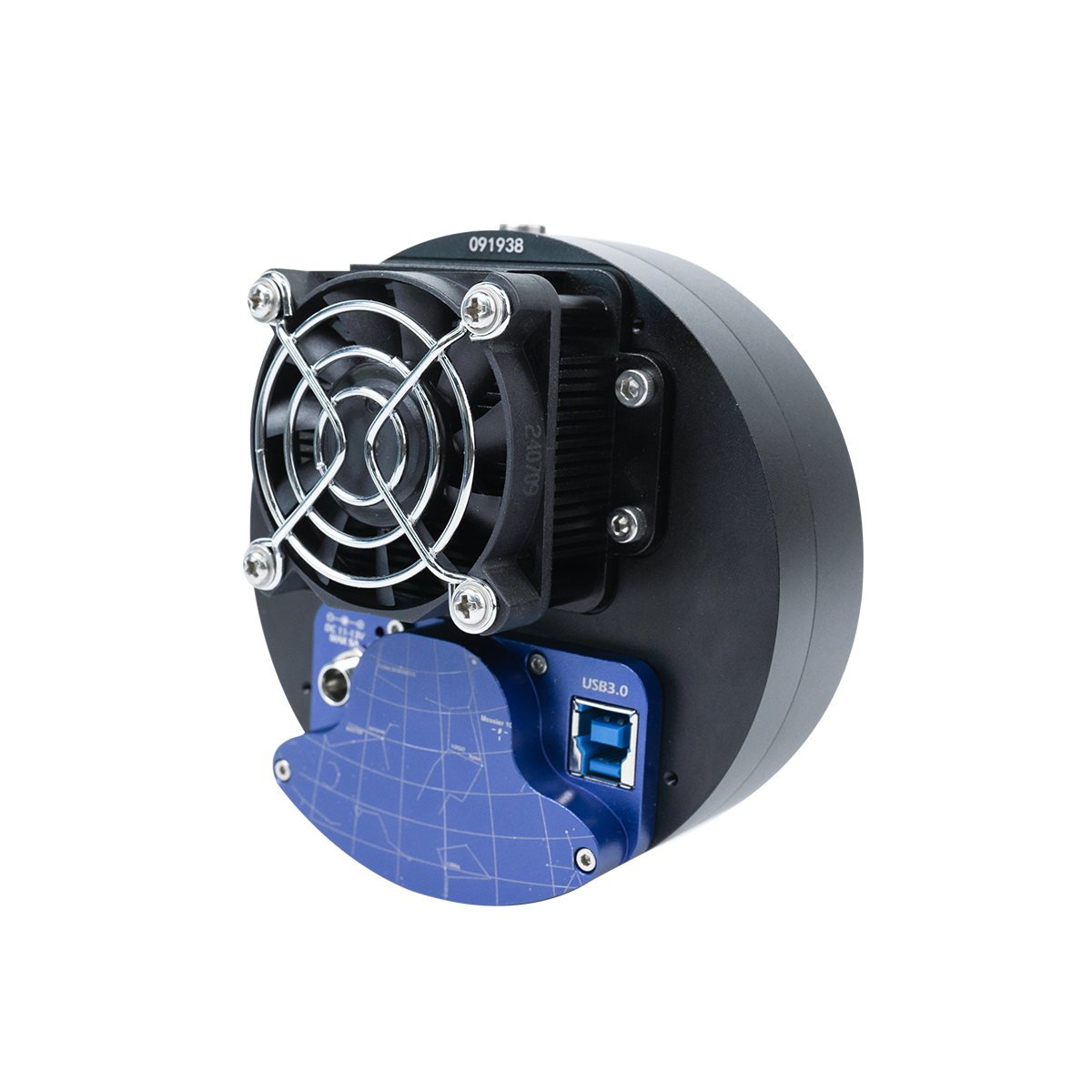
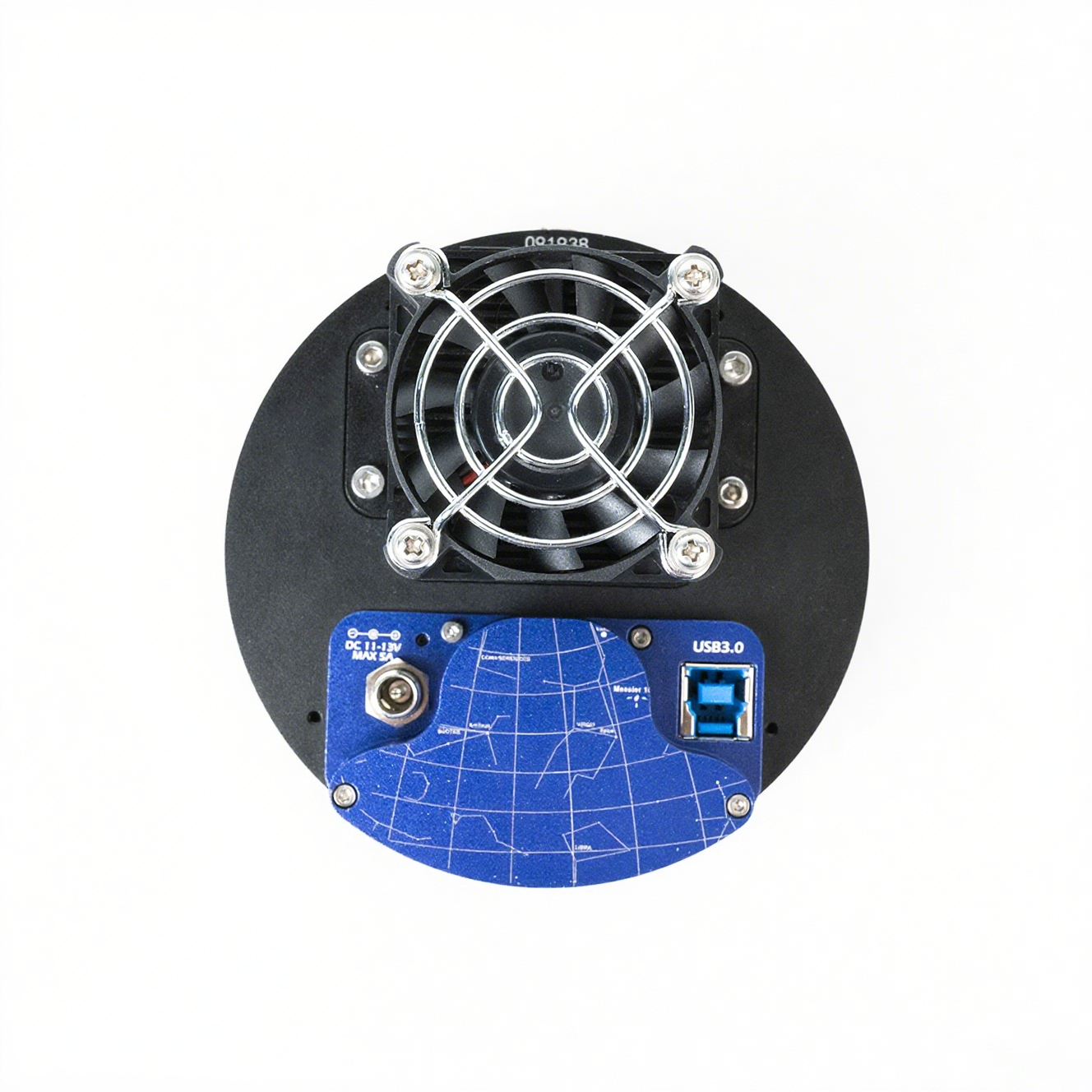
The miniCAM8M is equipped with a dual-stage thermoelectric cooler (TEC). For longer exposures, QHYCCD specifies cooling performance of approximately 45 °C below ambient temperature under suitable conditions. Cooling helps reduce dark-current noise generated by the sensor, particularly during longer deep-sky exposures. Temperature control also makes it easier to capture calibration frames consistently. Although cooling is less critical for very short planetary exposures than for long deep-sky integrations, having it built in makes the camera versatile across both types of imaging.
The camera also incorporates dew-control measures, including a heated optical window and internal humidity management. These features help reduce condensation risks around the sensor and front window during cooled operation.
Linearity HDR and wide dynamic range
The IMX585 sensor has a native 12-bit analogue-to-digital converter. QHYCCD’s Linearity HDR mode uses a software-assisted approach to combine high- and low-gain information into a 16-bit output with improved linearity. In this mode, QHYCCD specifies a full-well capacity of 46,000 electrons, read noise of approximately 1 electron and dynamic range of up to 46,300:1, equivalent to 93 dB or around 15.5 stops. These figures apply to the specified HDR mode rather than every operating mode.
In practical terms, this processing is intended to improve tonal transitions and preserve useful image information across a broader range of signal levels. It is important to use compatible driver and capture-software versions for the HDR correction feature.
High-speed planetary capture and deep-sky capability
The camera supports exposure times from 11 μs to 900 seconds. QHYCCD lists maximum full-resolution rates of 41.5 frames per second at 8-bit and 23.5 frames per second at 16-bit output. Faster capture is possible with a reduced region of interest, allowing planetary imagers to concentrate on a smaller area around the target.
For deep-sky imaging, the combination of monochrome sensitivity, regulated cooling, filter automation and a compact body makes the miniCAM8M suitable for multi-filter imaging of nebulae, galaxies and other celestial objects. The Planetary Combo’s supplied filters are specifically selected for planetary work; users primarily interested in deep-sky narrowband imaging may prefer one of QHYCCD’s separate deep-sky filter-set versions.
Connections and setup considerations
The camera connects to a computer via USB 3.0 and requires an external 12 V DC supply for cooled operation. QHYCCD specifies an input voltage range of 11–13.8 V and recommends a stable supply; the planetary combo is commonly supplied with a 12 V, 5 A adapter. The system uses C-mount-based interfaces and supplied adapters for 31.75 mm (1.25-inch) and 50.8 mm (2-inch) nosepiece connections. The specified back focal length is 17.5 mm. Check the optical spacing and adapter arrangement for your telescope or lens before ordering, particularly if you are building a very compact travel rig.
Important compatibility note: Although the miniCAM8M is compact, the integrated camera, filter wheel and power requirements still need to be accommodated by the telescope, focuser, mounting arrangement and travel power setup. It reduces the number of separate imaging components, but does not eliminate the need for a suitable mount, telescope, computer or power source.


 Cookie policy
Reviews
There are no reviews yet.