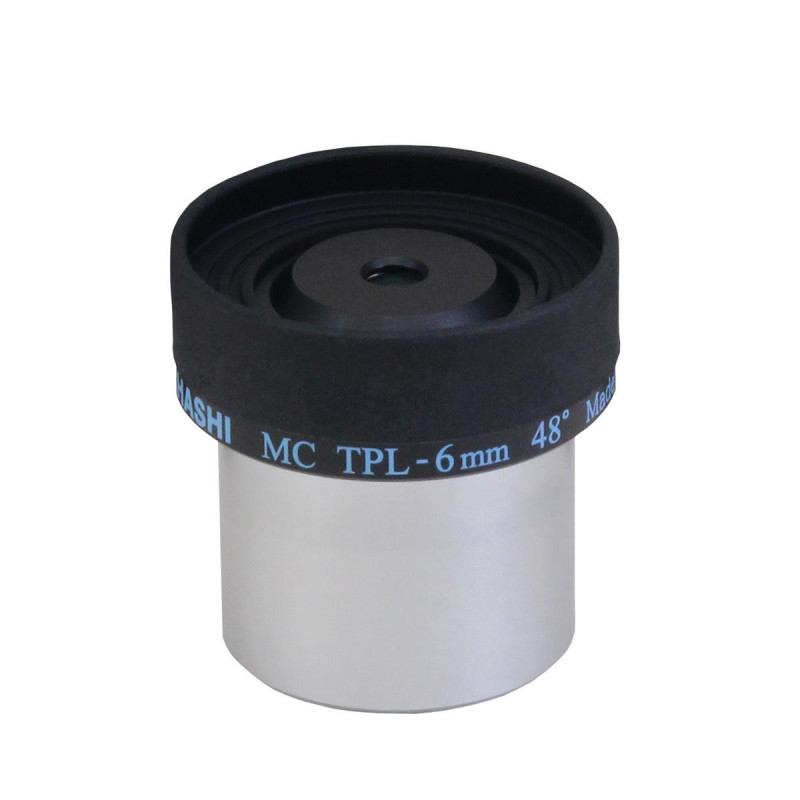
The Takahashi TPL 6 mm Eyepiece is the high-magnification detail specialist of the TPL range, designed for astronomers who appreciate the challenge and satisfaction of revealing fine detail in the Moon, planets and close double stars. Its defining strength is exceptional central-field image fidelity. By combining a carefully optimised four-element Plössl design with modern optical glass, advanced coatings and precision-engineered stray-light suppression, Takahashi has created a premium eyepiece that brings the quality of the central image into sharp focus. With a traditional 48° apparent field of view, the TPL 6 mm offers a deliberate, highly refined observing experience in which optical precision takes centre stage.
The Classic Plössl, Reimagined by Takahashi
The TPL series represents Takahashi’s modern interpretation of the established Plössl eyepiece design. Rather than simply reproducing a conventional configuration, Takahashi evaluated different optical arrangements in combination with highly corrected telescope designs, including its renowned TOA apochromatic refractors and Mewlon CRS instruments. The resulting TPL design uses four lens elements arranged in two groups, with carefully selected optical materials and an optimised arrangement intended to preserve fine detail and minimise unwanted aberrations. This is what gives the TPL its premium identity. The design may be traditional, but the engineering behind its execution is thoroughly considered. For astronomers who value precise image reproduction, the TPL offers a distinctive approach to high-performance visual observing.
6 mm Focal Length – Revealing the Fine Details
The 6 mm focal length is particularly well suited to high-magnification examination of the Moon, planets and double stars. On the Moon, it provides the image scale needed to explore intricate crater formations, narrow rilles, mountain ridges and subtle variations in surface shading. Jupiter’s atmospheric belts, Saturn’s ring system and the delicate separation of close double stars are equally compelling targets when the telescope and observing conditions support the required magnification. In a Celestron StarSense Explorer 8-inch Dobsonian with a 1,200 mm focal length, the TPL 6 mm produces 200× magnification and a 1.02 mm exit pupil. This is a useful high-power combination for an 8-inch telescope, although the sharpness of the final view will depend strongly on atmospheric steadiness, telescope collimation and thermal equilibrium. The 6 mm is therefore best appreciated as a specialist eyepiece for nights when conditions allow the telescope to reveal its finer capabilities.
Advanced Glass Selection and Outstanding Colour Correction
One of the TPL series’ most significant technical achievements is its careful control of chromatic aberration introduced by the eyepiece itself. Takahashi employs high-refractive-index, low-dispersion optical glass to minimise unwanted colour dispersion around the optical axis. According to Takahashi’s design calculations, central-field chromatic aberration is approximately half that of its former Abbe eyepieces and around two-thirds that of its previous LE series. These are comparisons with Takahashi’s own earlier optical designs, rather than claims that the TPL corrects chromatic aberration originating in the telescope. For the observer, this engineering supports faithful colour rendition and clean presentation of high-contrast details, particularly valuable during lunar and planetary observation.
Premium Coatings and Meticulous Contrast Control
High magnification places considerable demands on contrast and the control of stray light. Takahashi addresses these demands through premium multi-layer optical coatings, precisely machined internal components, carefully positioned baffles and high-quality matt-black finishes. The manufacturer specifies transmission exceeding 99% at the coated optical surfaces across the visible spectrum, helping minimise reflection losses. This figure relates to the coating performance of individual surfaces, not the total transmission of the complete eyepiece. Together, these refinements are intended to preserve subtle tonal differences and prevent unwanted scattered light from interfering with the image. When examining delicate cloud structures on Jupiter or subtle shading across the lunar surface, such attention to detail is a meaningful part of the premium observing experience.
A Traditional 48° Field with a Clear Optical Purpose
The TPL 6 mm offers a 48° apparent field of view, characteristic of its carefully optimised Plössl configuration. Its optical performance is particularly refined in the central portion of the field, where planetary and double-star observers typically position their targets. Takahashi acknowledges that stellar images may broaden gradually towards the field edge because the design does not completely eliminate field curvature and astigmatism. The TPL should therefore be appreciated for its excellent central-field performance rather than described as an edge-to-edge flat-field eyepiece. For observers using manually tracked telescopes, the narrower field also means more frequent repositioning at high magnification than with a wide-angle eyepiece. This is a practical distinction in observing style, not a judgement about the optical quality of other premium eyepiece designs.
Compact Japanese Craftsmanship
At just 55 g and approximately 39 mm long, the TPL 6 mm is remarkably compact for a premium astronomical eyepiece. Its lightweight construction makes it particularly convenient for smaller refractors, portable telescope setups and instruments where maintaining balance is important. The standard 1.25-inch barrel provides compatibility with a wide range of astronomical focusers and diagonals. The eyepiece also includes a fold-down rubber eyecup, helping establish a consistent observing position and reduce interference from surrounding light. Manufactured in Japan, the TPL reflects Takahashi’s established emphasis on optical precision, mechanical consistency and carefully considered design.
Understanding the 4.5 mm Eye Relief
The TPL 6 mm has a relatively short 4.5 mm eye relief, an important characteristic of this compact, short-focal-length Plössl design. Observers must position their eye close to the eye lens to see the full apparent field. The fold-down rubber eyecup can improve access, but the eyepiece is generally not suitable for observers who need to keep their spectacles on. For astronomers who prioritise generous eye relief, other premium eyepiece designs may offer a more comfortable alternative. For those comfortable with close eye positioning, the TPL 6 mm provides a highly focused high-power observing experience.
Why Invest in the Takahashi TPL 6 mm?
The Takahashi TPL 6 mm is not an expensive eyepiece because it offers an unusually wide field or elaborate mechanical features. Its premium value lies in the precision of its optical design: carefully selected glass, excellent central-field correction, advanced coatings, meticulous stray-light control and Japanese manufacturing quality. For astronomers who enjoy studying fine lunar formations, planetary features and close double stars, it offers a distinctive combination of classical optical design and modern refinement. The Takahashi TPL 6 mm is a precision instrument for observers who want to make the most of the detail their telescope and observing conditions can reveal.


 Cookie policy
Reviews
There are no reviews yet.