Detailed monochrome imaging with the Sony IMX428
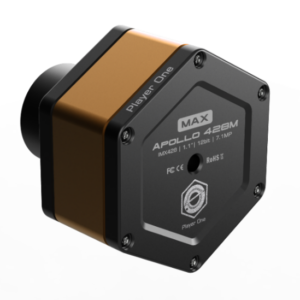
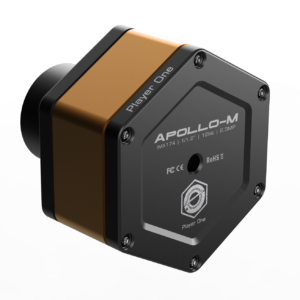
The Apollo 428M MAX Pro uses Sony’s IMX428 monochrome CMOS sensor, offering 3216 × 2208 pixels and a 14.5 × 9.9 mm active imaging area, with a 17.5 mm diagonal. Its 4.5 μm pixels balance fine image detail with a useful sensor size for high-resolution solar work. Because the sensor is monochrome, it records brightness directly rather than using a colour-filter array. This makes it well suited to narrowband solar imaging, where capturing fine contrast in features such as sunspots, prominences and surface detail is a priority.
Global shutter for accurate image capture
The global shutter exposes the entire sensor simultaneously instead of reading the image progressively, row by row. This helps minimise distortion when recording rapidly changing features or capturing short-lived events, such as an International Space Station transit across the solar disc.
Over USB 3.0, the camera supports up to 51 frames per second at full resolution in 10-bit mode, or 27 frames per second in 12-bit mode. The faster mode is useful for collecting many frames during brief periods of good atmospheric seeing, while 12-bit capture provides more tonal levels for processing.
BIN2 modes for increased charge capacity
The camera offers hardware and software BIN2 modes. Binning combines data from neighbouring pixels, effectively increasing the pixel scale from 4.5 μm to 9 μm and reducing the output resolution. This can be useful when the seeing conditions, image scale or target brightness make the full sensor resolution unnecessary. In hardware BIN2, the manufacturer lists speeds of up to 135 FPS in MONO8 mode and 109 FPS in MONO16 mode. The stated full-well capacity can rise from 25,300 electrons in the standard mode to approximately 100,000 electrons in BIN2. Full-well capacity describes how much charge a pixel can hold before saturating, so the larger capacity can help when imaging brighter regions.
Two-stage TEC cooling
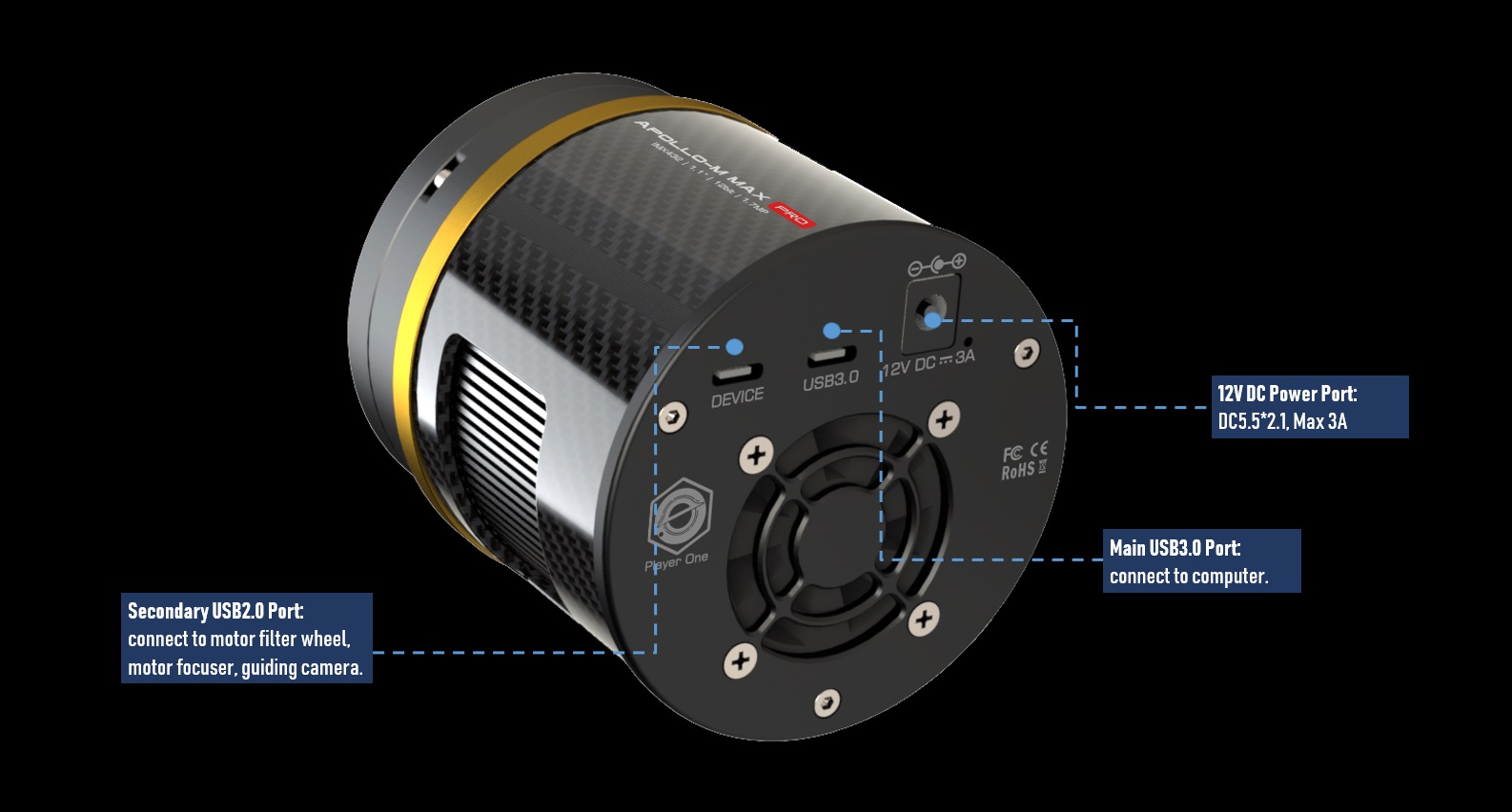
Unlike the passively cooled Apollo 428M MAX, the MAX Pro includes a two-stage thermoelectric cooling system. The camera can regulate its sensor temperature and achieve a temperature difference of approximately 35–40 °C below ambient under suitable operating conditions. Cooling is especially useful for longer exposures, dark-frame calibration and reducing temperature-dependent sensor noise. The camera can also operate without powering the cooler when active cooling is not required. The cooling system requires a separate 12 V DC power input; the manufacturer specifies a maximum camera power consumption of 3 A and recommends a power adapter rated for at least 5 A.
Anti-dew heater and adjustable sensor tilt
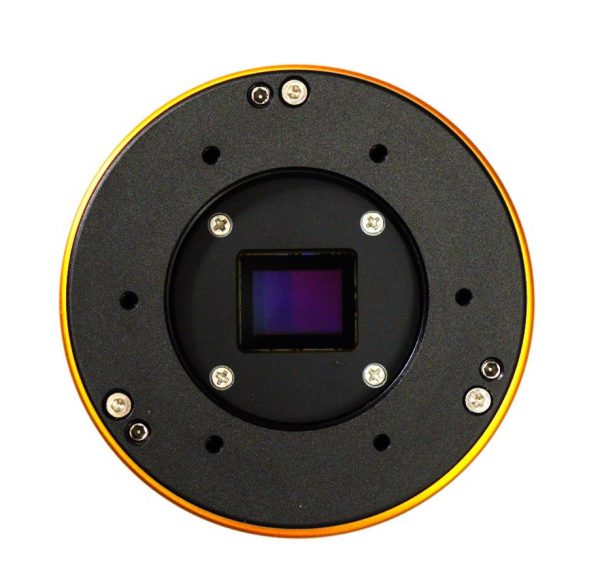
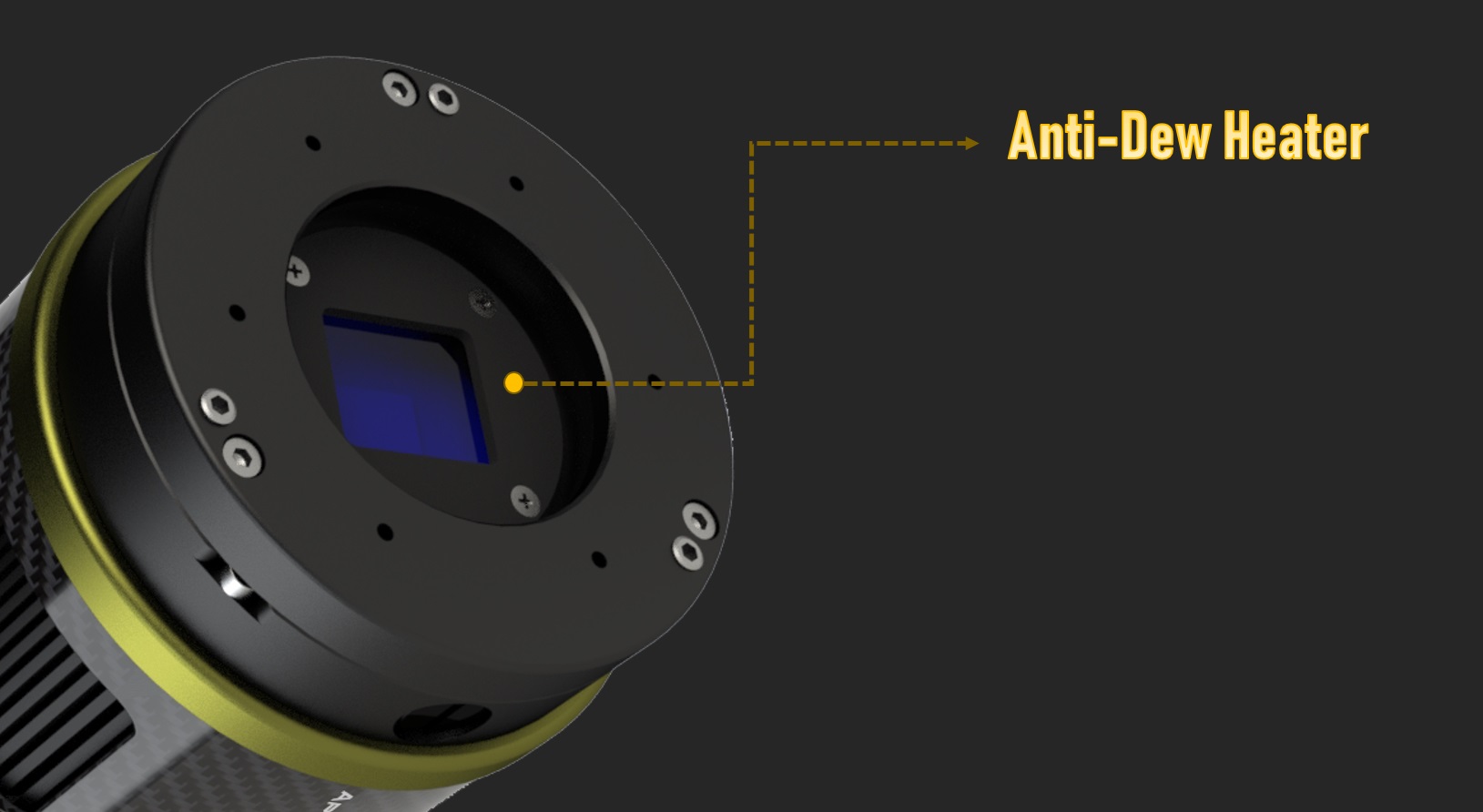
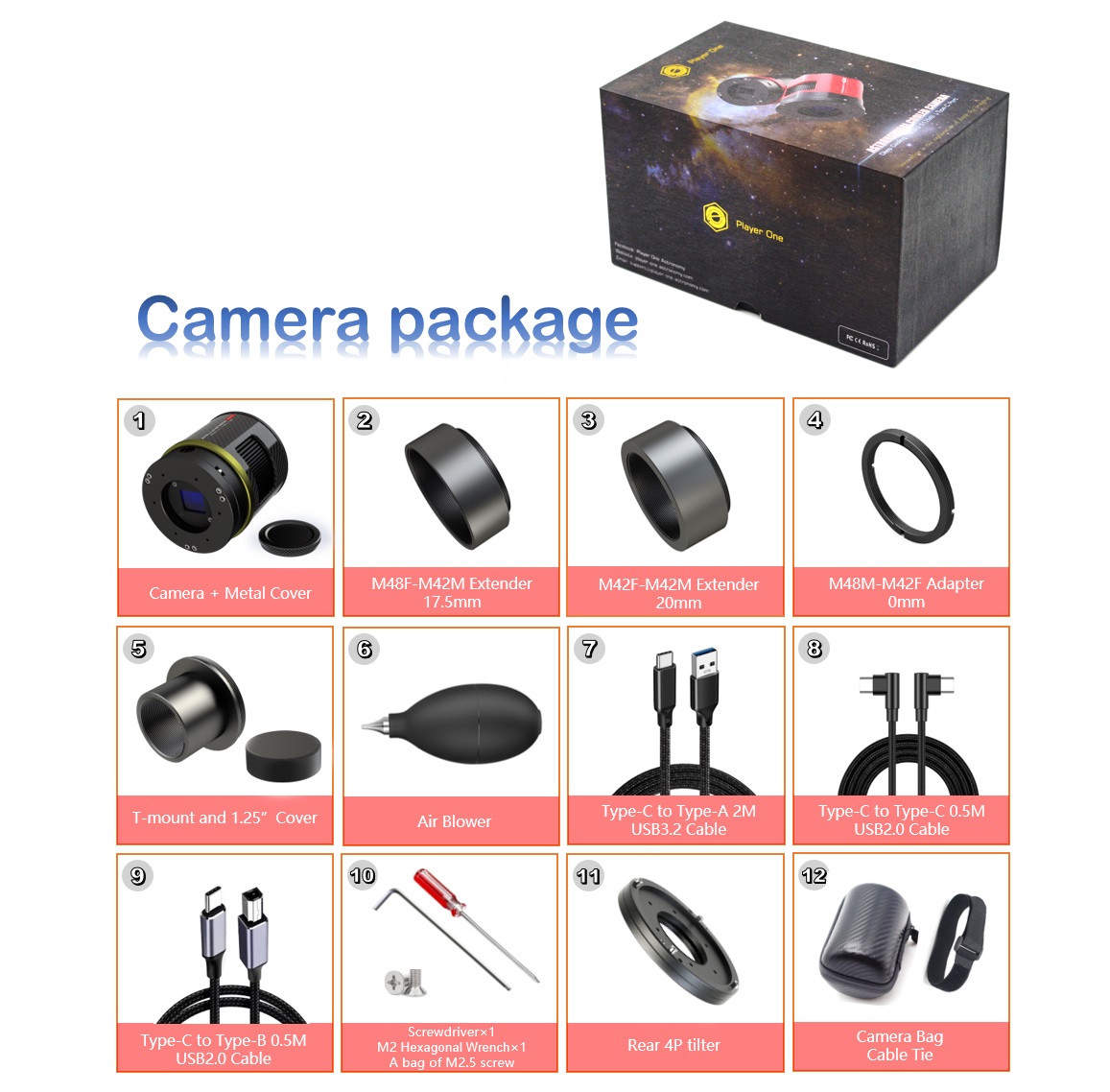
Condensation on the protective window can interfere with image quality during humid or changing weather. The integrated anti-dew heater helps keep the front window clear, and its power can be adjusted through compatible software. The camera also incorporates an adjustable sensor tilt plate. Fine-tuning the sensor angle can help correct uneven focus across the field. Player One describes front and rear tilt-plate arrangements for different imaging configurations; confirm the supplied configuration and included parts with the retailer.
Buffer memory, connections and build
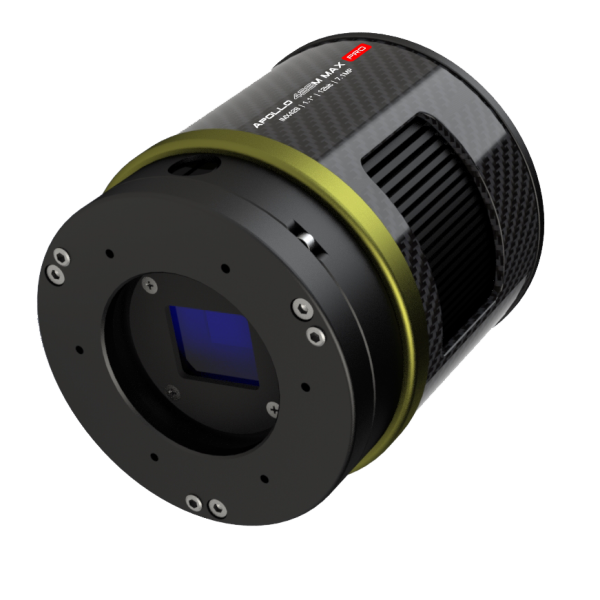
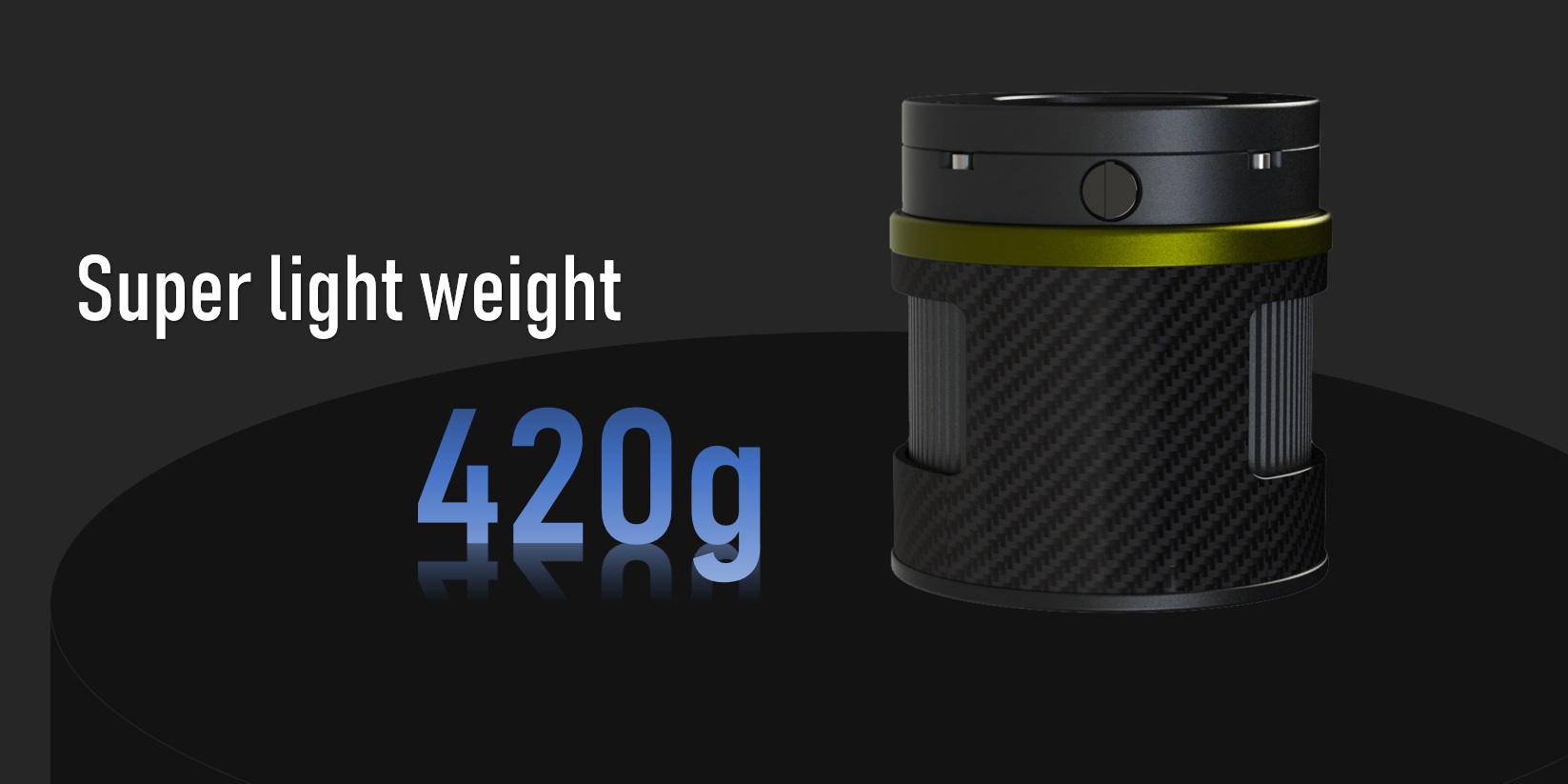
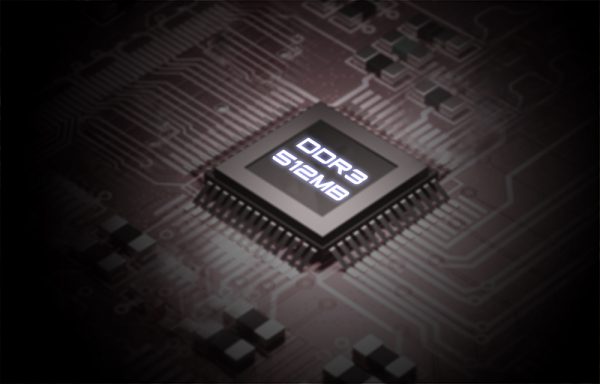
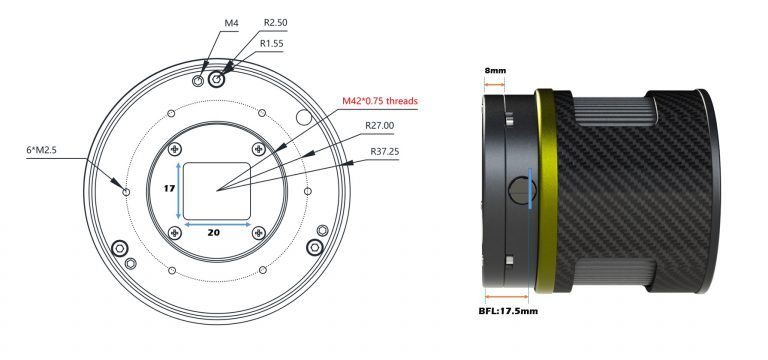
The 512 MB DDR3 buffer helps smooth data transfer between the camera and computer, reducing the likelihood of dropped frames when recording high-speed sequences. USB 3.0 is the preferred connection for maximum performance, while USB 2.0 is also supported at lower transfer rates. The camera has a USB Type-C data connection, a separate 12 V DC power input and a carbon-fibre housing designed to keep the weight down to approximately 420 g. Optical connections include a 31.75 mm (1.25-inch) nosepiece and an M42 × 0.75 thread. The specified back focal length is 17.5 mm.
Important solar safety warning: This camera is an imaging device, not a solar safety filter. Never point a telescope at the Sun without a suitable, correctly installed solar energy-rejection system. Use an appropriate full-aperture solar filter, a purpose-built solar telescope, or a properly configured Herschel wedge where suitable, and always follow the telescope and filter manufacturers’ instructions. A camera window or ordinary UV/IR-cut filter alone does not make solar viewing or imaging safe.


 Cookie policy
Reviews
There are no reviews yet.