High-resolution guiding and imaging
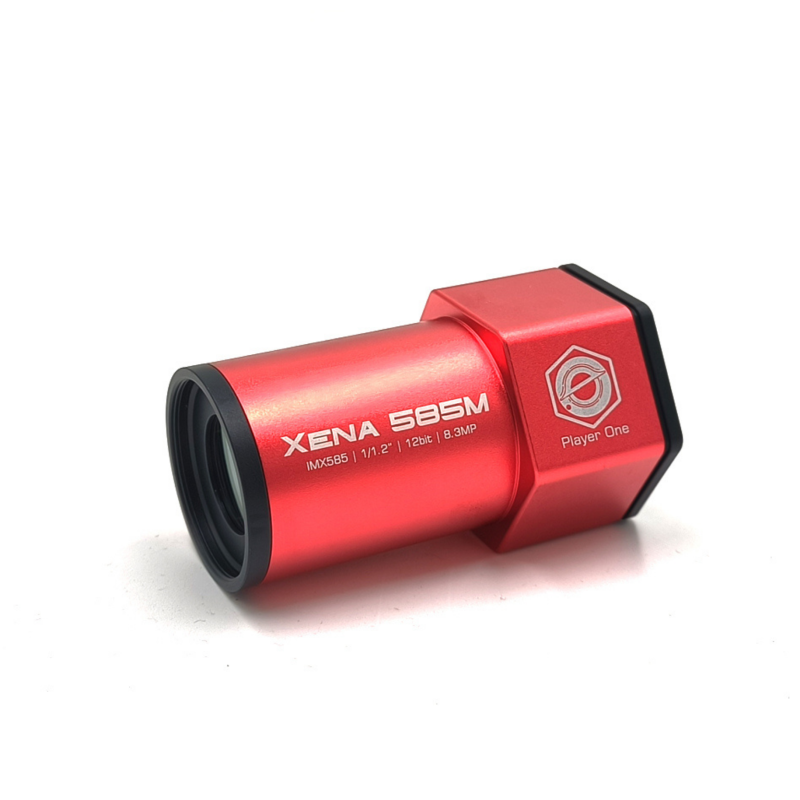
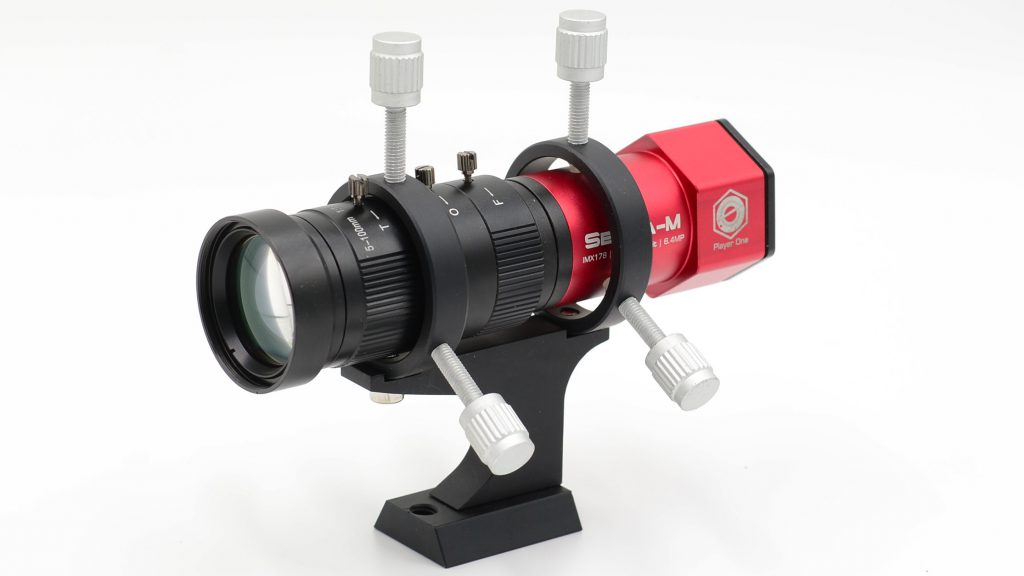
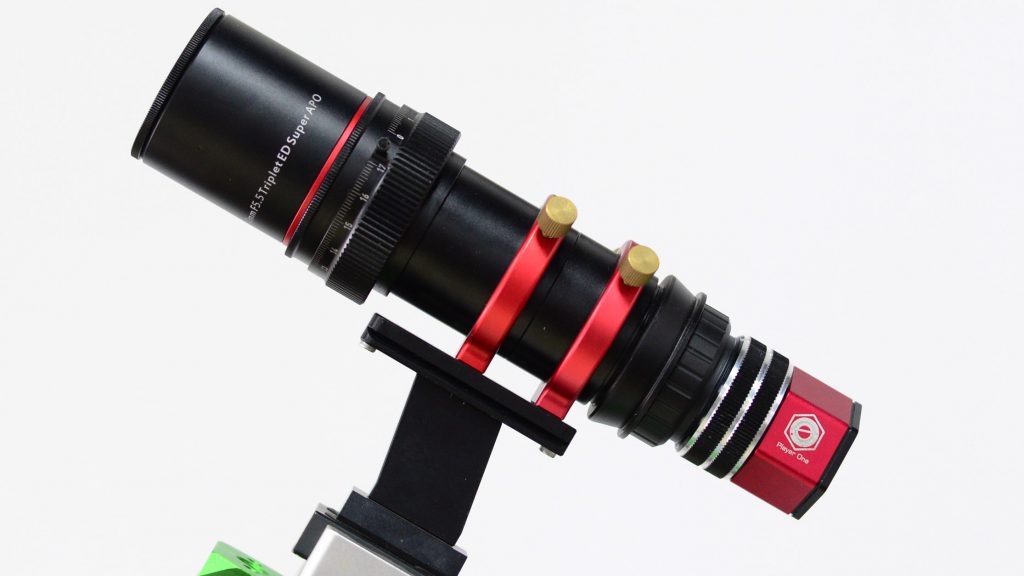
Autoguiding helps an equatorial mount track a celestial object accurately during long-exposure astrophotography. A guide camera takes short exposures of a guide star, and guiding software measures its position to help correct tracking errors. The Xena 585M uses Sony’s IMX585 monochrome CMOS sensor, offering 3856 × 2180 pixels and an 11.2 × 6.3 mm imaging area. Its relatively large sensor can provide a wider field of view than smaller guide-camera sensors when used with the same guide scope. This can make it easier to locate suitable guide stars, although the actual field of view depends on the guide scope’s focal length. The monochrome sensor records light without a colour-filter array, making it well suited to guiding and monochrome imaging. With a suitable optical setup, the camera can also be used for lunar, planetary and other astrophotography projects.
Sensitive Sony IMX585 sensor
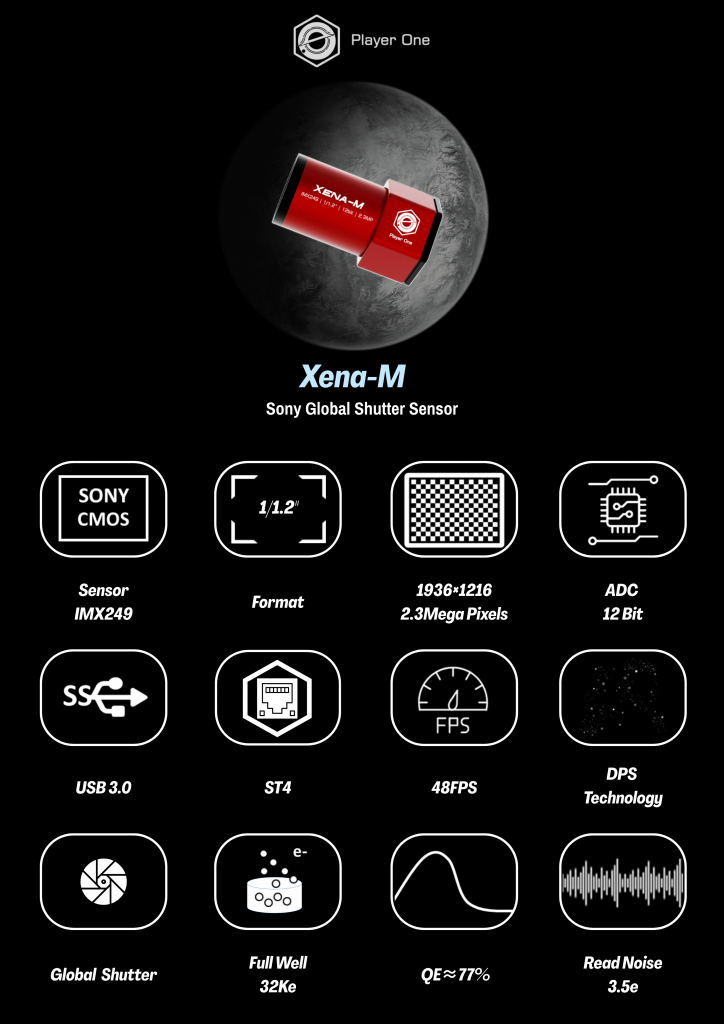
The 2.9 μm pixels balance image detail with the light-gathering characteristics of the sensor. Whether this pixel size provides ideal guiding accuracy depends on the focal length of the guide scope, seeing conditions and the guiding software. Player One specifies a peak quantum efficiency of approximately 91% and a full-well capacity of 47,000 electrons. Quantum efficiency describes how effectively the sensor converts incoming photons into an electronic signal, while full-well capacity indicates how much charge a pixel can hold before saturating. Together, these specifications help describe the camera’s ability to record guide stars of varying brightness. The camera also supports High Dynamic Range (HDR) functionality. HDR processing is intended to improve the range of signal levels that can be recorded, which may be useful in imaging scenes containing both relatively bright and faint details. The practical result depends on the capture mode, settings and processing workflow.
Fast USB connectivity
The Xena 585M features USB 3.0 connectivity and can also operate over USB 2.0. Over USB 3.0, the manufacturer specifies up to 46 FPS at the full 3856 × 2180 resolution in RAW8 mode and 23 FPS in RAW16 mode. At 1920 × 1080, the listed rates rise to 187 FPS in RAW8 and 93.5 FPS in RAW16. These higher frame rates are useful when capturing many short exposures or experimenting with lunar and planetary imaging. Actual performance depends on the selected capture format, computer, USB connection and storage speed.
Low read noise and camera processing
Read noise is the electronic noise introduced when the sensor’s signal is read out. Lower read noise can help when recording faint signals, particularly in short exposures. Player One specifies a read-noise range of approximately 7.2 to 0.7 electrons, depending on camera settings. The camera also includes Player One’s Dead Pixel Suppression (DPS) technology, which analyses dark frames to identify fixed abnormal pixels and uses this information to help suppress their impact. These features support the camera’s versatility, but the results still depend on exposure settings, calibration and the imaging conditions.
Compact housing and practical connections
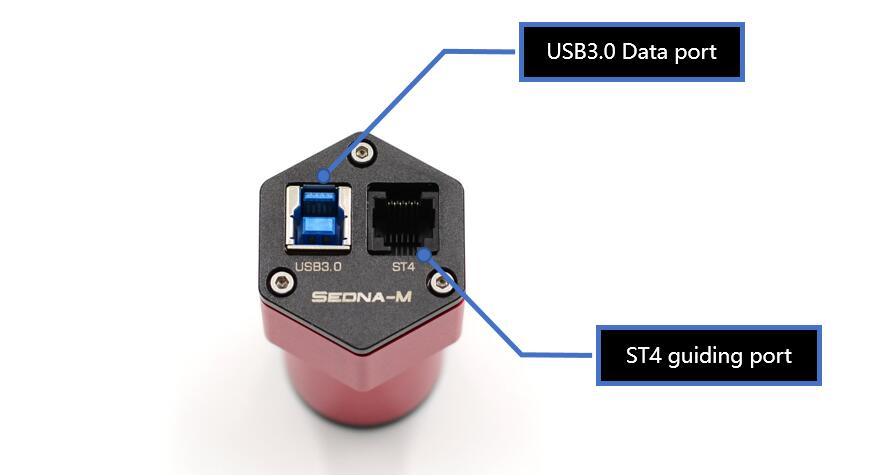
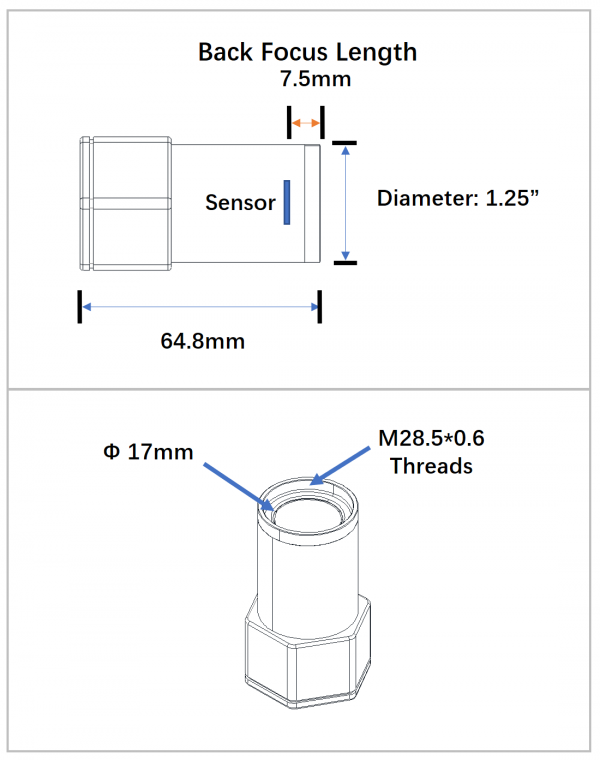
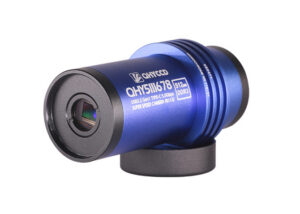
The Xena 585M uses a compact housing with a 1.25-inch insertion format and weighs approximately 65 g. Its short 7.5 mm back focal length can be helpful in setups where available back focus is limited. The front connection accepts a 1.25-inch adapter and includes an M28.5 × 0.6 filter thread. An ST4-compatible port allows direct connection to a compatible mount’s autoguiding input. Guiding software may also control a compatible mount through a separate supported connection. The camera uses USB for data transfer and does not have manufacturer-specified active sensor cooling. It is therefore best considered a compact guiding and general-purpose imaging camera rather than a dedicated cooled deep-sky camera.


 Cookie policy
Reviews
There are no reviews yet.