Turn sensor tilt correction into a controlled process
Tilt is one of those small mechanical errors that can have a disproportionate effect on astrophotography. If the camera sensor is not perfectly aligned with the focal plane, stars may appear sharp in one part of the image but elongated or distorted towards other corners. The effect can be particularly noticeable with large sensors and fast optical systems, where tolerances are demanding.
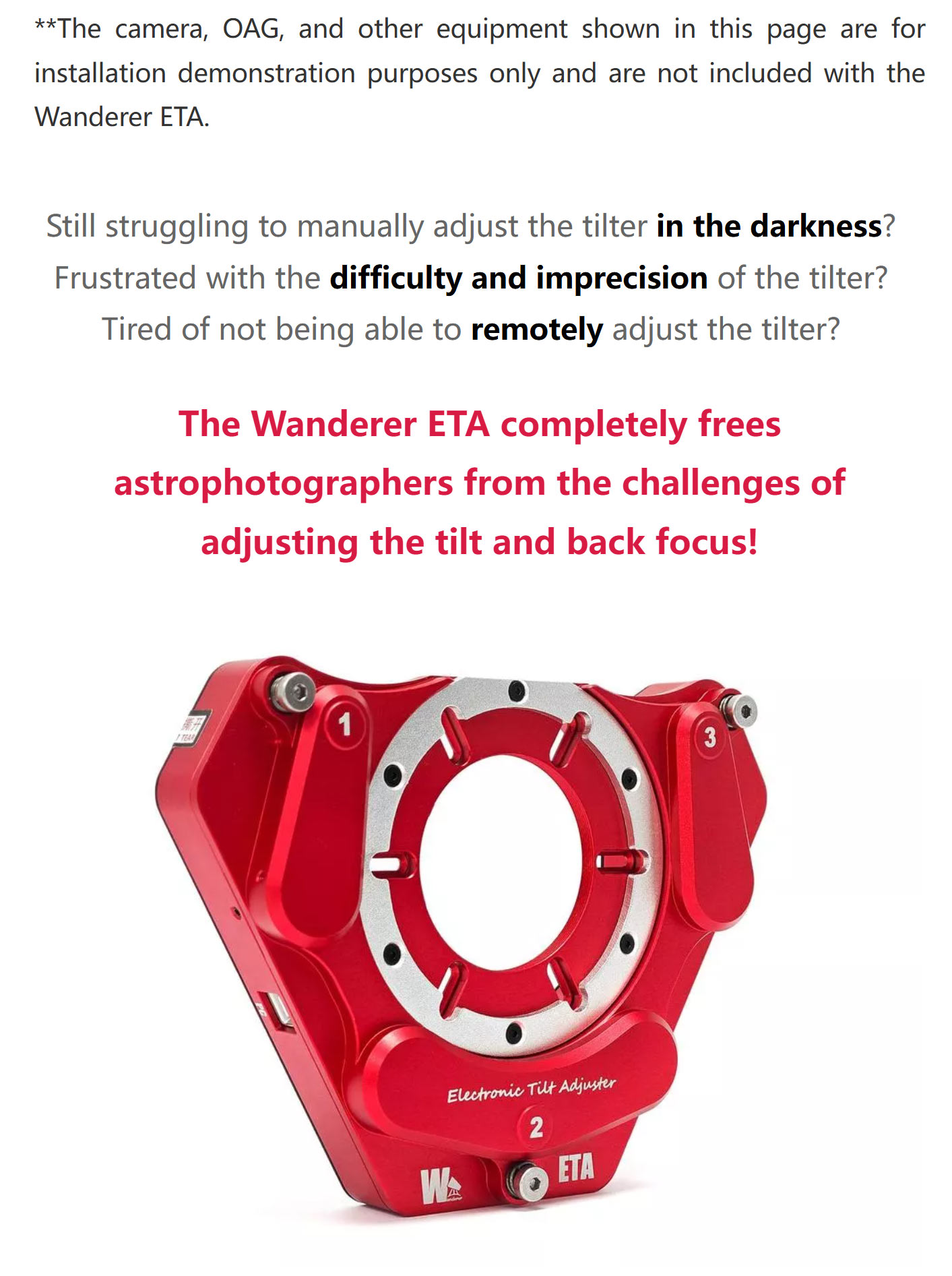
Traditional tilt adjustment relies on a manual tilt plate. You make a small mechanical change, capture another image, inspect the stars and repeat until the result improves. Each adjustment can affect the others, and the process may take multiple rounds of testing before you find a satisfactory setting.
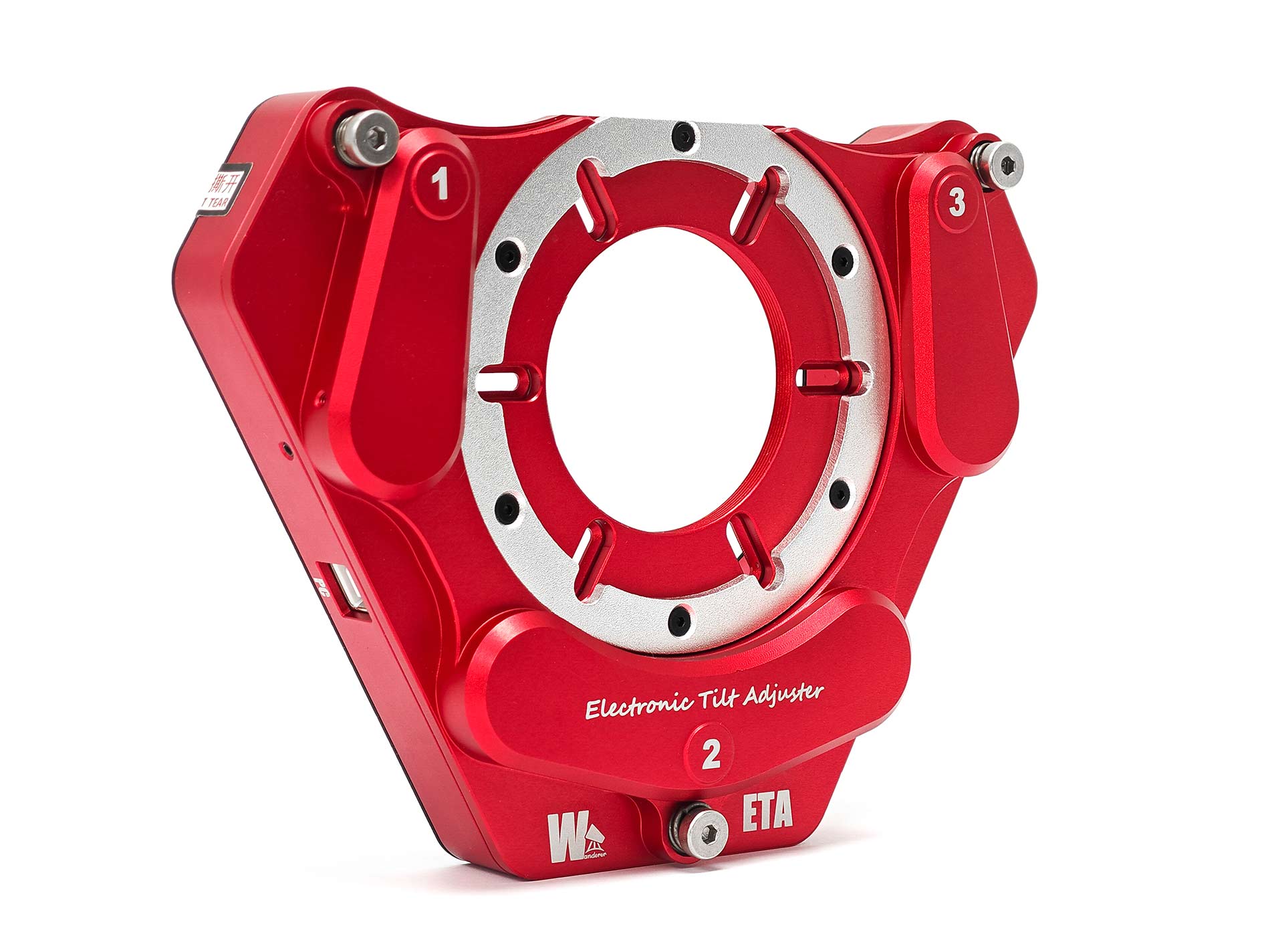
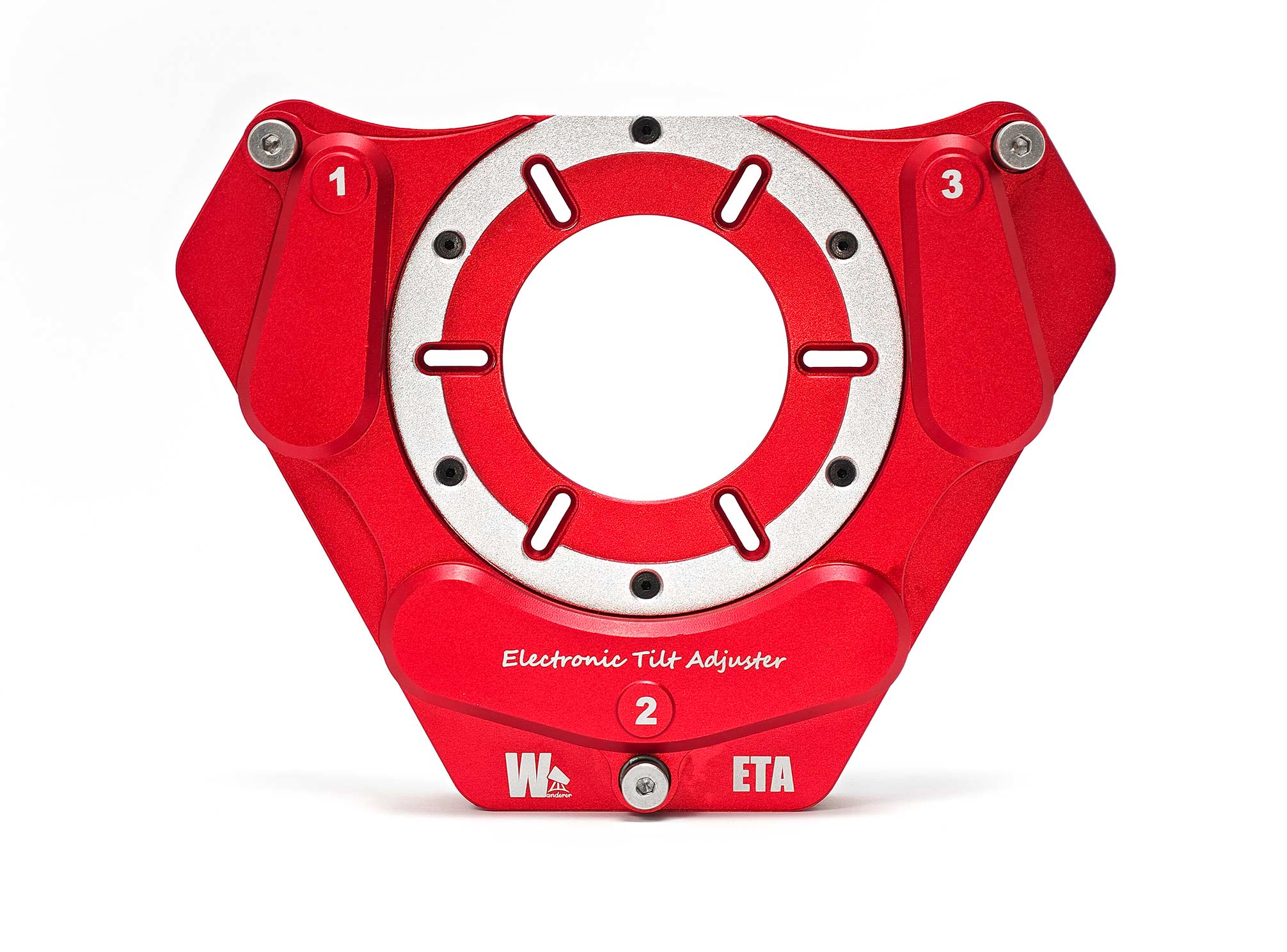
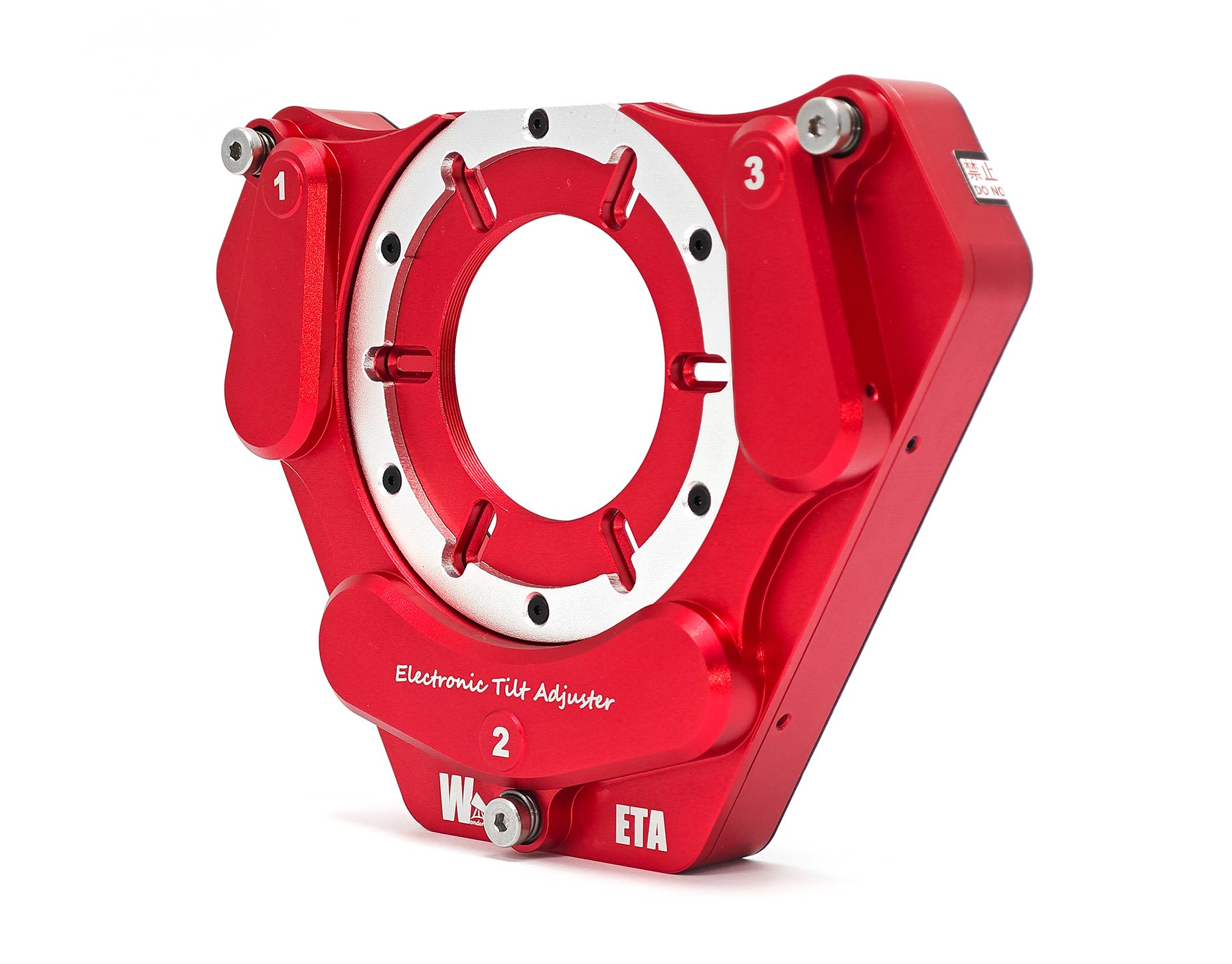
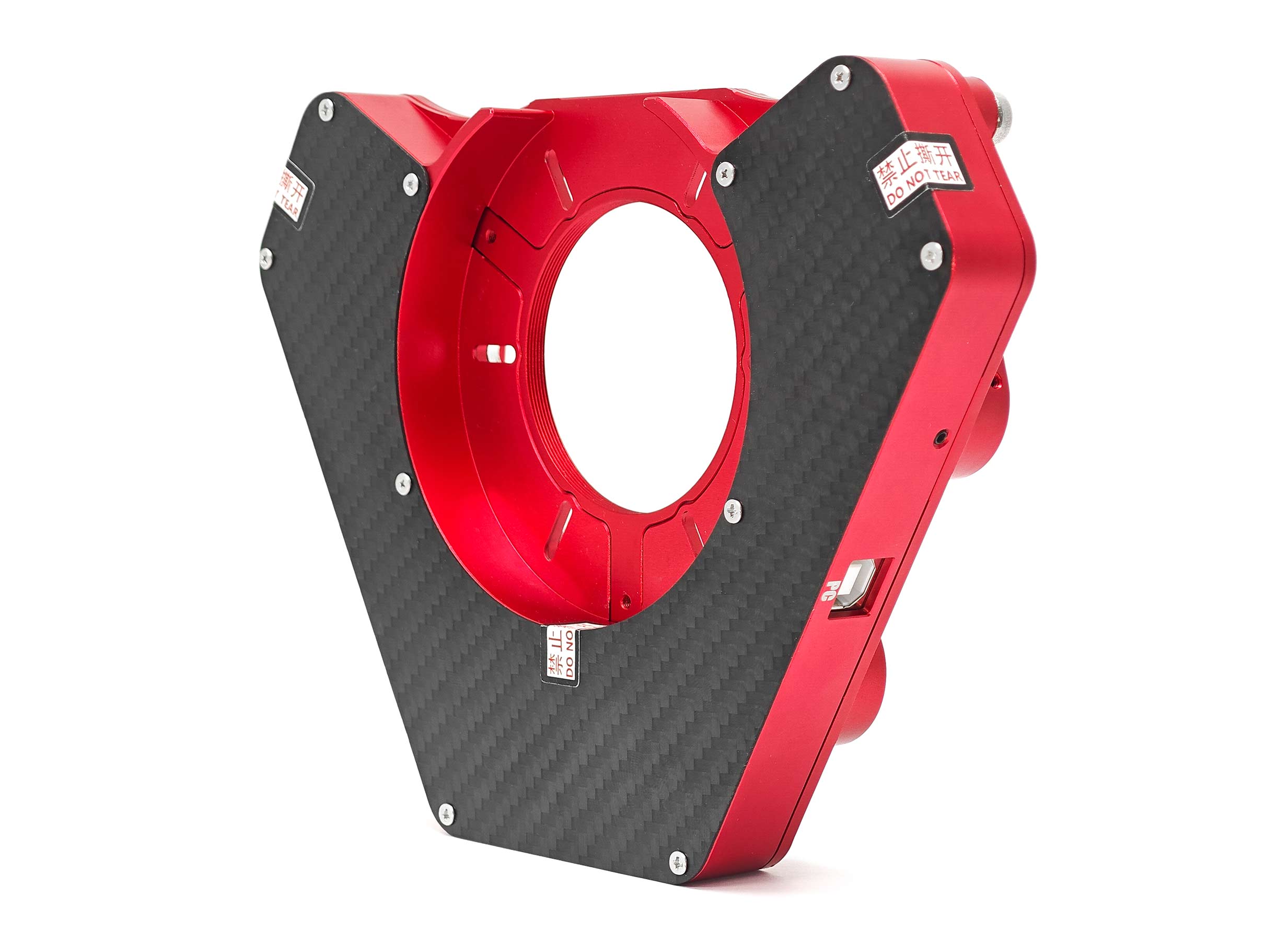
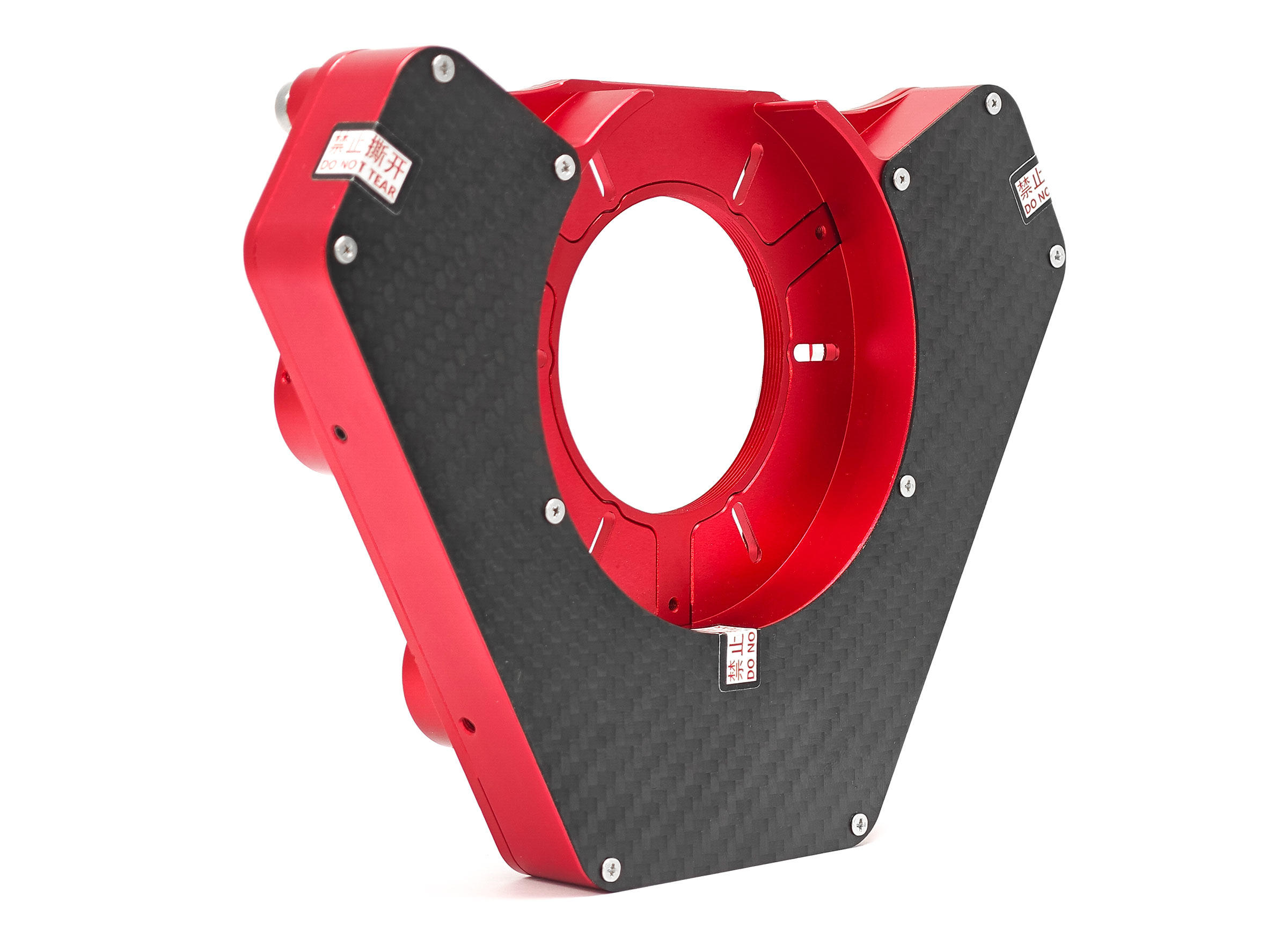
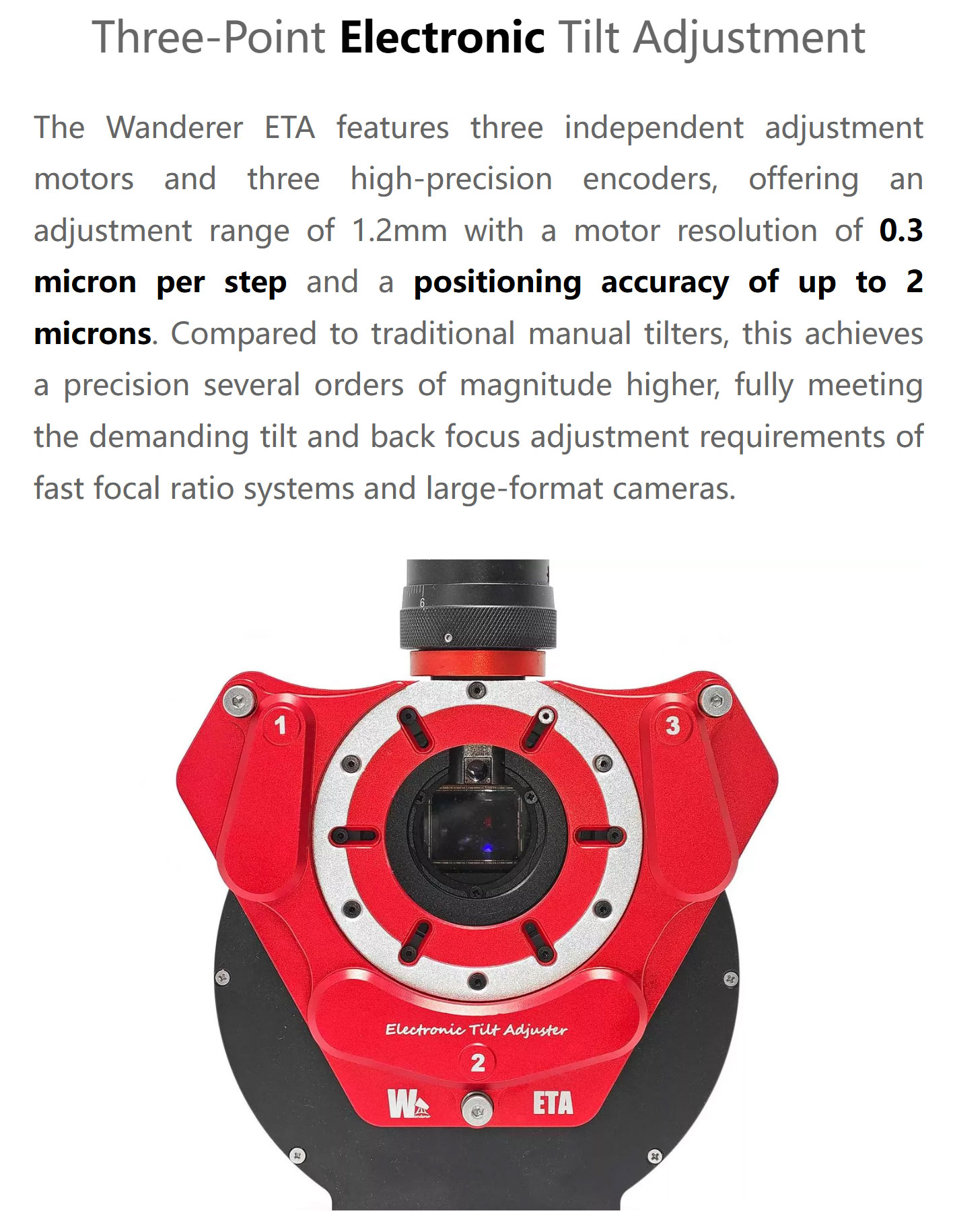
The ETA M54 takes a different approach. Its three independent adjustment motors allow the tilt of the imaging plane to be refined electronically, with exceptionally small, controlled movements. You can make corrections remotely rather than physically accessing adjustment screws on the camera assembly. The result is a more systematic and repeatable way to diagnose and correct tilt.
Precision measured in micrometres
At the heart of the ETA are three independent adjustment motors paired with high-precision encoders. The specified motor resolution is 0.3 µm per step, with positioning accuracy of up to 2 µm and an adjustment travel of 1.2 mm. These figures matter because sensor tilt is often a very small mechanical error with a visible effect across the image. Fine adjustment gives you greater control when working to optimise star shapes across the entire sensor, rather than relying on coarse manual movements and repeated guesswork.
The ETA is not a substitute for correct optical spacing, collimation or a properly aligned telescope. Instead, it gives you a dedicated tool for correcting tilt in the imaging train once the rest of the system is appropriately configured.
From manual tweaking to automated imaging
The real benefit extends beyond the adjustment mechanism itself. With WandererEmpire software and N.I.N.A. integration, the ETA can be incorporated into a computer-controlled imaging workflow. This makes remote fine-tuning possible without reaching the telescope, and supports automated tilt correction using suitable analysis and control software.
For an observatory or remote imaging setup, this can be especially valuable. Accessing the camera assembly to adjust a conventional tilt plate may be inconvenient or impossible during a session. Electronic adjustment makes the process accessible from the control computer, helping you refine the system without repeatedly disturbing the physical setup. Even for an imager who prefers to make corrections manually, precise motorised movement and repeatable positioning provide a more controlled alternative to adjusting tiny screws by hand.
Precision without sacrificing precious back focus
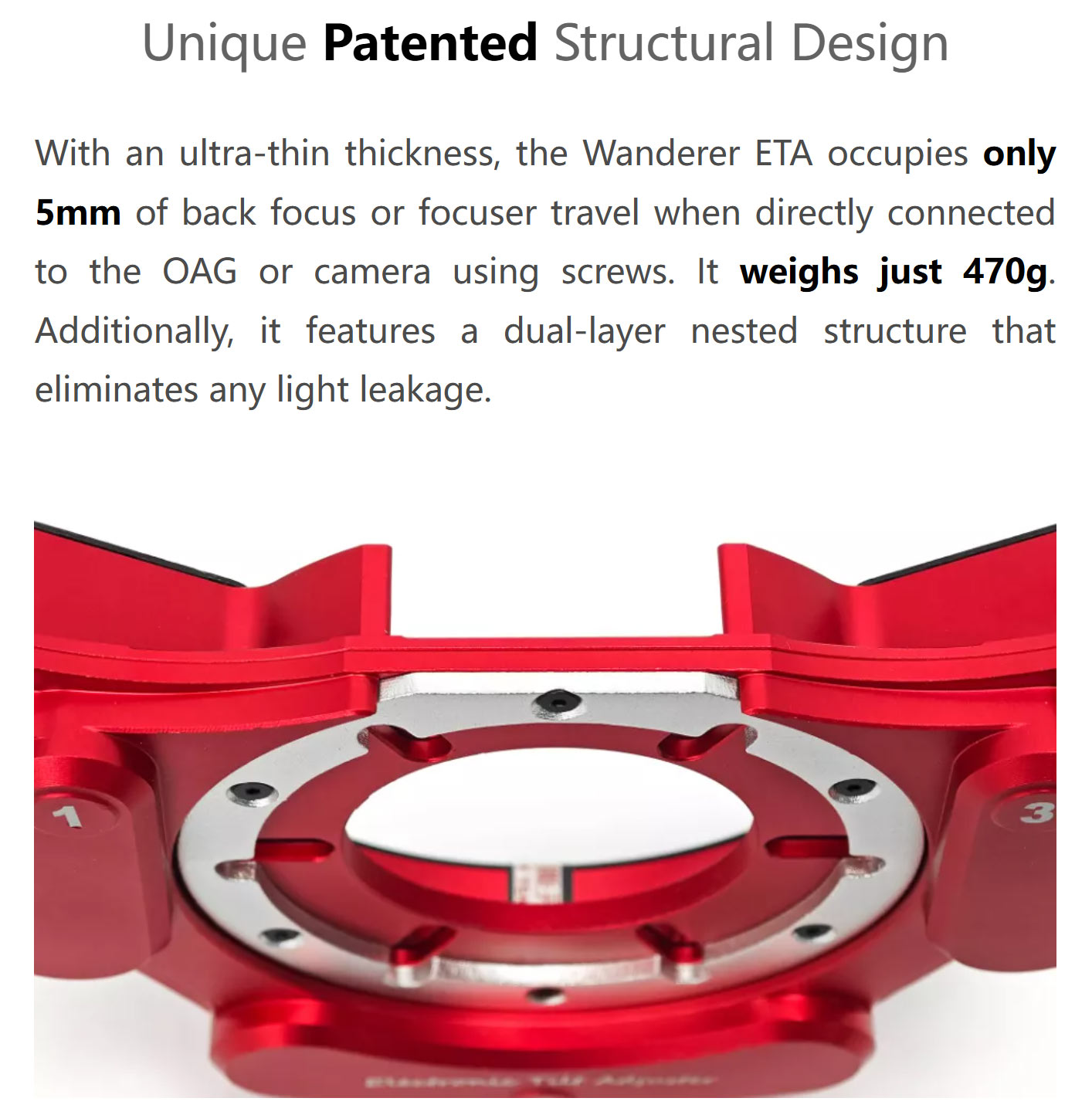
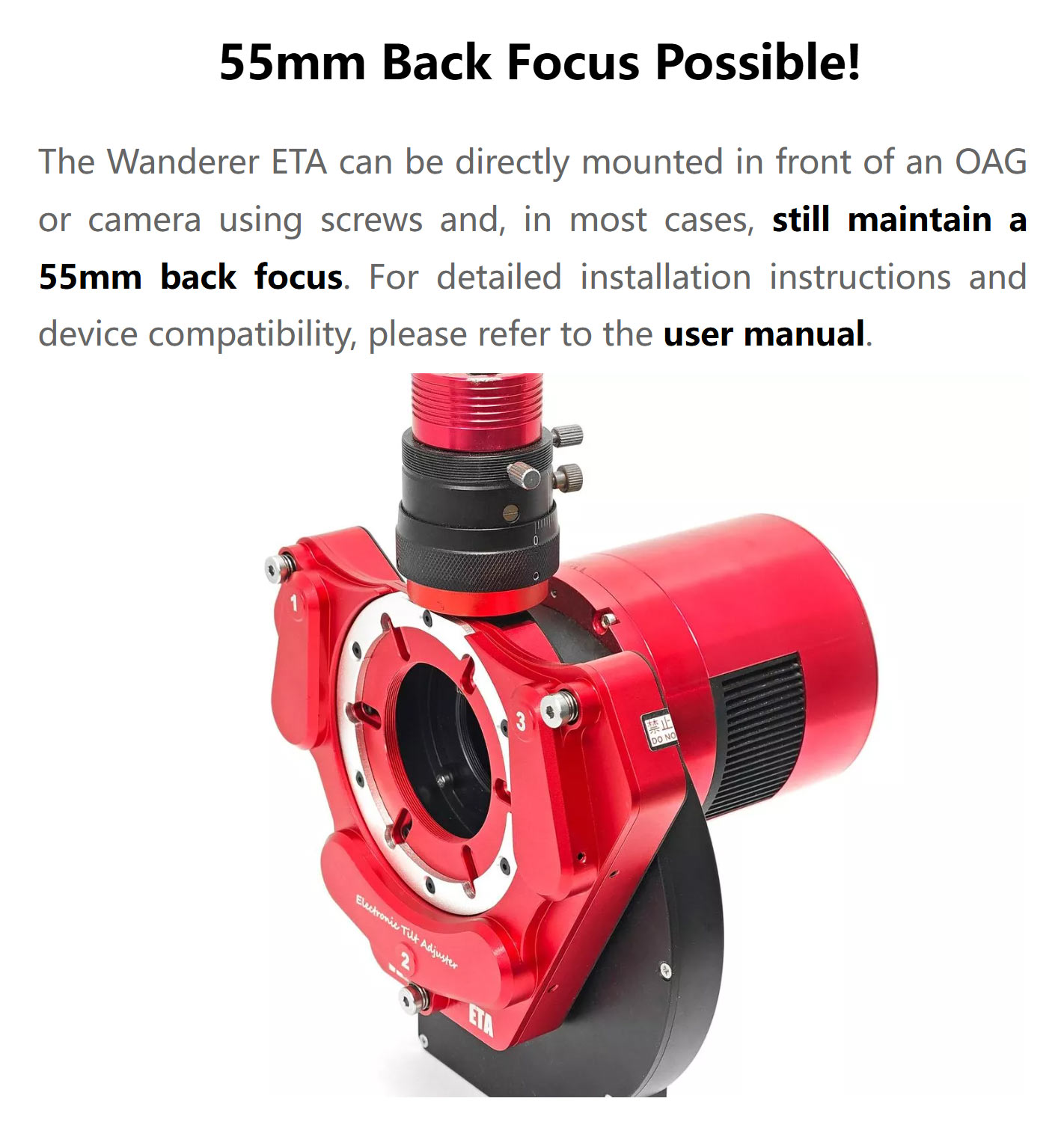
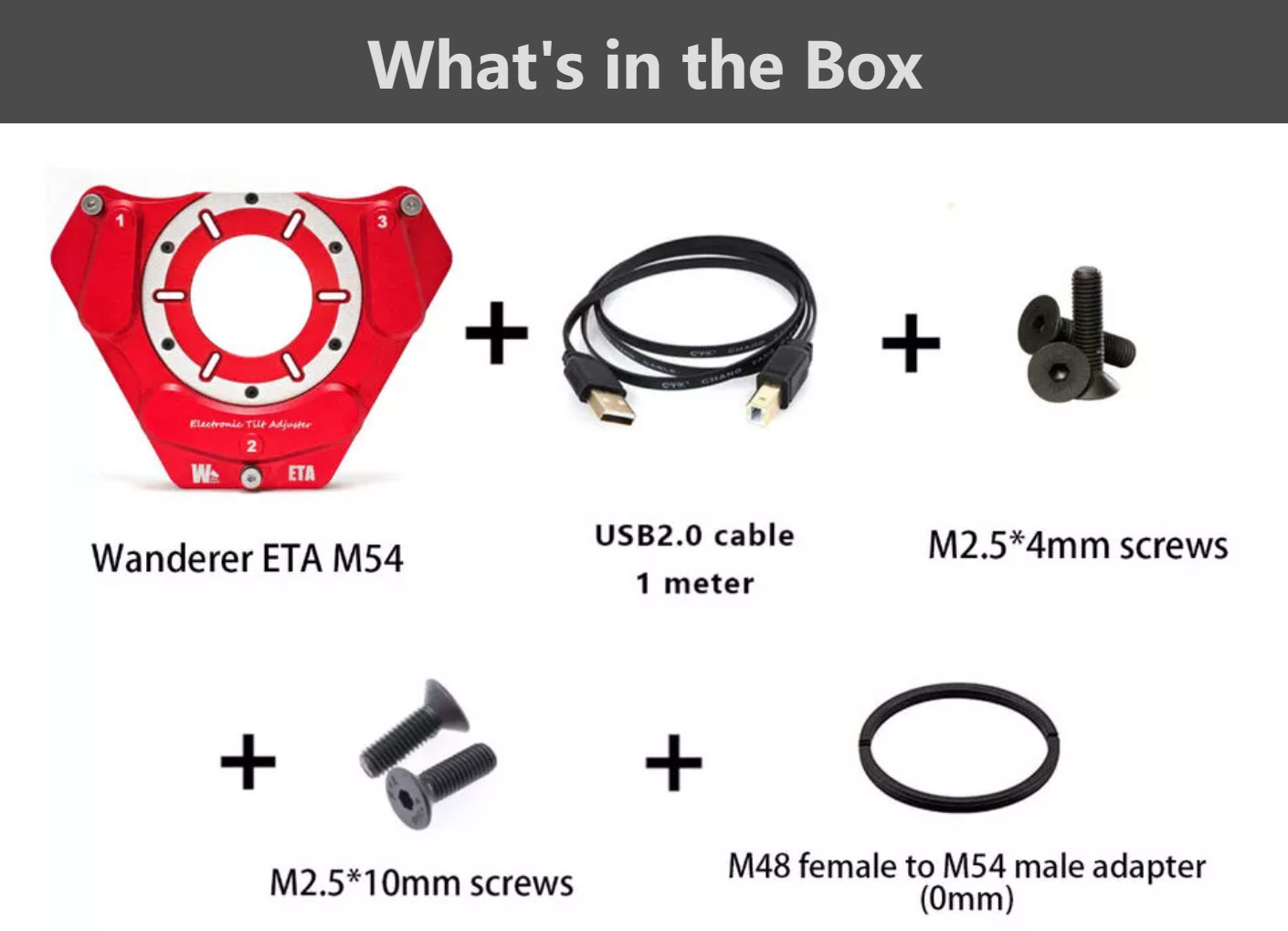
Modern imaging trains leave little room for additional hardware. Filter wheels, off-axis guiders, adapters and cameras must fit within the available back-focus distance, often with a strict optical spacing requirement. The ETA M54 is designed to minimise this compromise. When directly screw-mounted to compatible equipment on the camera side, it consumes only 5 mm of back focus or focuser travel. This low-profile design can make it possible to add electronic tilt correction while preserving a standard 55 mm imaging train in suitable configurations. The telescope side uses an M54 female thread. On the camera side, the default connection is screw-mounted; an optional adapter is required for a threaded M54 connection. Check the mechanical arrangement and required adapters before ordering, particularly if you are integrating the ETA with an existing filter wheel or off-axis guider.
Designed for real observatory conditions
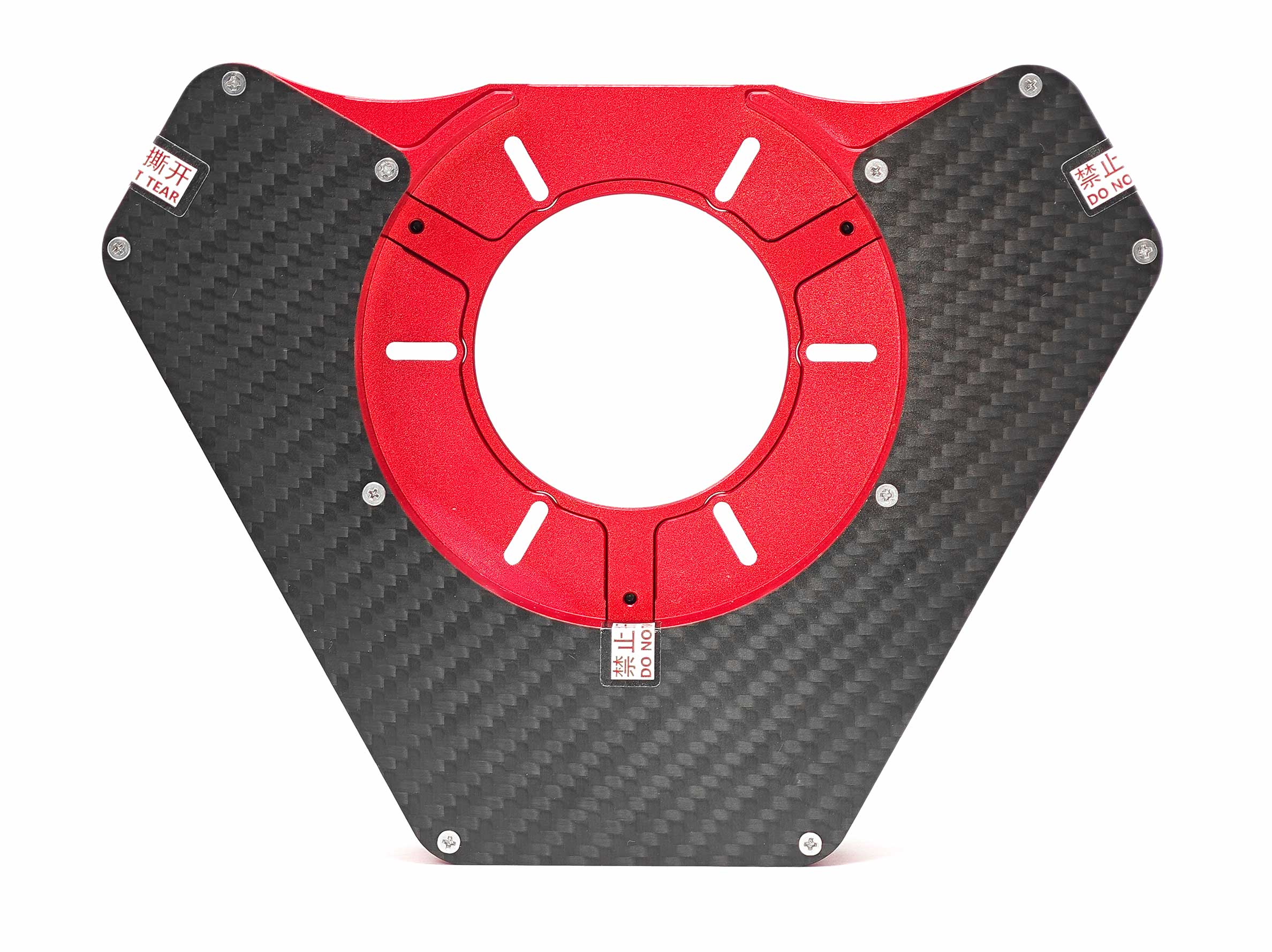
The ETA is built for a payload of up to 3 kg and is specified to operate from −25°C to +50°C. Its slim mechanical design and enclosed construction are intended to provide a rigid, practical addition to a precision imaging train, including setups used through cold nights and remotely operated sessions.
For astrophotographers using large-format cameras, fast optics or demanding imaging systems, the ETA offers something more valuable than another adjustment ring: a way to make tilt correction a measured, repeatable part of system optimisation.


 Cookie policy
Reviews
There are no reviews yet.