Automated filter changes for monochrome imaging
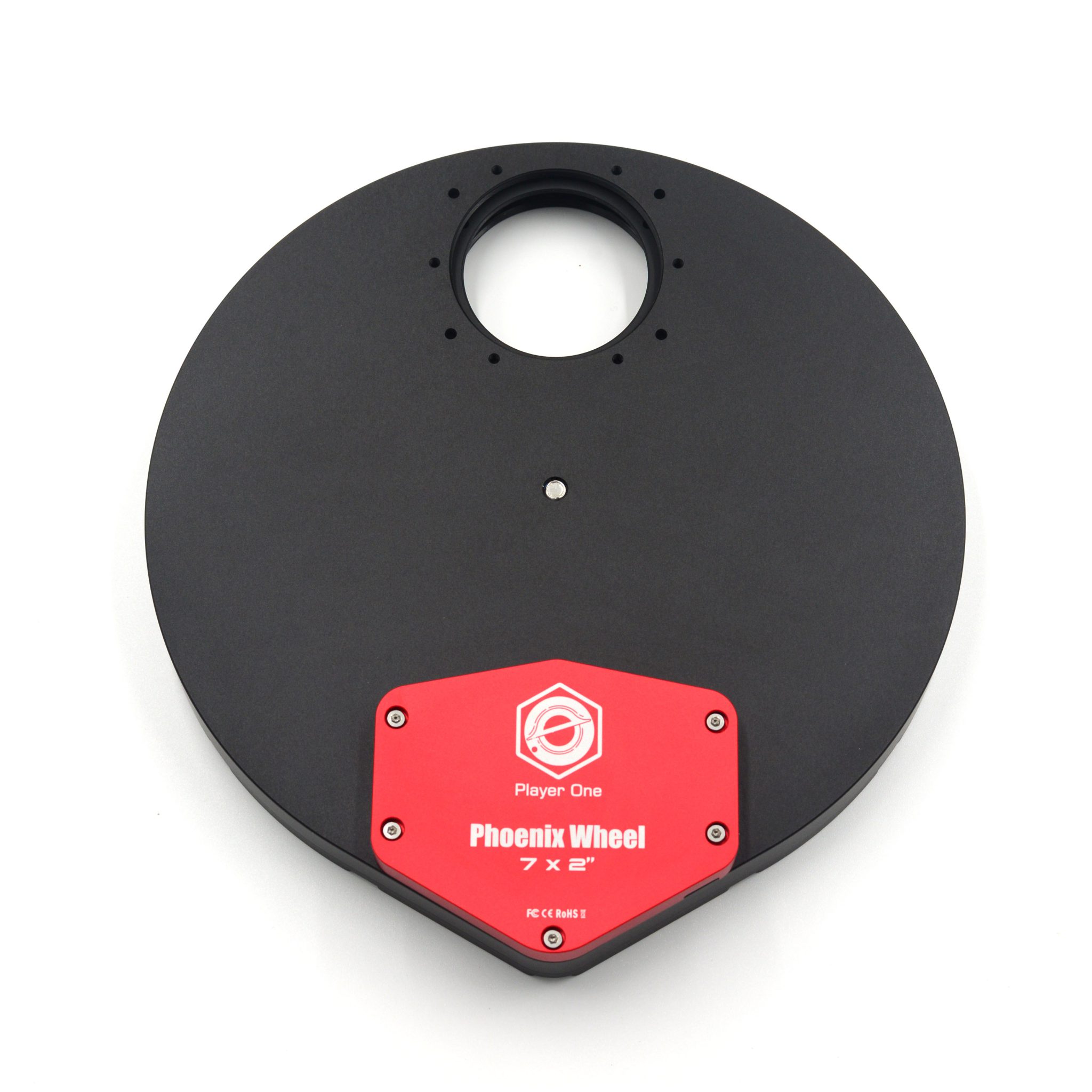
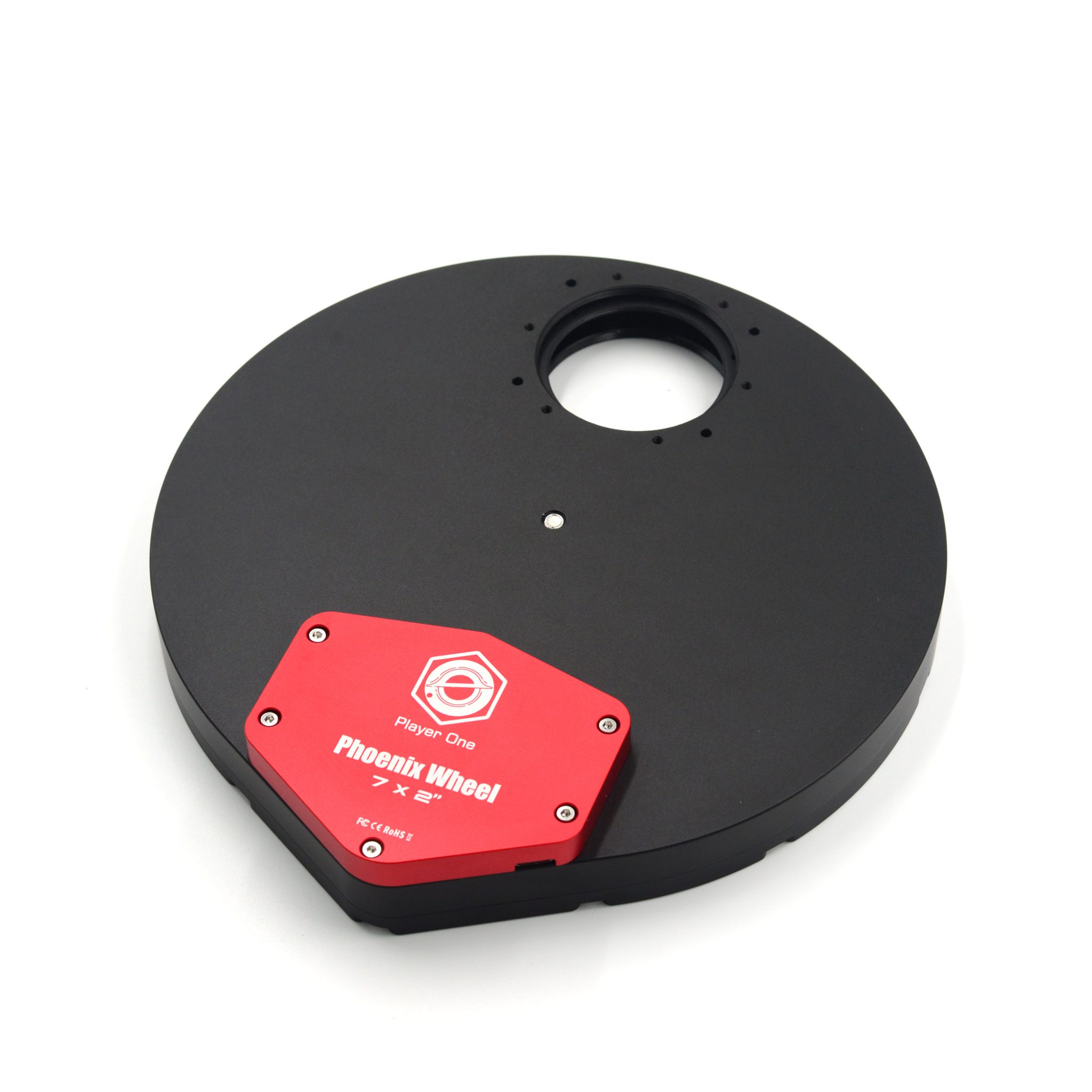
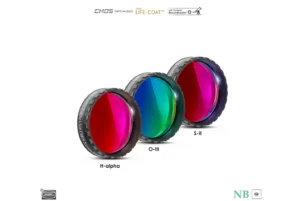
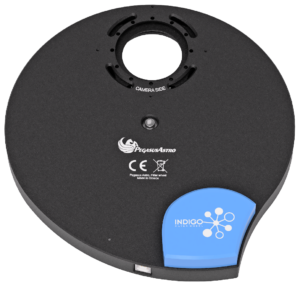
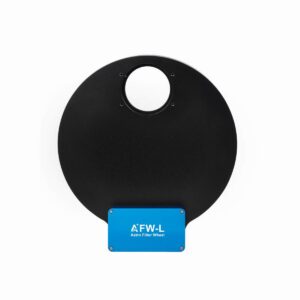
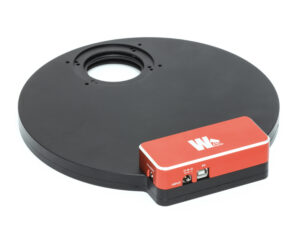
A motorised filter wheel makes multi-filter astrophotography more convenient by keeping the filters installed and switching between them under software control. With seven positions, the Phoenix can accommodate luminance, red, green and blue filters alongside narrowband filters such as Hα, OIII and SII.
This is useful when running automated imaging sequences throughout the night, especially when capturing several channels for a finished image. Keeping filters mounted in the wheel also reduces the need to handle filters or open the imaging train between exposures, helping limit opportunities for dust to enter the system.
The trade-off is size and complexity. A seven-position wheel adds bulk, weight and cost compared with a filter drawer. If you use only one or two filters, change them manually, or prioritise a lightweight travel setup, a drawer may be the more practical solution.
Filter compatibility and capacity
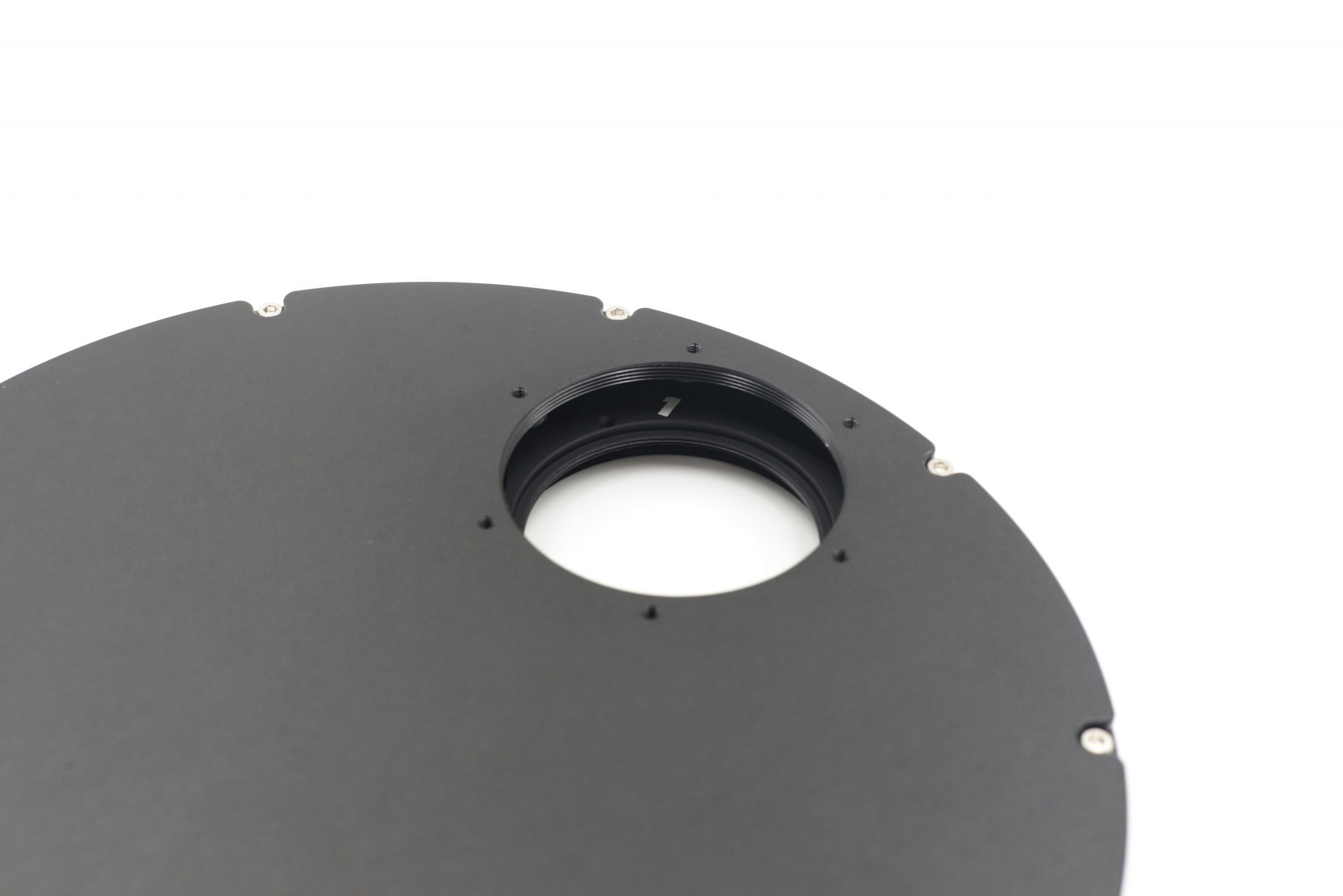
The Phoenix 7 × 2″ supports seven 2-inch mounted filters or seven 50 mm unmounted filters. These are alternative formats, so check that your existing filters match the wheel’s retaining system before purchasing. For mounted 2-inch filters, Player One specifies a filter-body thickness below 8.5 mm, with thread thickness no greater than 2.5 mm. Checking these limits is important because filter-cell dimensions can differ between manufacturers, even when filters are sold as the same nominal size.
Physical thickness and optical path length
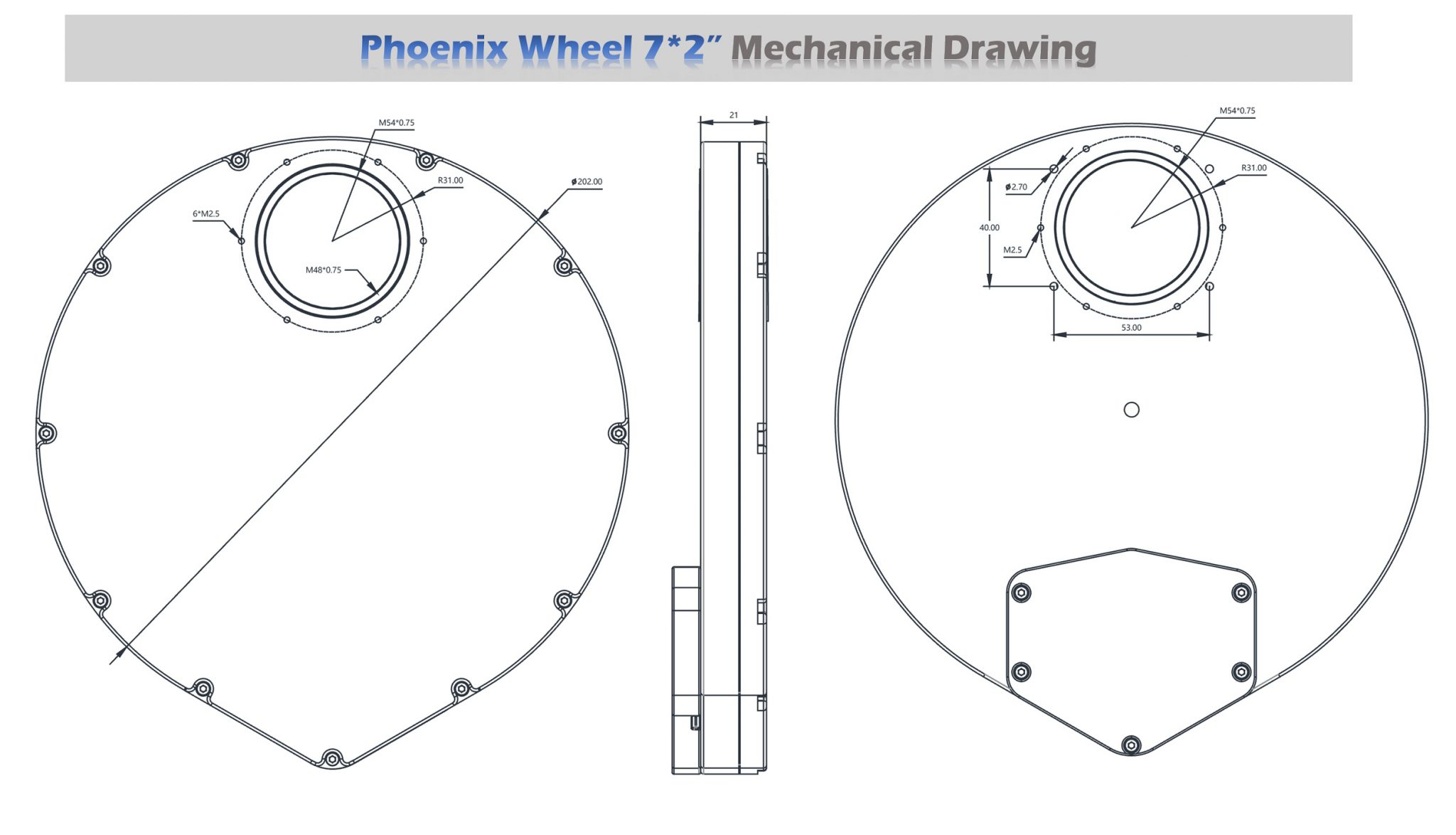
When planning an imaging train, it is important to distinguish the wheel’s external physical thickness from its optical path length. Player One specifies a physical thickness of 21 mm and an optical path length of approximately 20 mm when a filter is installed. The small difference reflects the fact that a glass filter changes the effective optical path compared with the same distance through air. This is useful when calculating back focus, although the exact spacing of the complete imaging train still depends on the other adapters and components being used.
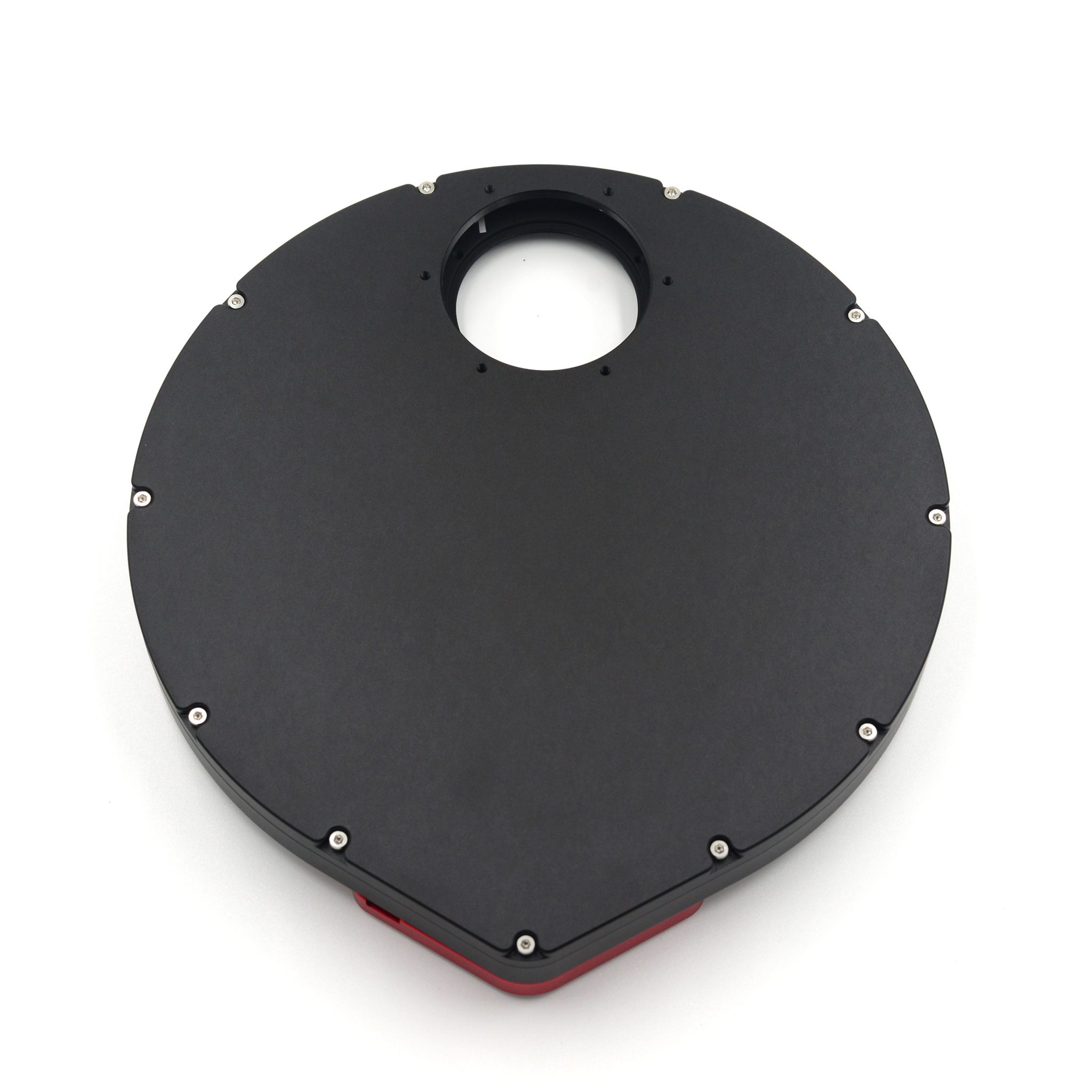
The wheel uses M54 × 0.75 threaded interfaces on both sides. Its slim design can help when space is limited between a telescope corrector or reducer and the camera, but the total mechanical spacing must still be checked against the optical system’s required back focus.
Positioning and motor operation
The wheel uses Hall-effect sensing to identify filter positions. A magnet on the filter plate is detected by the sensor, allowing the wheel to locate positions accurately. A hybrid stepping motor drives the filter plate and is designed to provide smooth rotation with minimal vibration during changes.
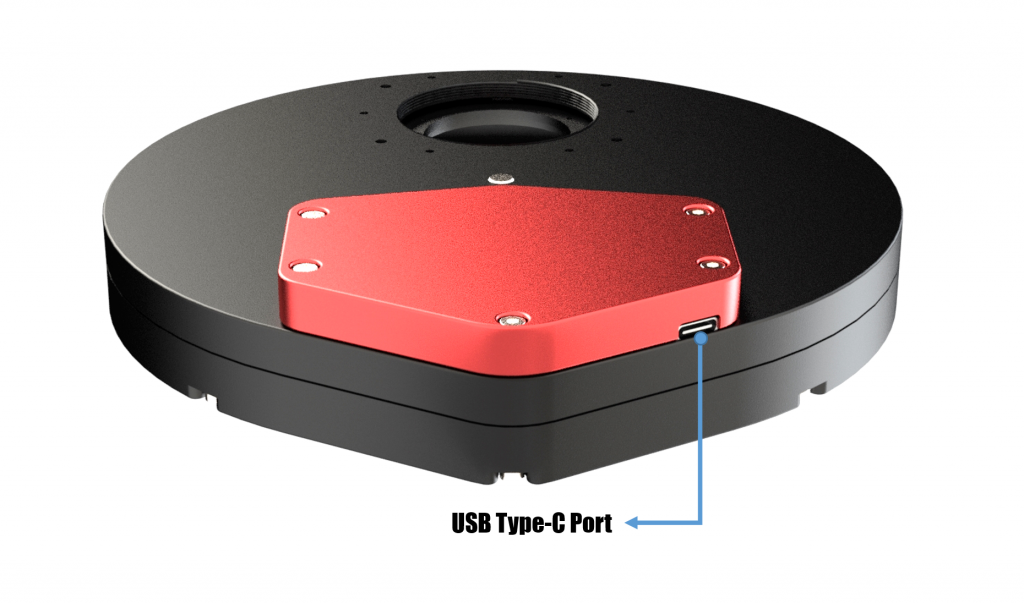
The USB Type-C data port connects the wheel to a controller / mini-computer for supported software control. Player One provides drivers and ASCOM support for compatible imaging applications. Compatibility depends on the operating system, driver and capture software used.
Weight and setup considerations
The Phoenix weighs approximately 665 g excluding filters. Its external diameter is around 202 mm, so it is worth checking clearance around the focuser, mount and other accessories, particularly when the telescope points towards the zenith or when the camera assembly rotates.
The additional mass behind the focuser can increase leverage on the imaging train. Depending on focuser rigidity, mounting orientation and the weight of the camera and accessories, this can increase the risk of sag or flexure. For permanent observatory rigs and automated monochrome imaging, the convenience of seven installed filters may outweigh these drawbacks. For highly portable rigs, a lighter filter drawer may be preferable.


 Cookie policy
Reviews
There are no reviews yet.