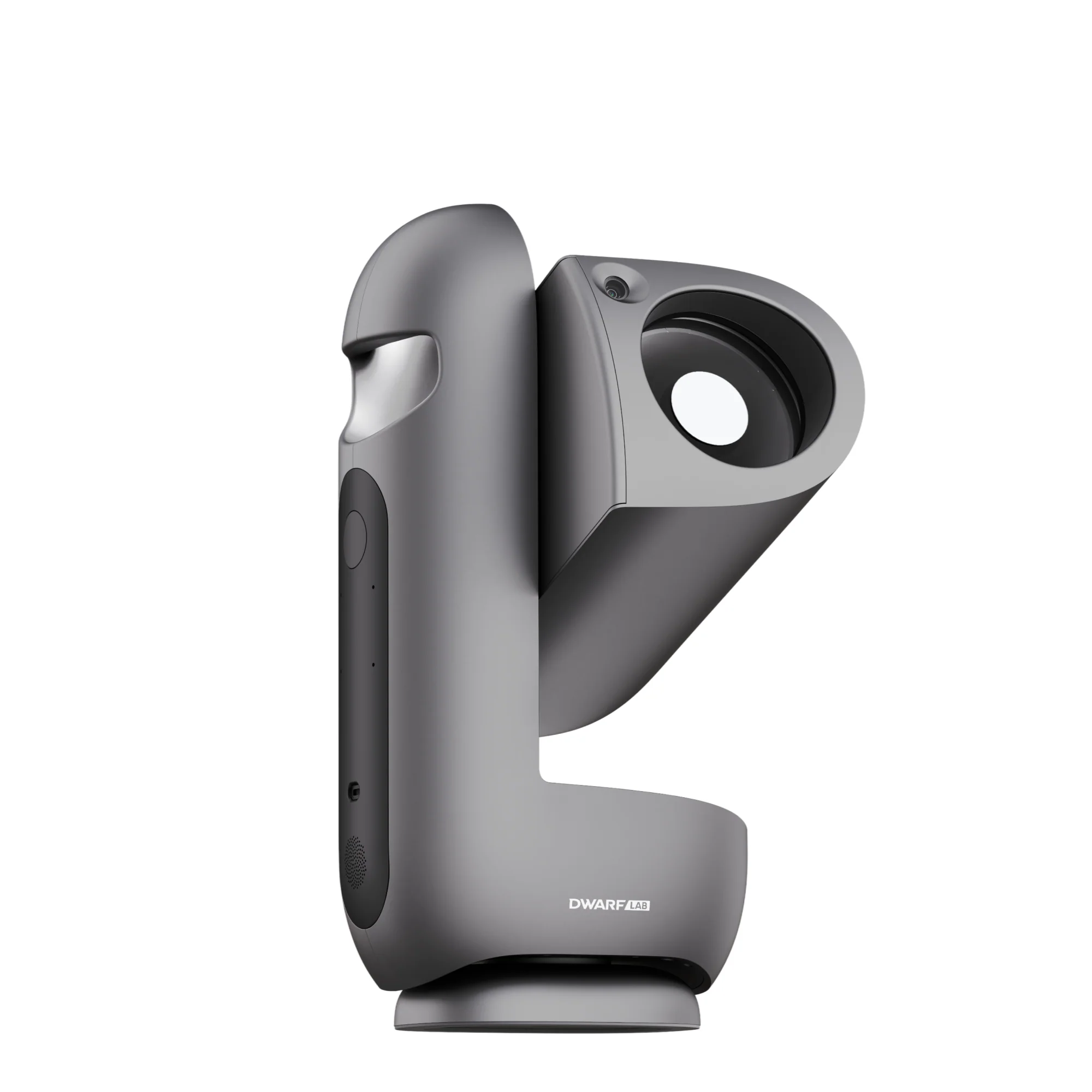
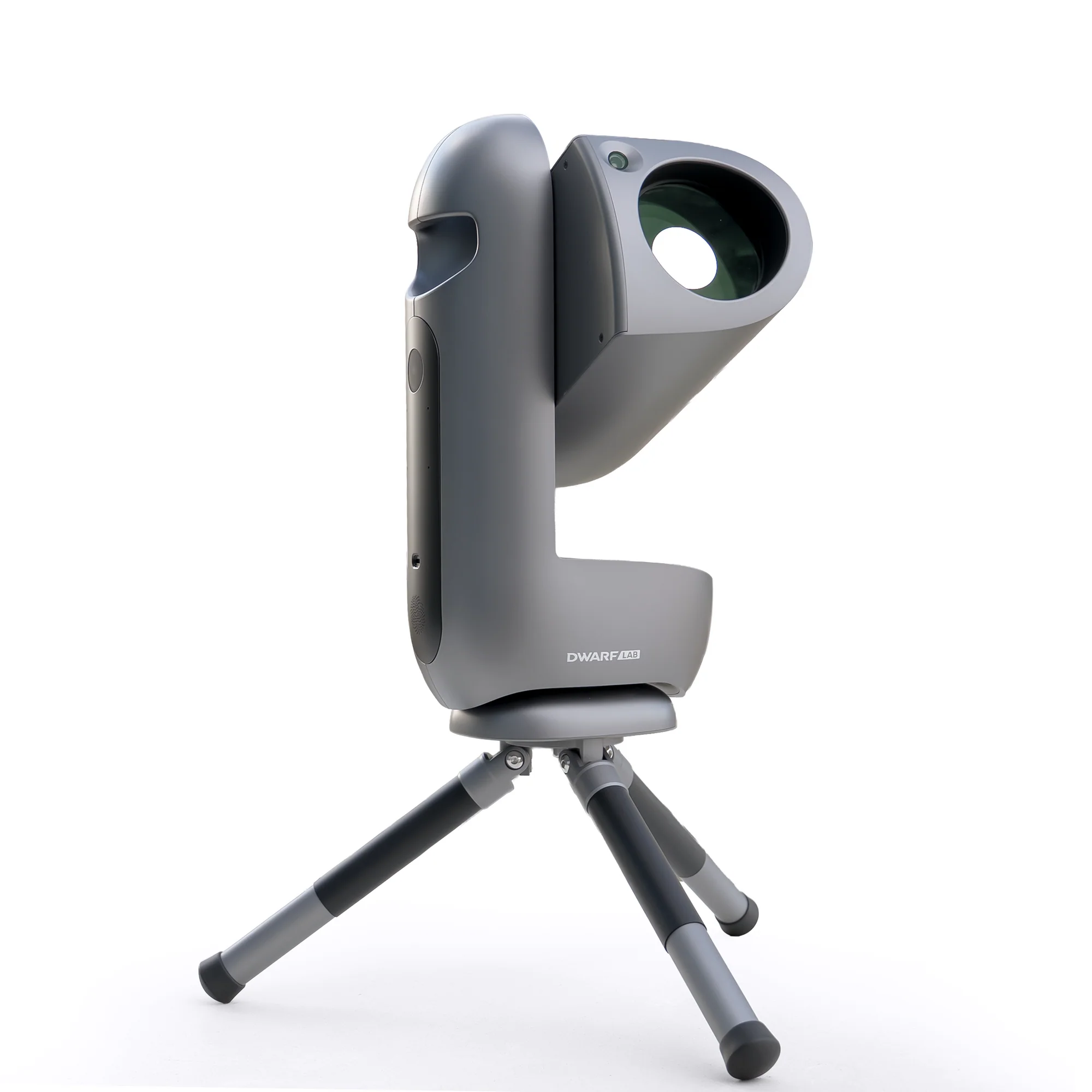
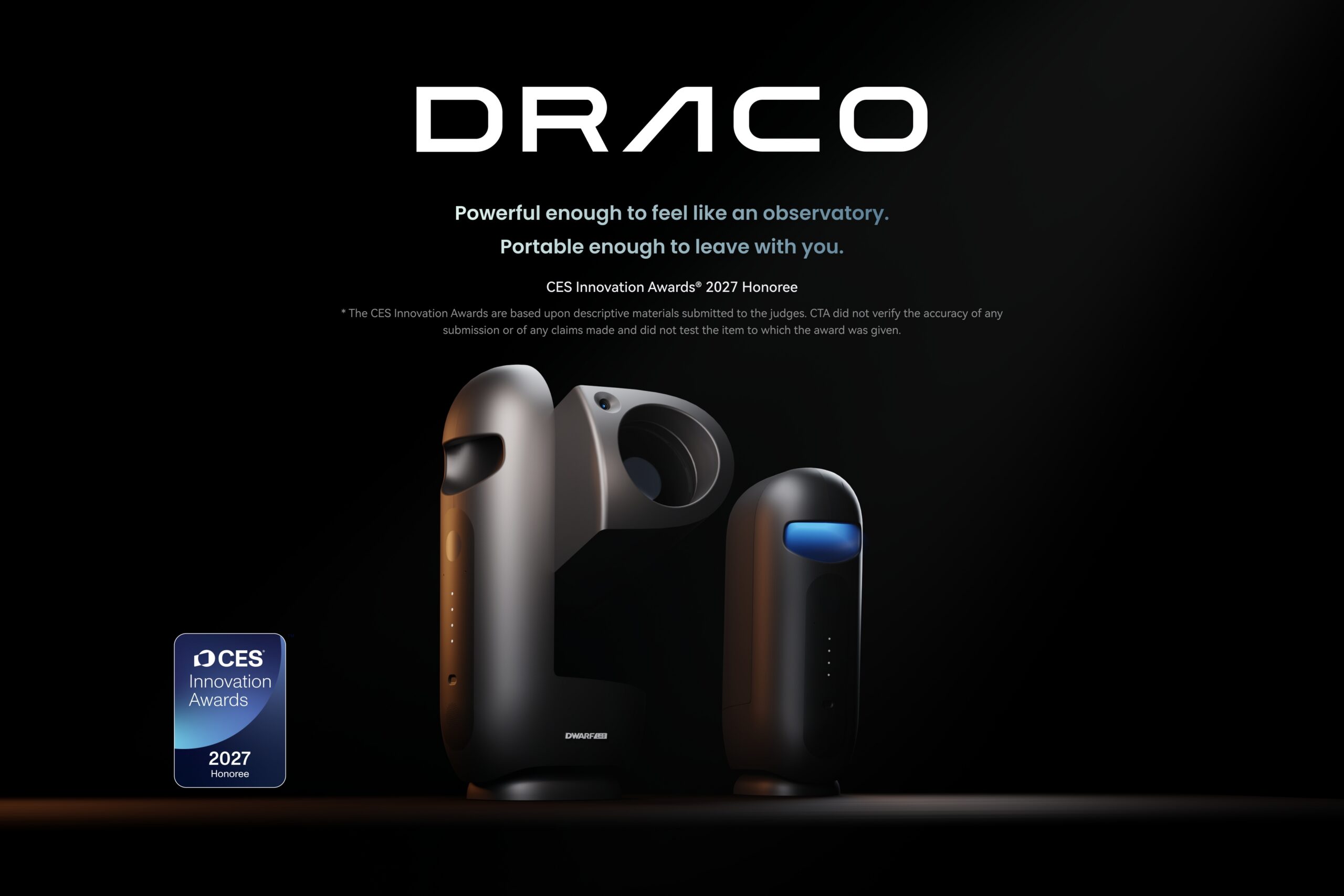
The DWARFLAB Draco SHO Edition represents a significant evolution in smart telescope technology. Designed for both newcomers to astrophotography and more experienced imagers, Draco combines a substantially larger optical system with advanced imaging capabilities, sophisticated tracking and extensive automation. The result is a complete imaging system that brings together many of the components traditionally required for astrophotography in one portable instrument. With a 90mm aperture, dual-camera imaging, integrated equatorial functionality and exposures of up to 300 seconds, Draco is designed to capture considerably more than the typical entry-level smart telescope. The SHO Edition adds a particularly interesting capability: genuine three-channel narrowband imaging, with automatic capture and processing of sulphur, hydrogen and oxygen data.
90mm aperture – more light and greater detail
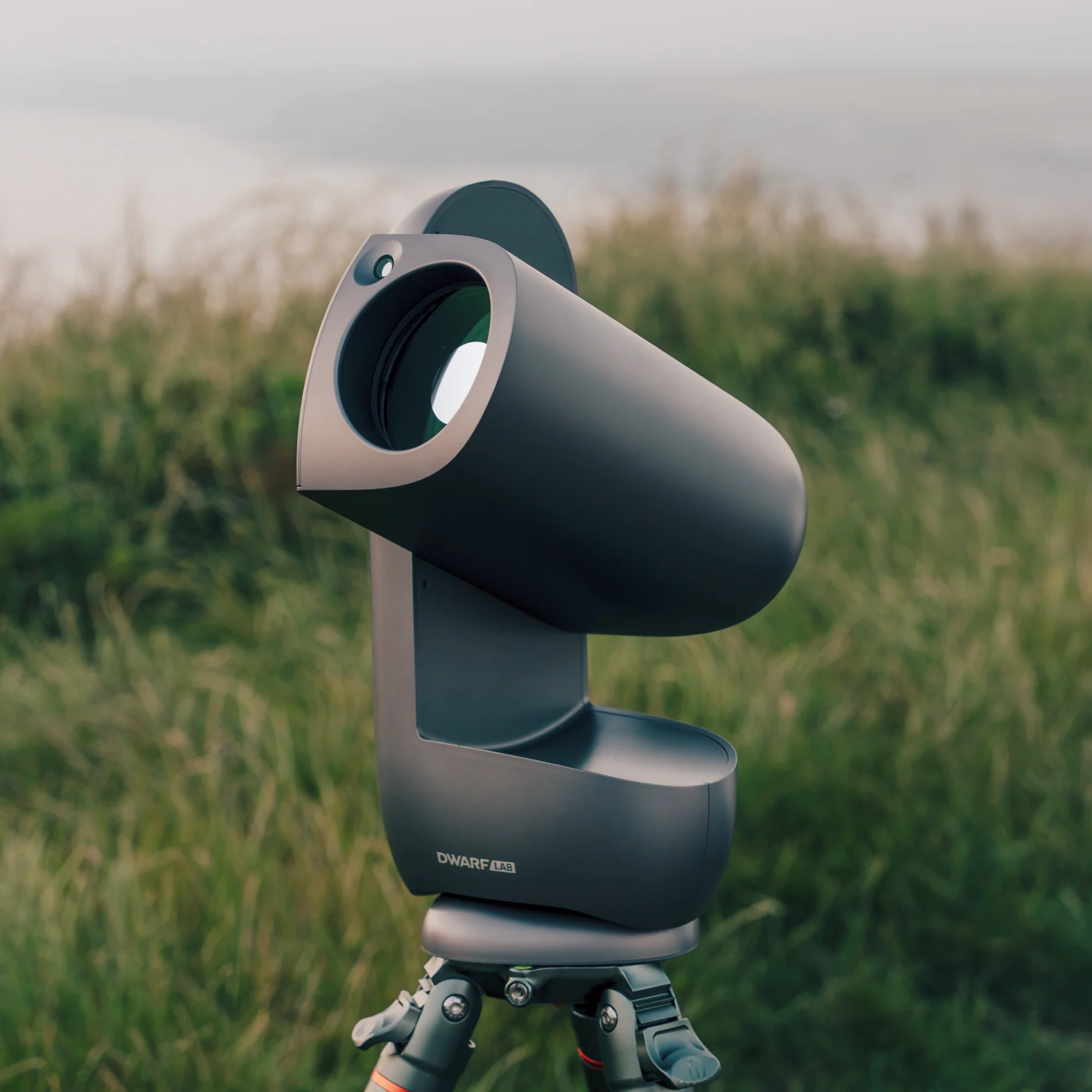
At the heart of Draco is a 90mm telephoto optical system with a focal length of 340mm and a focal ratio of f/3.8. The larger aperture collects more light, helping to reveal fainter structures and finer detail in deep-sky objects such as galaxies, nebulae and star clusters. The telephoto camera uses a 50.33-megapixel sensor with a native pixel size of approximately 1.2μm. For deep-sky imaging, Draco uses 2 × 2 pixel binning, combining four neighbouring pixels into one effective 2.4μm pixel. This increases the signal collected by each effective pixel and improves the signal-to-noise ratio when imaging faint objects. The resulting deep-sky images have an output resolution of approximately 12 megapixels. For solar-system imaging, including the Sun, Moon and planets, Draco uses the sensor’s native pixel sampling and intelligently crops the image around the selected target.
Dual-camera system – two perspectives of the night sky
Draco incorporates two imaging cameras, allowing it to capture detailed astronomical subjects and much wider views of the surrounding sky. The main 90mm telephoto camera is designed for deep-sky objects, while the second camera uses a wide-angle lens with a 5.56mm focal length and an 85.74° diagonal field of view. This makes it particularly useful for wide-field night-sky photography, including the Milky Way, star trails and night landscapes. The two cameras provide considerably more flexibility than a conventional single-camera smart telescope, allowing users to explore different types of astronomical photography with one integrated system.
Advanced SHO imaging – genuine Hubble Palette data
One of the defining features of the SHO Edition is its advanced integrated filter system. Both Draco editions include an Astronomy filter for general astronomical imaging, a dark-frame system and an Hα + O III dual-narrowband filter. The SHO Edition adds a second dual-narrowband filter, S II + O III, specifically for capturing the additional data required for SHO astrophotography. The two narrowband filters isolate three important emission wavelengths:
-
- S II (Sulphur II): 671.6nm.
-
- Hα (Hydrogen-alpha): 656.3nm.
-
- O III (Oxygen III): 500.7nm.
Each wavelength channel has a specified bandwidth of 13 ± 3nm. By isolating these particular wavelengths, the filters allow Draco to record the light emitted by different elements within emission nebulae while reducing unwanted background light. The two filters operate automatically in sequence to collect the S II, Hα and O III data. Draco then handles the channel separation, colour mapping and composition, producing traditional blue-and-gold Hubble Palette-style images with a single operation. This is an important distinction. Applying a Hubble Palette effect to a conventional colour image is not the same as capturing genuine SHO data. The SHO Edition records the three individual emission channels through its dedicated filters, providing a much more meaningful foundation for this type of astrophotography. The Hα + O III filter is also particularly useful when imaging emission nebulae under light-polluted skies, helping to suppress unwanted background light. The Astronomy filter, meanwhile, preserves a broader range of useful starlight for targets such as galaxies and star clusters.
Long-exposure imaging – up to 300 seconds per frame
Longer exposures allow more light to be collected in each individual image, making it easier to record faint astronomical detail. However, keeping stars sharp during long exposures requires accurate tracking and correction for the apparent movement of the sky. Draco incorporates a built-in guiding system to monitor and correct tracking errors. It also uses physical rotation of the CMOS imaging sensor to compensate for field rotation, helping to maintain consistent framing during extended imaging sessions. Individual exposures can be set from 1/10,000 second up to 300 seconds. This represents a significant increase in flexibility compared with smart telescopes restricted to much shorter individual exposures. Actual results will depend on setup accuracy, environmental conditions, target position, wind and ground stability. The maximum exposure time should therefore be understood as a supported operating limit rather than a guarantee of perfectly round stars in all conditions.
Integrated Equatorial Mode – no separate equatorial mount required
Draco incorporates an equatorial operating mode within its own mechanical structure. Its metal base and frame form a rigid support system, which can be adjusted to the correct angle with guidance from the DWARFLAB app. This configuration provides greater stability for long exposures and multi-frame image stacking, without requiring the user to purchase and configure a separate equatorial mount. Combined with built-in guiding and physical sensor rotation, it provides a sophisticated tracking solution in a self-contained system.
Automated astrophotography – from target selection to image stacking
Despite its advanced imaging capabilities, Draco remains a smart telescope designed to simplify the process of astrophotography. Select an astronomical target in the DWARFLAB app and Draco can automatically take care of the main imaging steps, including:
-
- Target acquisition and positioning.
-
- Image capture and live stacking.
Live stacking combines multiple individual exposures into a progressively more detailed image. Draco also automatically captures dark frames and applies calibration data to help reduce thermal noise, read noise, vignetting and dust shadows. There are two main operating modes. Auto Mode selects suitable settings for the chosen target, making it particularly convenient for newcomers. Pro Mode gives more experienced users manual control over parameters such as exposure time, gain and filters.
Astro Mosaic – capture larger areas of the sky
Not every astronomical object fits comfortably within a single image. Draco’s Astro Mosaic function addresses this by automatically capturing and combining multiple adjacent sections of the sky. The imaging area can be expanded by up to 1.8 times in both width and height, resulting in an overall field of view approximately three times larger than a standard single frame. This is particularly useful for extended nebulae and larger deep-sky regions.
Stellar Studio – image processing within the DWARFLAB app
Capturing the image is only part of the process. Draco also provides access to Stellar Studio, DWARFLAB’s integrated image-processing environment. The available tools include automatic image enhancement, noise reduction, star correction, star reduction, star removal, star extraction and Hubble Palette effects. This allows users to make adjustments and improve their images without immediately having to learn more complex desktop processing software. For those who prefer to work with dedicated astrophotography software, Draco also supports the export of images in FITS and TIFF formats, alongside JPG and PNG.
Remote operation and scheduled imaging
Draco also offers remote operation through DWARFLAB’s PhotonLink service. This allows users to control the telescope through the app from another location, making it possible to operate Draco at a more suitable observing site without being physically present beside the instrument. Scheduled Shooting provides another useful capability. Users can programme the target, imaging time and parameters in advance, allowing Draco to wake, locate the selected object and begin capturing images automatically. For more permanent installations, USB connectivity also supports wired Ethernet through a compatible adapter.
Solar, lunar and wide-field photography
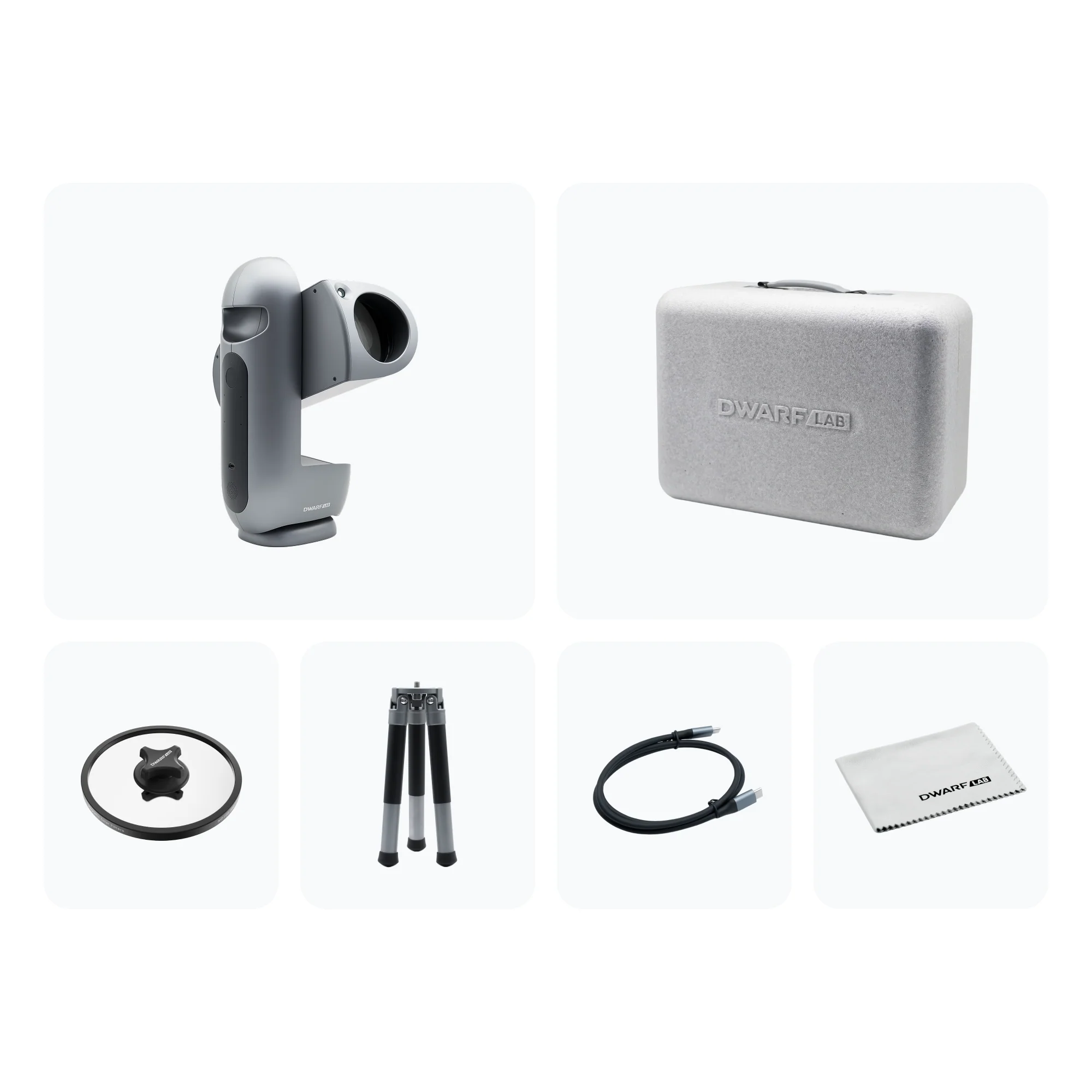
Although Draco is primarily designed for deep-sky astrophotography, its imaging modes extend beyond galaxies and nebulae. The dedicated Solar System Mode can automatically centre, focus and track the Sun or Moon. It can also capture subjects such as lunar craters, sunspots and planetary details. The SHO Edition includes an external magnetic neutral-density (ND) filter for solar imaging. This filter must be securely installed before pointing Draco at the Sun. Never attempt solar imaging without the supplied solar filter correctly fitted. The wide-angle camera also provides additional opportunities for Milky Way photography, star trails and night landscapes.
Portable all-in-one design
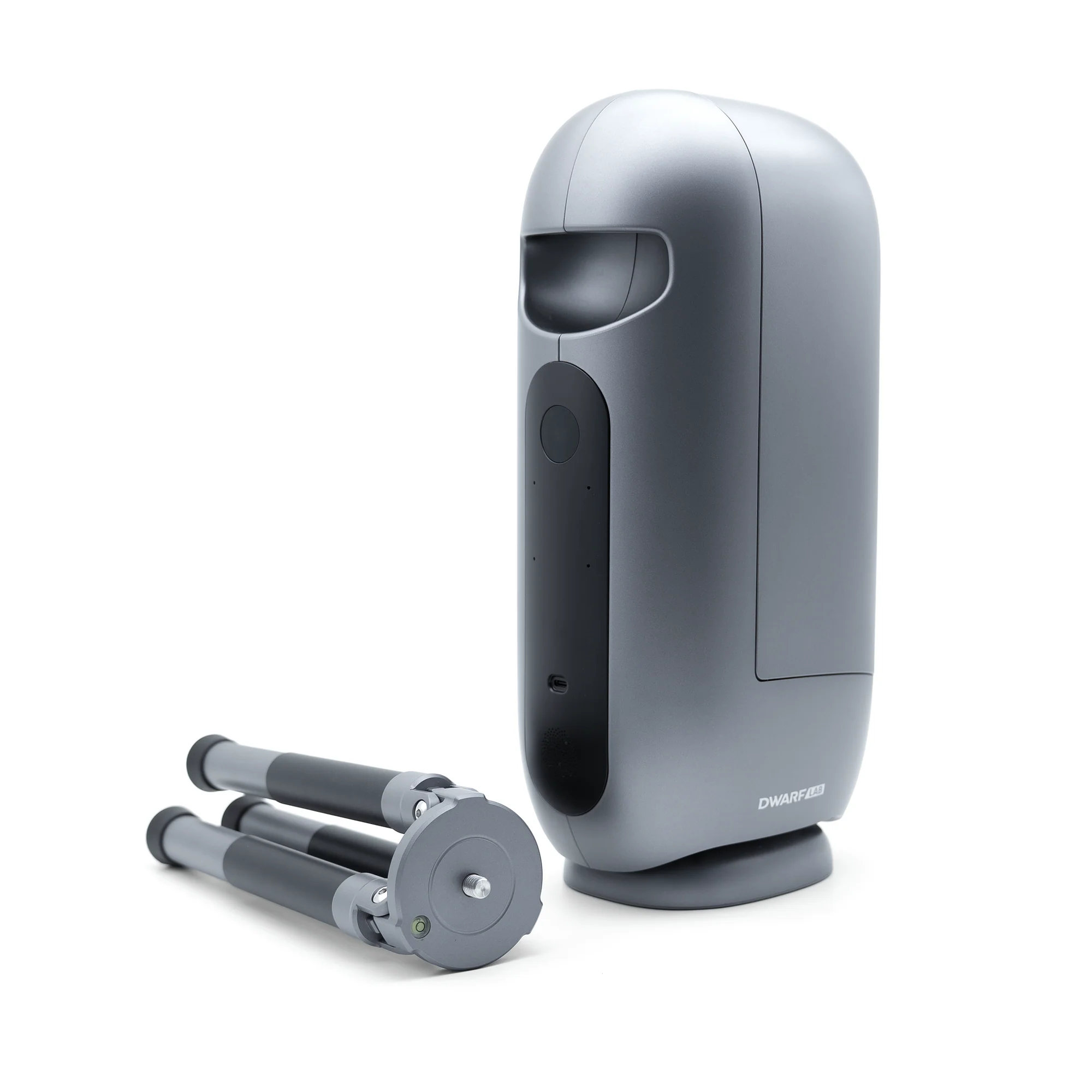
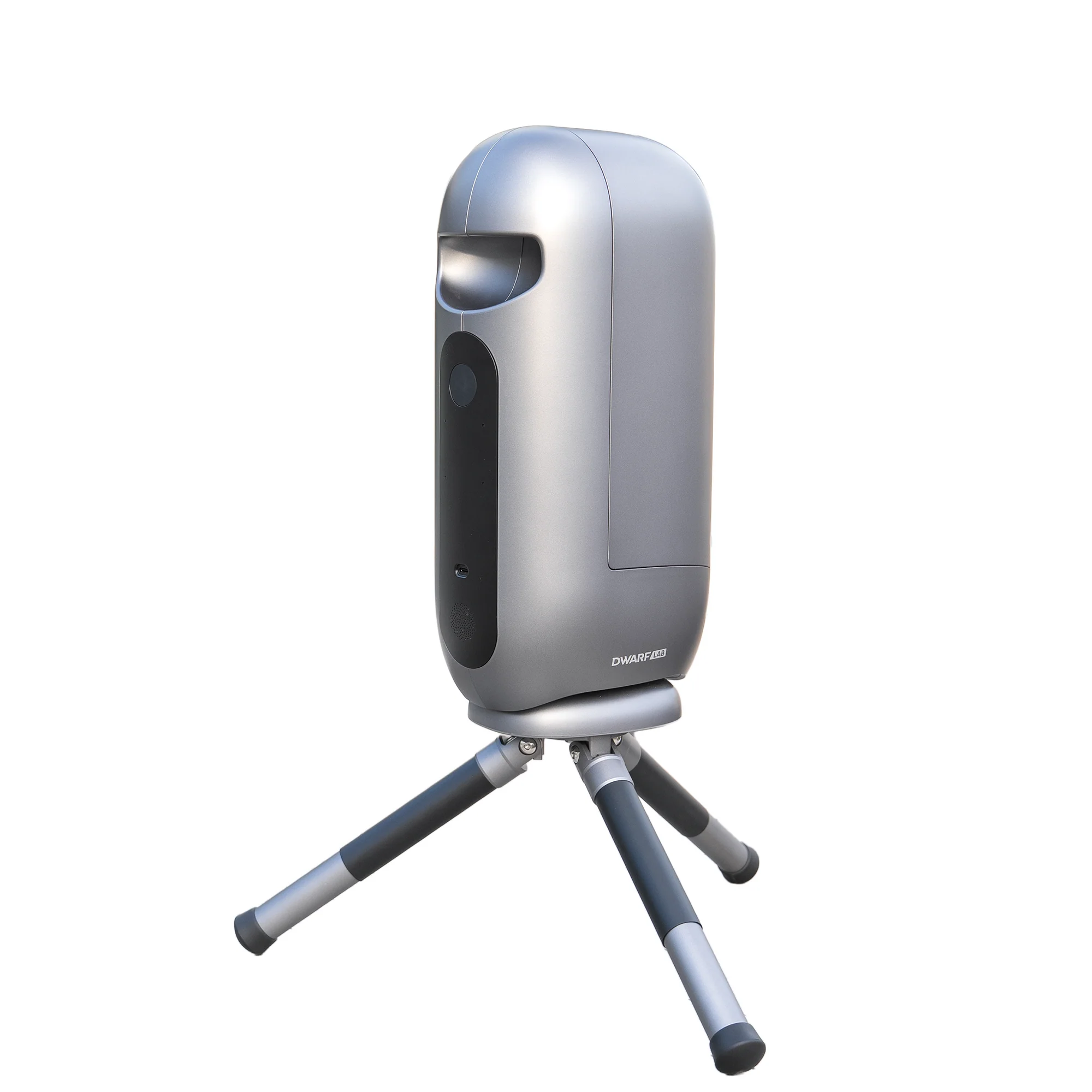
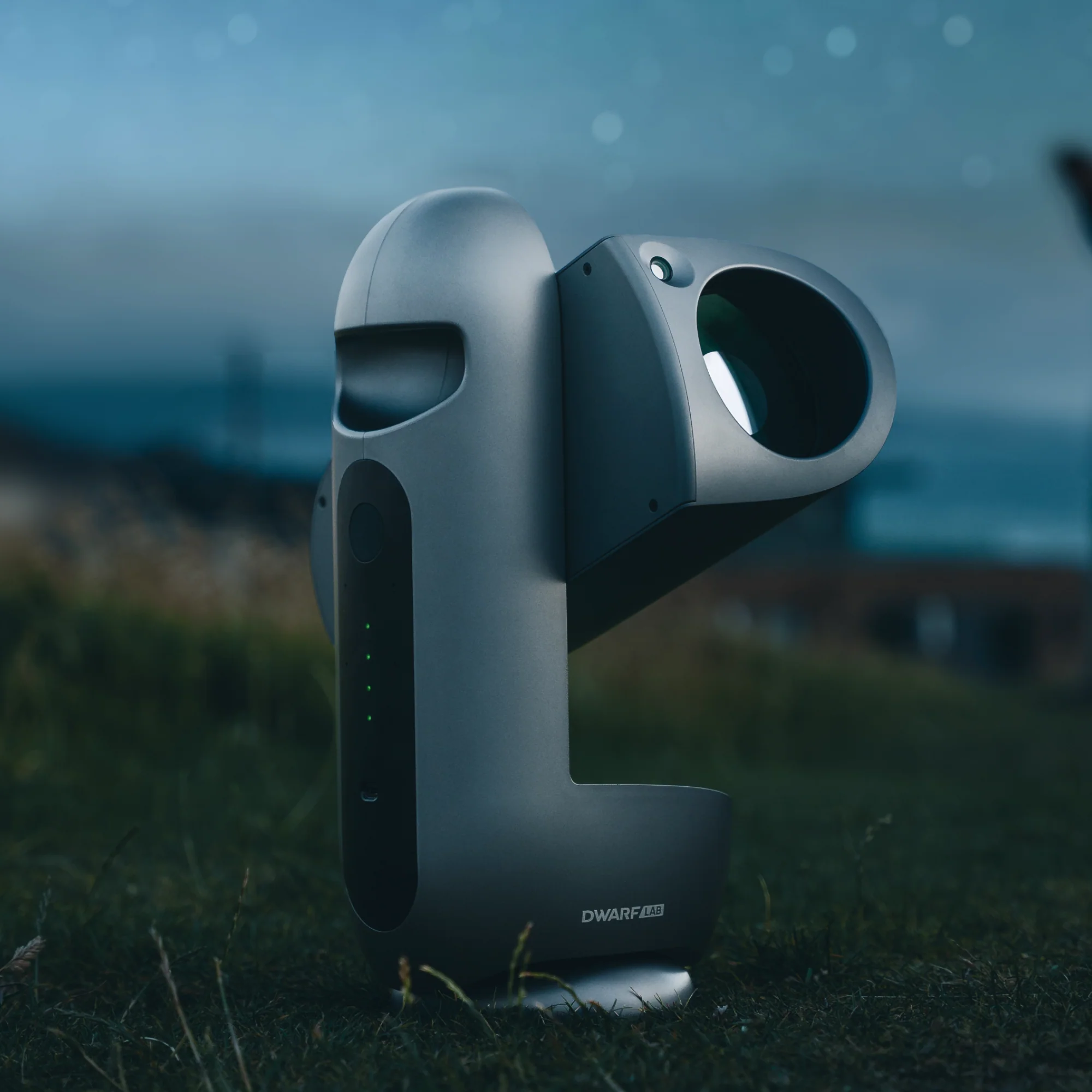
Despite its substantial optical and imaging capabilities, Draco remains a self-contained portable system. The telescope body weighs approximately 5.5kg and incorporates its own battery, imaging electronics, tracking system and 128GB of internal storage. The built-in 10,000mAh battery provides approximately five hours of operation in Astronomy Mode, although actual runtime will vary with operating conditions. Supplied with an aluminium-alloy tripod and protective carrying case, Draco provides an integrated solution for astronomers who want advanced imaging capabilities without having to assemble a conventional telescope, mount, camera, guiding system and filter arrangement.


 Cookie policy
Reviews
There are no reviews yet.