Designed for solar astrophotography
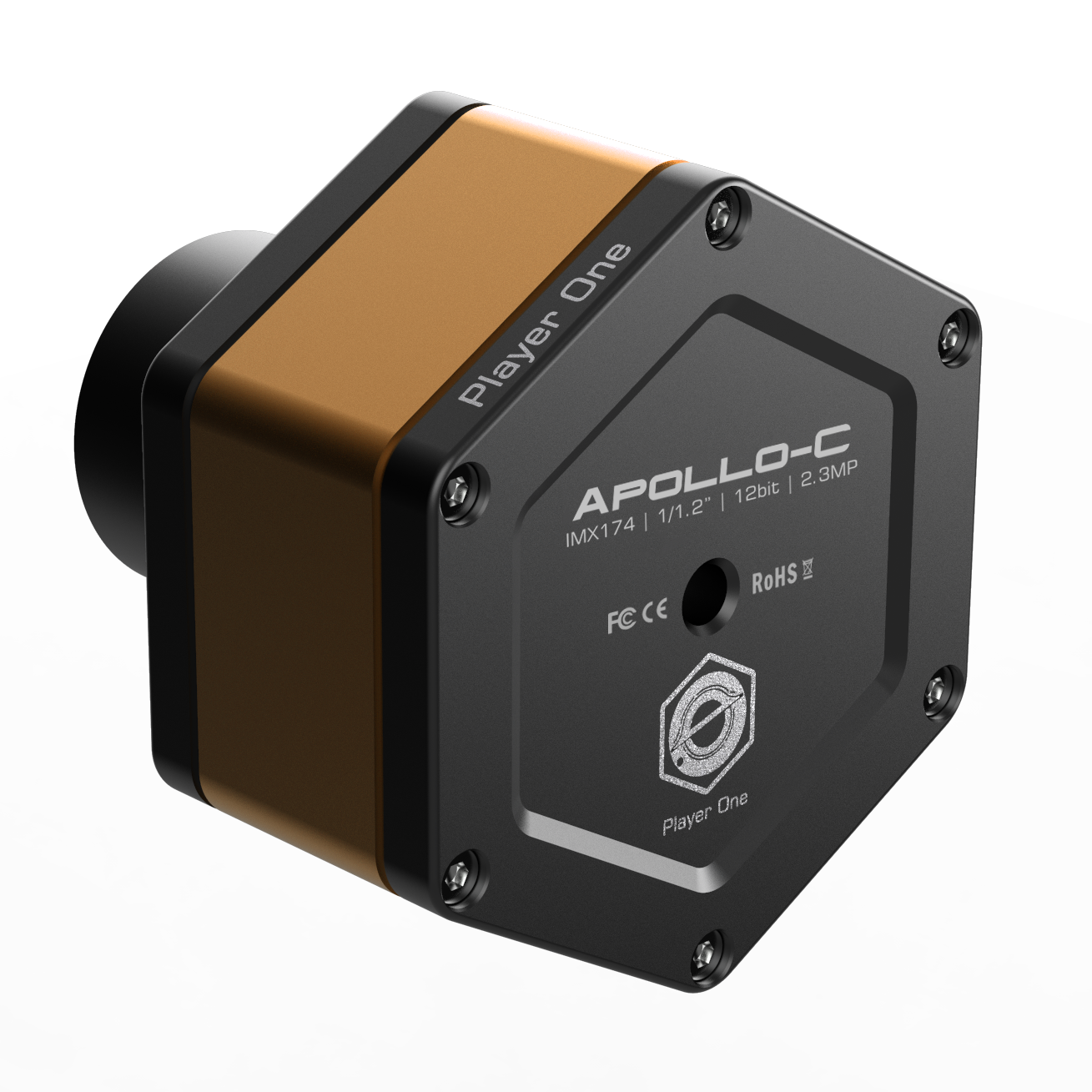
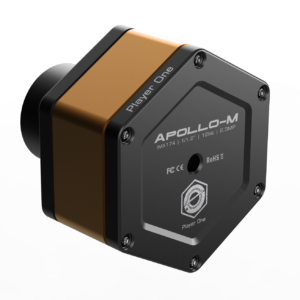
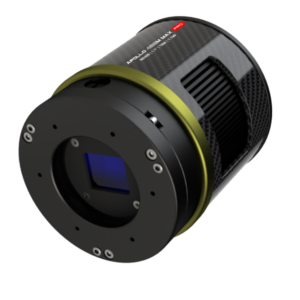
The Apollo series was developed by Player One Astronomy with solar imaging as its primary purpose. The Apollo-C uses a colour Sony IMX174 sensor, making it an option for observers who want to capture colour images of the Sun with an appropriate white-light solar setup or a compatible dedicated solar telescope.
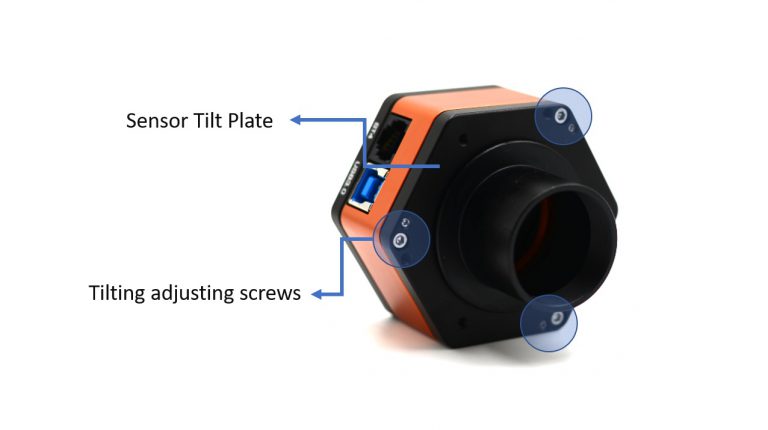
Solar imaging places particular demands on a camera. Sessions take place in daylight, when camera temperatures can rise, and the Sun’s fine details benefit from rapid image capture. The Apollo-C addresses these challenges with a global shutter, passive cooling, onboard DDR3 buffer memory and an adjustable sensor tilt plate.
The camera is also suitable for lunar and planetary imaging. Its large pixels and high frame rate are useful when recording many frames for later selection and stacking.
Global shutter for capturing solar detail
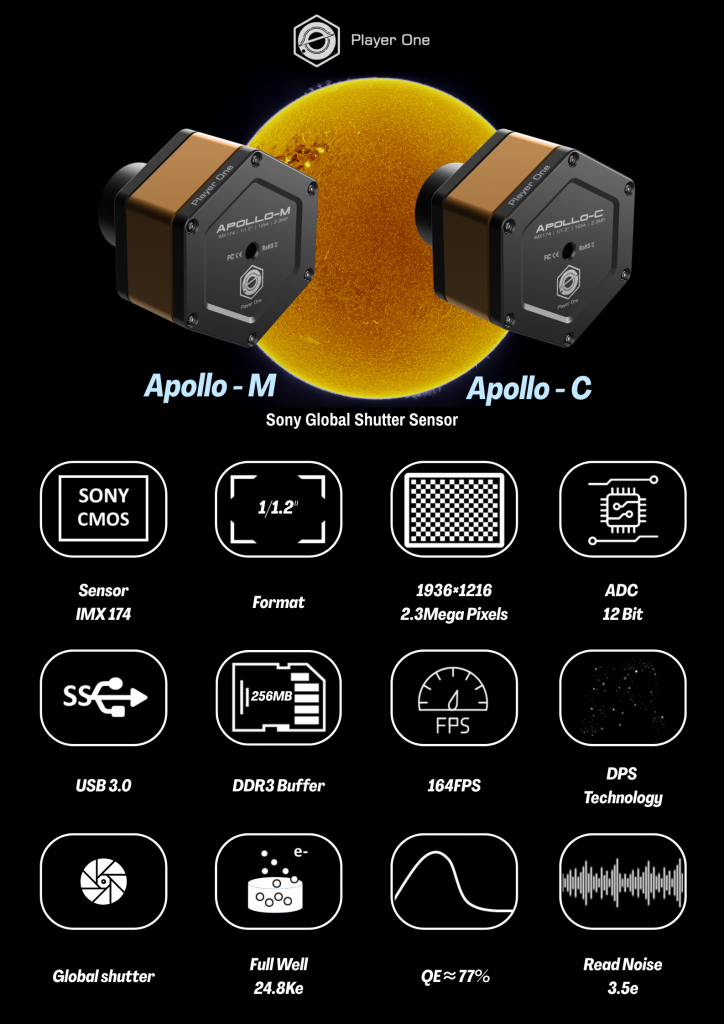
The Apollo-C uses Sony’s IMX174 colour CMOS sensor with a global shutter. Unlike a rolling shutter, which reads different rows at slightly different times, a global shutter captures the frame simultaneously. This can help preserve the geometry of fine solar features and avoid skewing during high-speed capture.
The sensor offers 1936 × 1216 resolution, approximately 2.3 megapixels, with a 1/1.2-inch format and 5.86 μm pixels. The relatively large pixels can provide a useful balance between sensitivity and resolution for solar imaging, particularly when paired with suitable solar telescopes, filters and focal lengths.
The colour sensor records red, green and blue information through its Bayer filter array. This allows colour capture without a separate filter wheel for ordinary colour imaging. As with any colour astronomy camera, the final level of detail depends on the optical setup, focus, atmospheric seeing and processing.
Adjustable sensor tilt plate to help reduce Newton’s rings
Newton’s rings are unwanted interference patterns that can appear when imaging through certain optical systems, including some solar etalon and filter arrangements. They can show up as curved bands or rings across the image and interfere with the appearance of solar surface detail. The Apollo-C incorporates an adjustable sensor tilt plate. By making small adjustments to the sensor’s angle, users can often reduce or remove these patterns in a suitable setup. The tilt plate can also help compensate for slight alignment issues in the imaging train. This is particularly valuable for high-resolution solar imaging, where even subtle interference patterns can become conspicuous during image processing. Results depend on the optical system, and not every source of Newton’s rings can be corrected by sensor tilt alone.
High-speed capture and DDR3 buffer memory
The Apollo-C supports up to 164 FPS at its full 1936 × 1216 resolution in RAW8 mode over USB 3.0. In RAW16 mode, the listed full-resolution frame rate is 82.5 FPS. Higher frame rates are available when using a smaller region of interest, allowing the camera to concentrate on a selected area of the Sun. High-speed capture is useful because atmospheric turbulence can cause solar detail to fluctuate rapidly. Recording many frames gives stacking software more images from which to select the sharpest results.
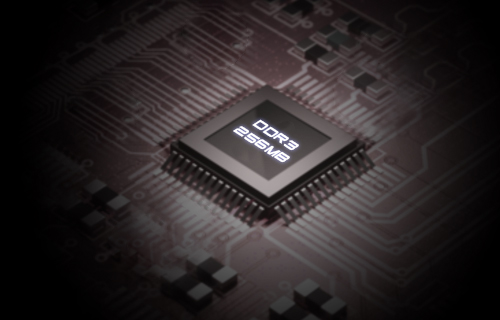
The camera includes 256 MB of DDR3 buffer memory. This onboard cache helps manage image data between the sensor and computer, supporting stable transfer during high-speed sequences. Actual recording rates depend on the computer, capture software, USB connection and storage write speed; a fast SSD is recommended for sustained high-speed recording.
Passive cooling for daytime use
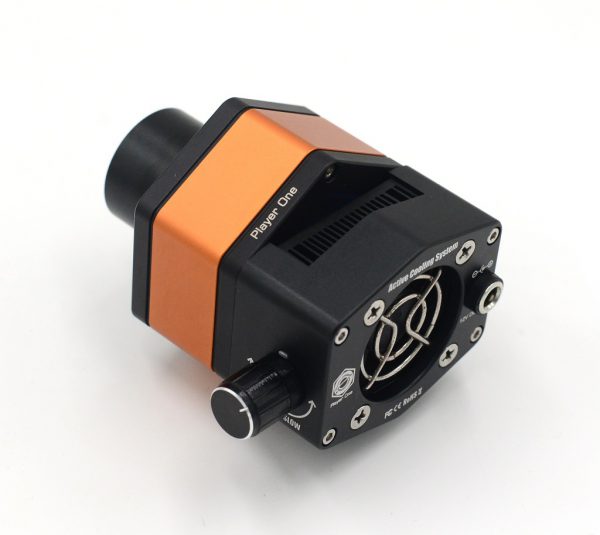
Solar imaging is often performed in warm daytime conditions. Sensor heat can affect operating behaviour and image quality, so Player One incorporates a Passive Cooling System designed to conduct heat away from the sensor and camera body. Passive cooling does not actively regulate the sensor to a fixed temperature, but it helps manage heat without a built-in thermoelectric cooling system. For users who want additional temperature control, Player One offers an external Active Cooling System (ACS) as a separate accessory. The ACS is not part of the standard camera configuration unless specifically purchased as a bundle.
Colour imaging and sensor sensitivity
The IMX174 sensor has a specified peak quantum efficiency of approximately 77% and a full-well capacity of 24,800 electrons. Quantum efficiency describes how effectively incoming photons are converted into an electronic signal, while full-well capacity indicates how much charge a pixel can hold before saturating. These specifications help describe the camera’s response to light, but solar imaging performance also depends heavily on the solar filter or telescope, exposure time, gain and atmospheric conditions. With a suitable white-light solar filter or dedicated solar telescope, the Apollo-C can record colour data for the Sun’s disc and surface features.
Connections and compact construction
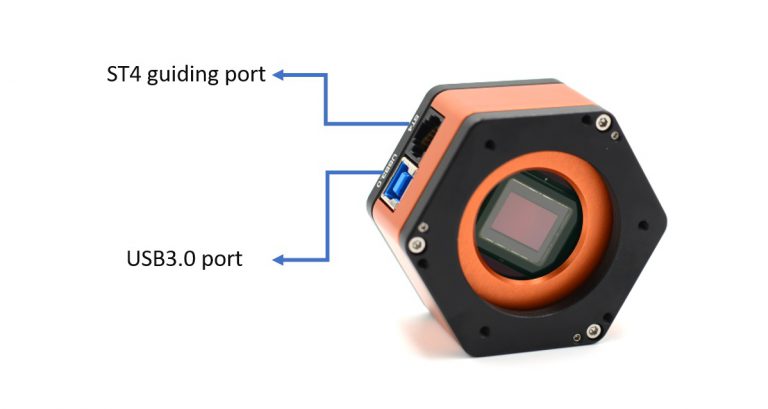
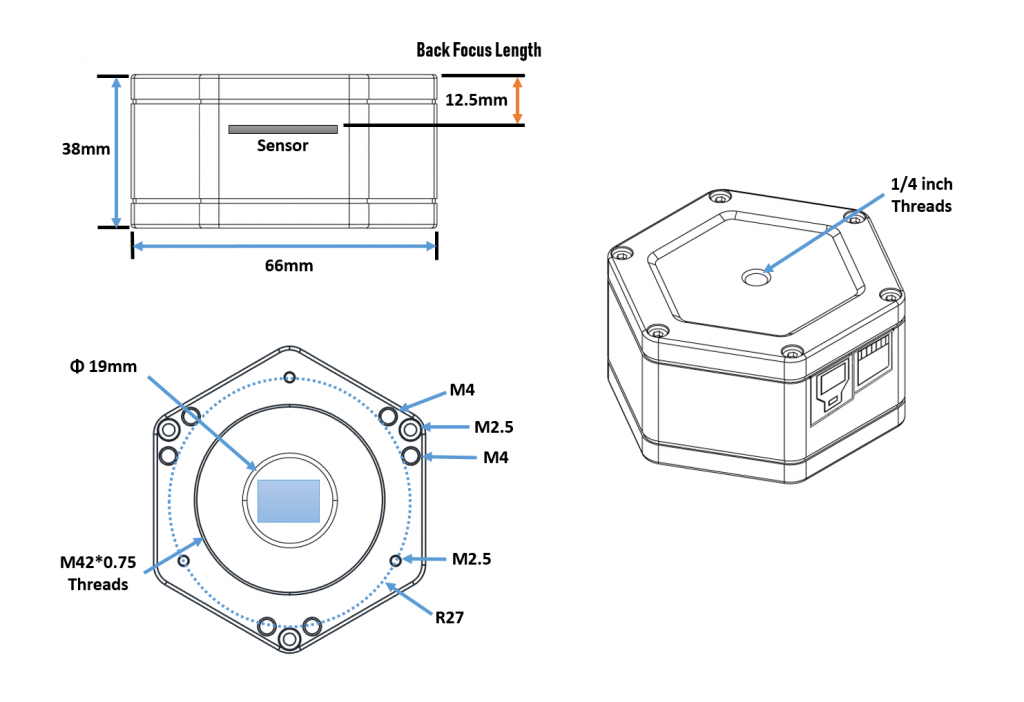
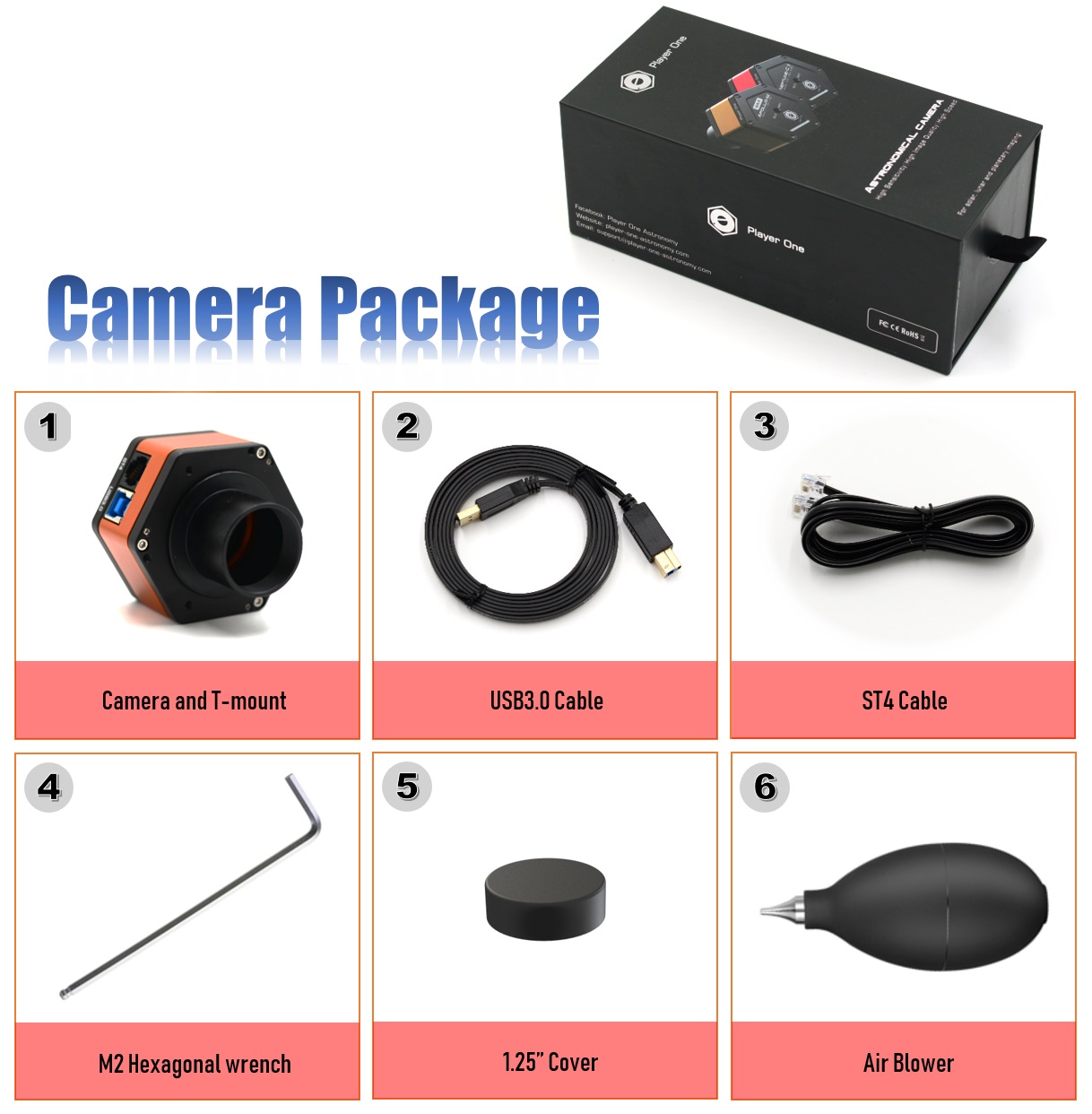
The Apollo-C connects to a computer through USB 3.0 and is also compatible with USB 2.0. It uses a 1.25-inch adapter and M42 × 0.75 (T2) thread, with a specified back focal length of 12.5 mm. This makes it straightforward to integrate into many common astronomical imaging trains. An ST4 guiding port is also included, although solar imaging is the camera’s primary purpose. The camera’s body measures approximately 66 mm in diameter and 38 mm in height, with a listed weight of 160 g.



 Cookie policy
Reviews
There are no reviews yet.