Designed for deep-sky imaging
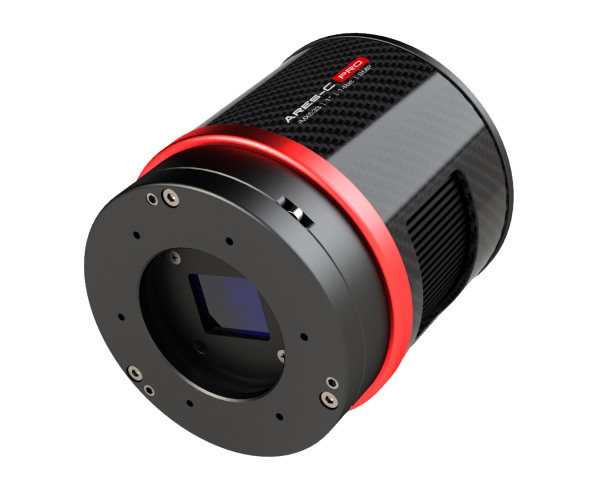
The Player One Ares-C Pro is a cooled colour astronomy camera designed primarily for deep-sky astrophotography. Its combination of a square colour sensor, low-readout-noise imaging mode and active cooling makes it well suited to capturing faint nebulae, galaxies and other deep-sky objects. The camera can also be used for lunar and solar imaging, although its main strengths lie in long-exposure imaging rather than specialist high-speed planetary work.
Sony IMX533 colour sensor
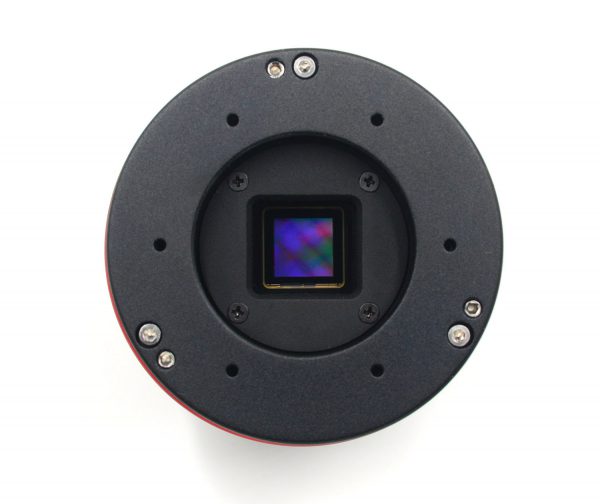
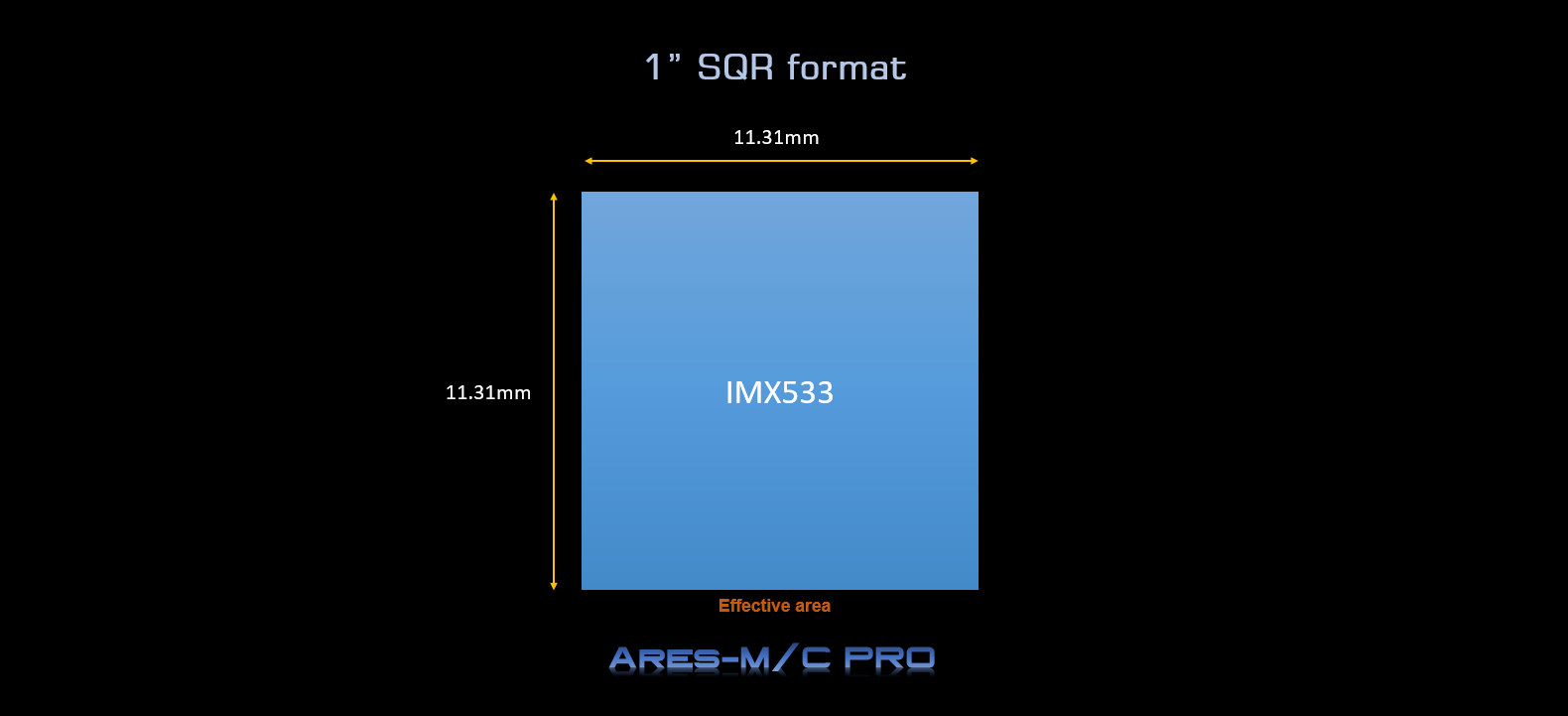
At the heart of the Ares-C Pro is a Sony IMX533 back-illuminated colour CMOS sensor. It offers a resolution of 3008 × 3008 pixels, giving a total of approximately 9 megapixels, with a pixel size of 3.76 µm and a square active imaging area measuring 11.31 × 11.31 mm. The square sensor format provides equal horizontal and vertical dimensions, making it convenient to frame objects and plan imaging mosaics. Its 73,000-electron full-well capacity allows each pixel to collect a substantial amount of signal before reaching saturation, which is useful when imaging targets containing both bright and faint features. The sensor uses Sony STARVIS back-illuminated technology, designed to improve the collection of incoming light. The manufacturer specifies a peak quantum efficiency of approximately 80%, indicating that the sensor can convert a substantial proportion of incoming photons into an electronic signal.
Two-stage cooling for cleaner images
The Ares-C Pro uses a two-stage thermoelectric cooling system capable of reducing the sensor temperature by approximately 35–40°C below ambient temperature under the manufacturer’s stated conditions. Cooling reduces thermal noise generated by the sensor, which is particularly beneficial during long exposures and when recording faint astronomical objects. Lower thermal noise can help improve the signal-to-noise ratio, making faint details easier to distinguish from unwanted background variations.
The camera also offers two sensor readout modes. Normal mode prioritises faster image acquisition, while low-readout-noise mode reduces readout noise and provides higher dynamic range. The manufacturer recommends the latter for deep-sky imaging, where capturing faint details is usually more important than achieving the highest possible frame rate.
Non-amp-glow sensor design
Some astronomy cameras produce a characteristic glow in parts of the image during long exposures, caused by the sensor’s readout electronics. The Ares-C Pro uses a non-amp-glow design, avoiding this characteristic source of unwanted light in the image background. This can simplify image calibration and processing, particularly when working with long exposures and faint targets. It does not eliminate every source of image noise, so dark frames and other calibration frames may still be useful depending on the imaging workflow.
Integrated anti-dew protection
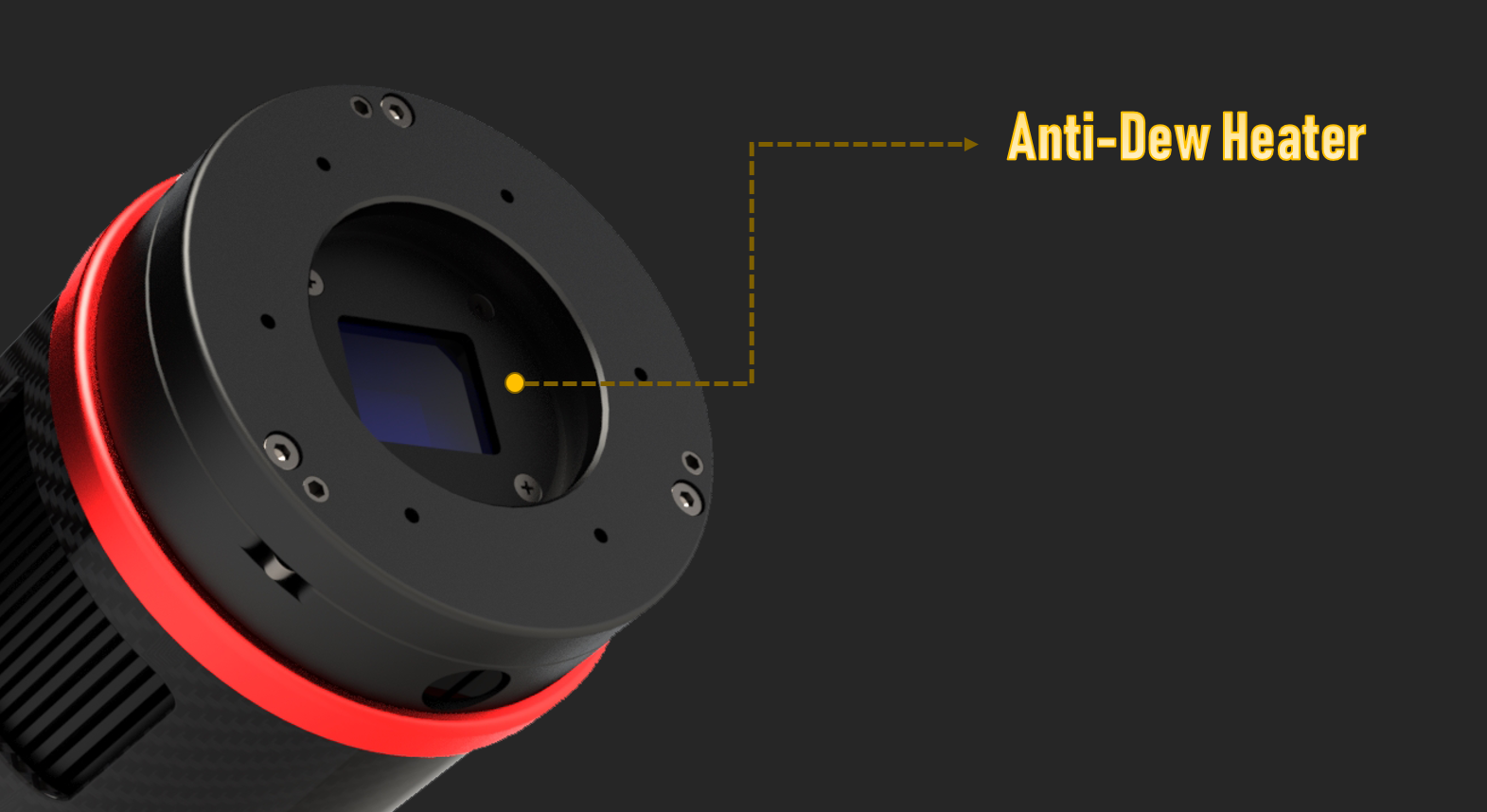
Condensation on the protective window can compromise image quality during humid or cold imaging sessions. The Ares-C Pro incorporates an adjustable anti-dew heater around the front window to help prevent this from happening. The heater can be controlled through compatible software, allowing its power to be adjusted to suit observing conditions. This is particularly useful when the camera is cooled below the surrounding air temperature, as cooling can increase the risk of condensation.
Adjustable sensor tilt
The camera includes a sensor-tilt adjustment system to help correct small alignment errors between the sensor and the optical system. If the sensor is not aligned correctly, stars near the corners of an image may appear less round than those near the centre. Adjusting the sensor tilt can help improve star shapes across the image. This is particularly valuable for deep-sky astrophotography, where stars are often examined across the entire frame and small optical or mechanical alignment errors can become noticeable.
Buffer memory and connectivity
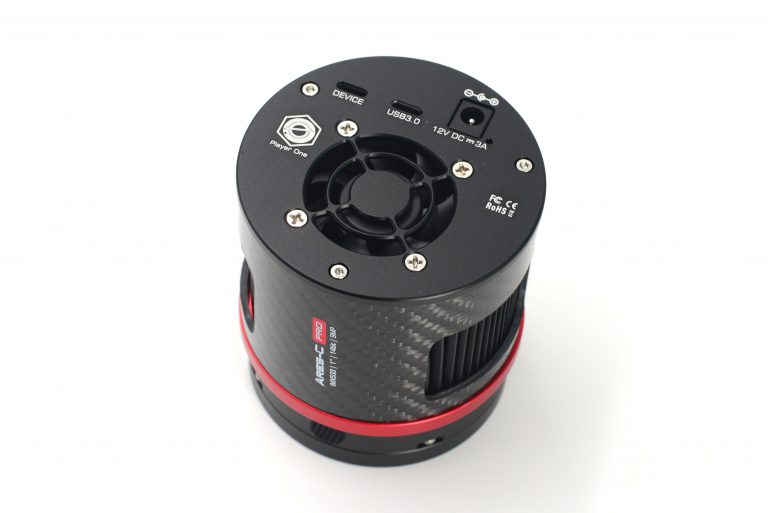
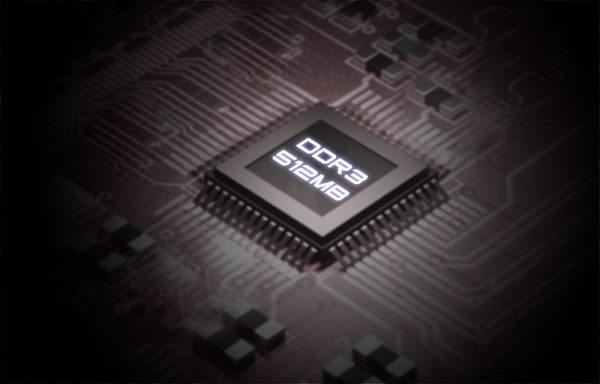
The Ares-C Pro incorporates 512 MB of DDR3 buffer memory to help manage image-data transfer between the sensor and the connected computer. Its main data connection supports USB 3.0, allowing fast transfer of captured images when the computer and storage system can keep up with the incoming data. The camera can reach a manufacturer-specified maximum of 43 frames per second at its full sensor resolution in the faster readout mode. The actual rate depends on the selected readout settings and the performance of the connected computer and storage device.
Compact, lightweight construction
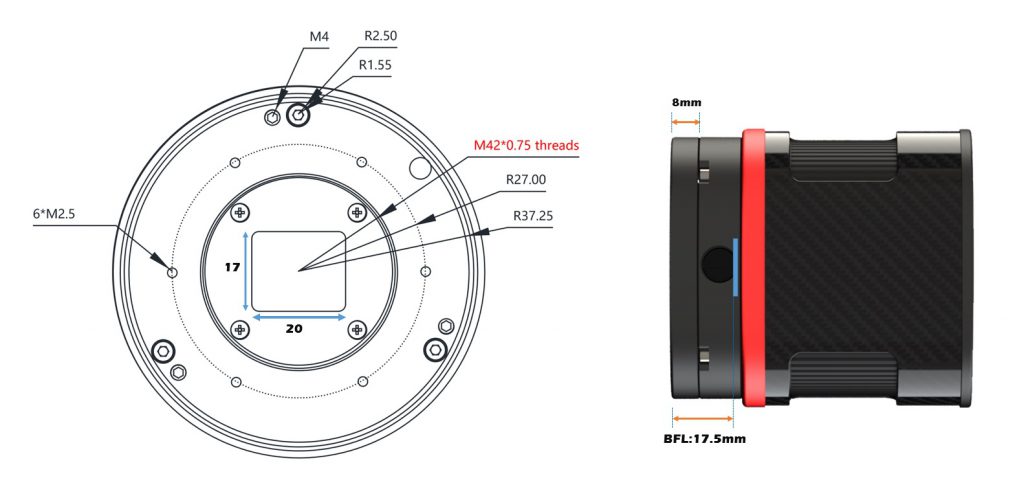
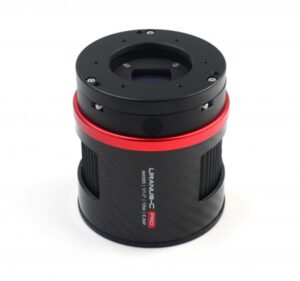
The camera features a round carbon-fibre body weighing approximately 420 g. Its relatively low weight makes it a practical option for portable imaging setups and configurations where minimising the load on a telescope focuser is important. The camera has a protective window with an anti-reflection multi-layer coating and a specified back focal distance of 17.5 mm. The latter is important when calculating the spacing between the camera and other optical accessories, such as filter drawers, filter wheels or off-axis guiders.
A versatile deep-sky imaging camera
The Player One Ares-C Pro combines a square colour sensor, active cooling, low-readout-noise operation and practical features for managing condensation and sensor alignment. It is a compelling option for amateur astronomers looking to build a dedicated deep-sky imaging setup without adding unnecessary weight to their telescope.


 Cookie policy
Reviews
There are no reviews yet.