Designed for deep-sky imaging
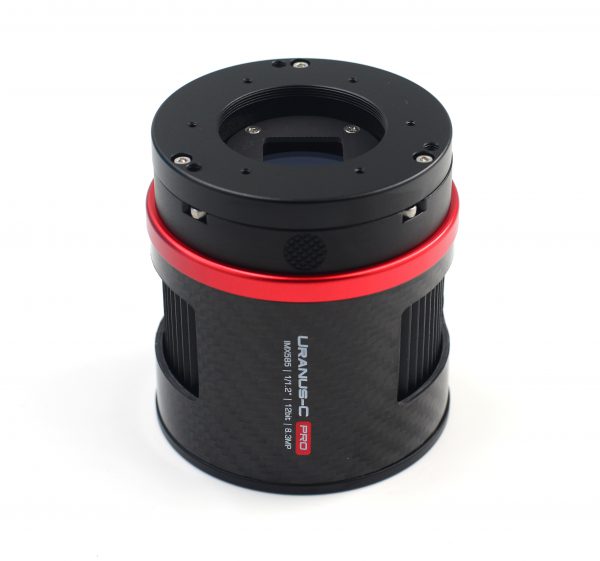
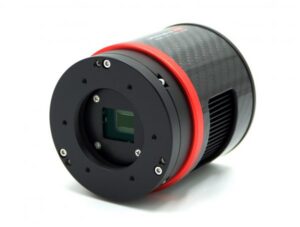
The Player One Uranus-C Pro is a cooled colour astronomy camera intended primarily for deep-sky astrophotography. It combines a Sony IMX585 sensor with active cooling and features designed to support long-exposure imaging, making it suitable for targets such as nebulae and galaxies. It can also be used for lunar and planetary imaging, offering flexibility for astronomers who enjoy more than one type of astrophotography.
Sony IMX585 colour sensor
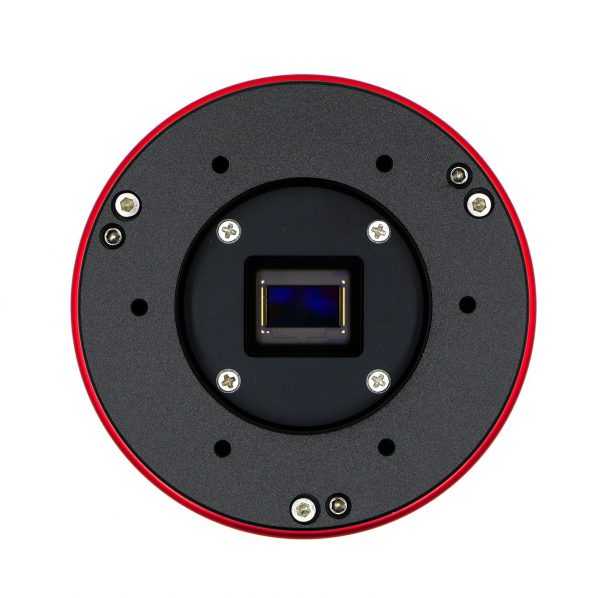
At the heart of the Uranus-C Pro is a Sony IMX585 back-illuminated colour CMOS sensor using Sony STARVIS 2 technology. It has a resolution of 3856 × 2180 pixels, giving approximately 8.3 megapixels, with a pixel size of 2.9 µm and an active imaging area measuring 11.2 × 6.3 mm. The sensor’s wider-than-tall format is well suited to framing many deep-sky objects and can also be useful for capturing the full lunar or solar disc with a suitable optical system. The sensor’s 12-bit analogue-to-digital converter provides 4096 possible digital levels per pixel before additional processing. The manufacturer specifies a peak quantum efficiency of approximately 91%. Quantum efficiency describes how effectively a sensor converts incoming photons into an electronic signal. A high peak value helps the camera collect light efficiently at the wavelengths where its sensitivity is greatest, although actual performance varies with wavelength.
Two-stage cooling for long exposures
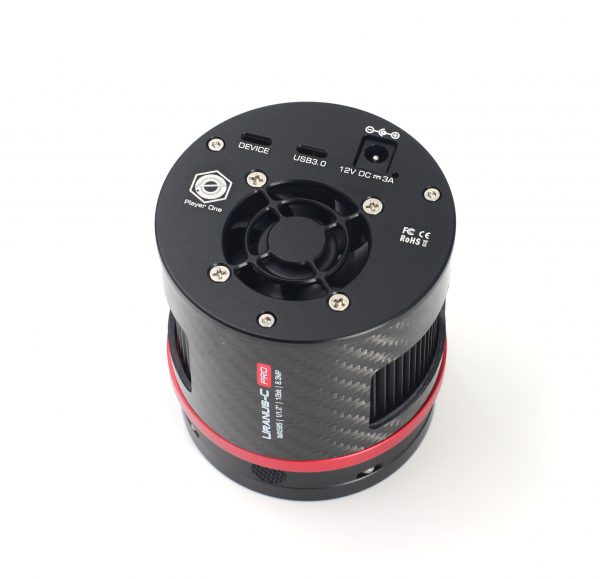
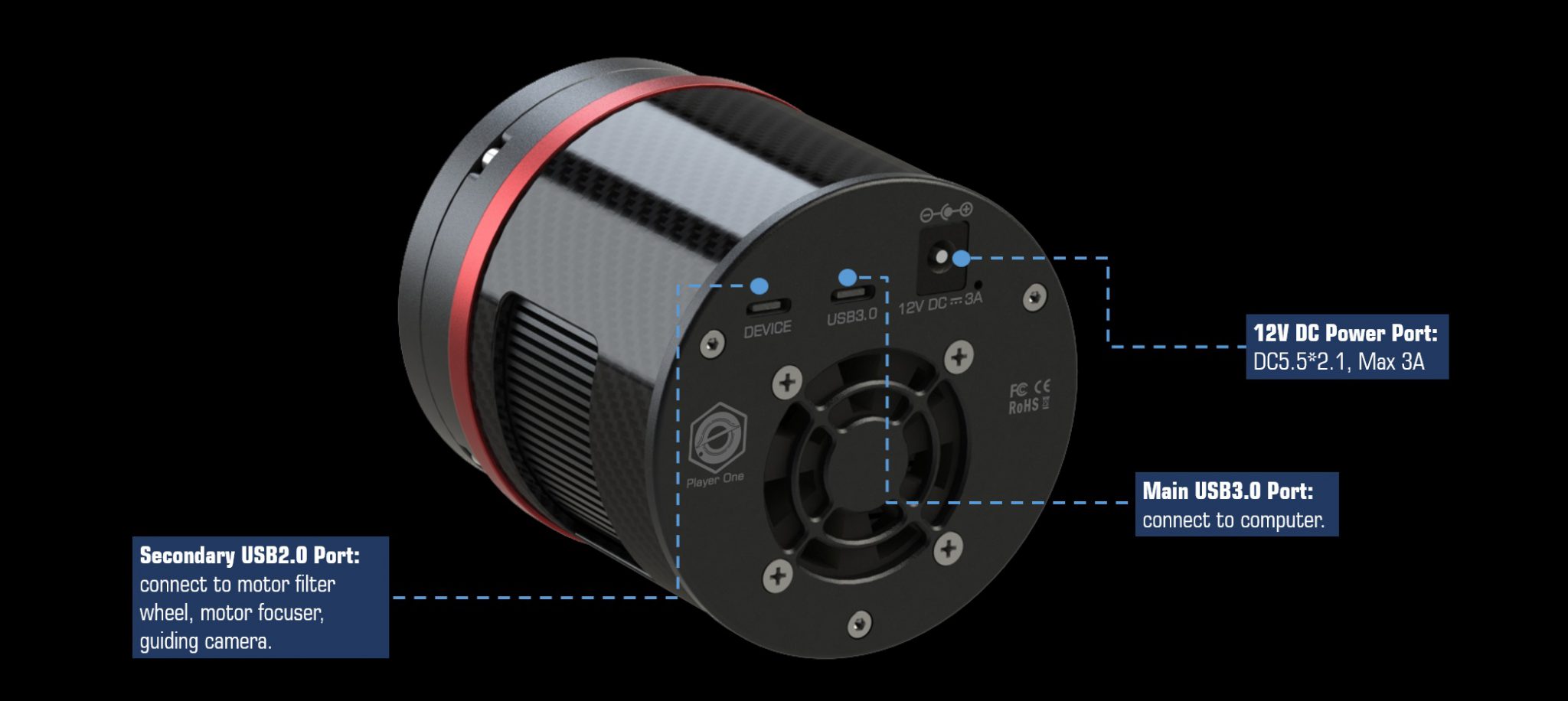
The Uranus-C Pro incorporates a two-stage thermoelectric cooling system capable of lowering the sensor temperature by approximately 35–40°C below ambient temperature under the manufacturer’s specified conditions. Cooling reduces thermal noise generated by the sensor. This is particularly useful when taking long exposures of faint objects, where unwanted background noise can make subtle details harder to distinguish. Lower thermal noise can improve the signal-to-noise ratio, although the actual result also depends on exposure time, sky conditions and other aspects of the imaging setup. The target temperature and fan speed can be adjusted through compatible software. For effective operation, the camera’s cooling system requires an external 12 V power supply, which is not included in the standard camera package.
Non-amp-glow design and low readout noise
The Uranus-C Pro uses a non-amp-glow sensor design, avoiding the characteristic glow that can otherwise appear in parts of long-exposure images. This helps keep the image background more uniform and can simplify calibration and processing. The camera also offers very low readout noise, reaching a manufacturer-specified minimum of 0.7 electrons at suitable settings. Readout noise is the electronic noise introduced when the sensor’s recorded signal is read out. Keeping it low helps preserve faint details, particularly when imaging targets that produce relatively little signal. The lowest readout-noise figure is dependent on operating settings and should not be interpreted as the camera’s noise level in every mode.
Integrated anti-dew protection
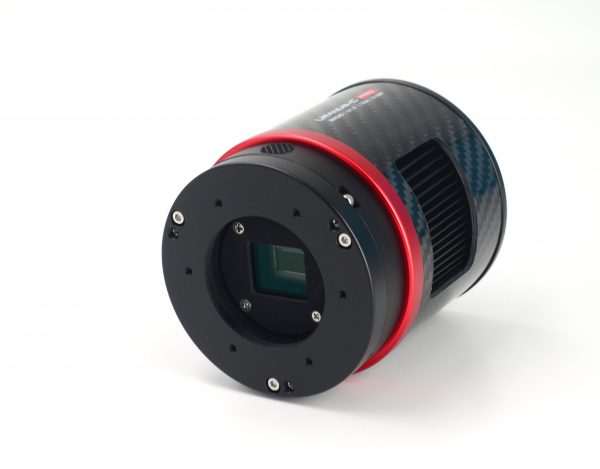
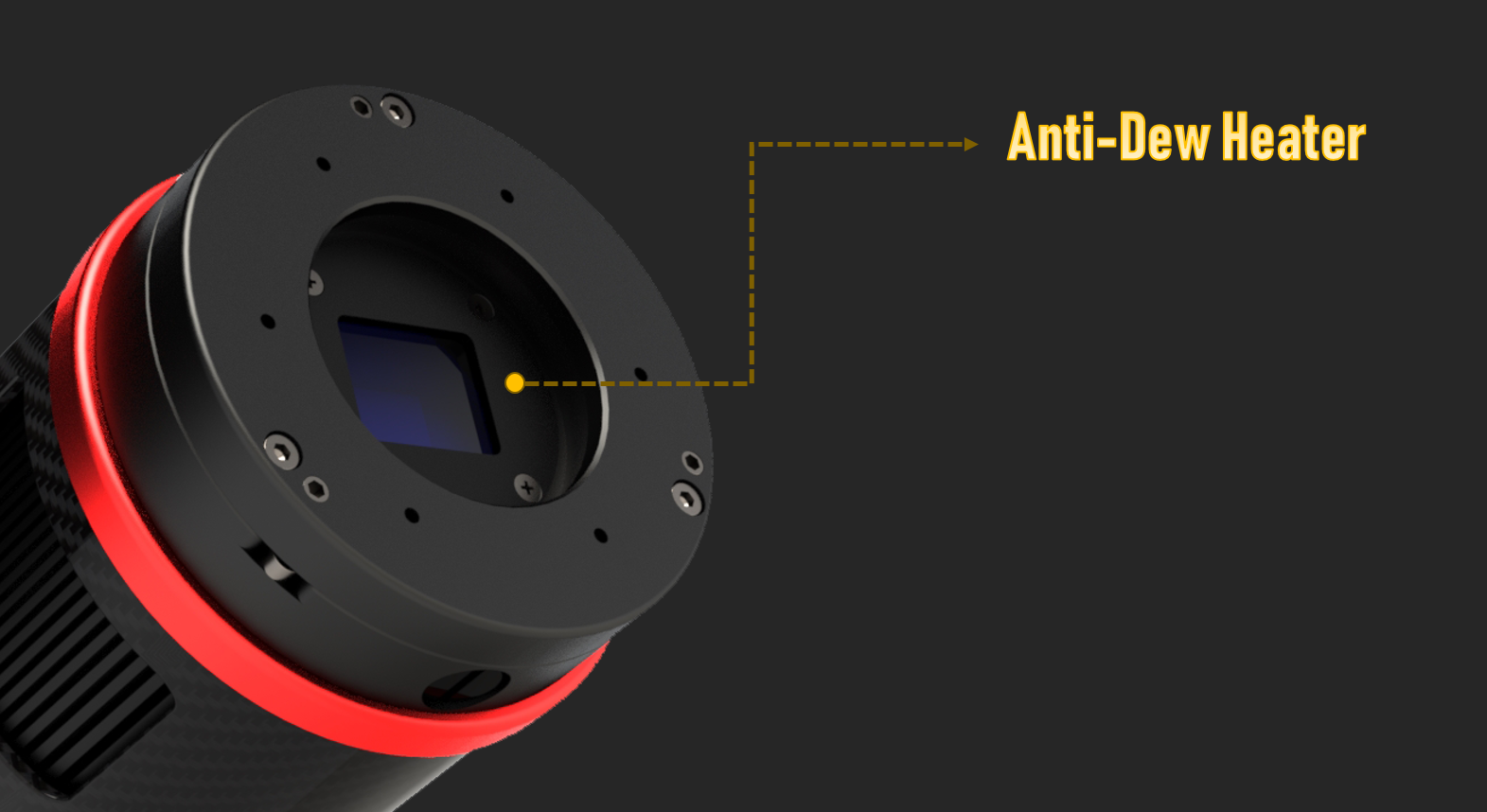
Condensation on the camera’s protective window can interfere with image quality during humid or cold imaging sessions. The Uranus-C Pro includes an adjustable anti-dew heater around the front window to help prevent condensation from forming. The heater’s power can be controlled through compatible software, allowing it to be adjusted to suit the conditions. This is especially useful when the camera is cooled below the surrounding air temperature.
Adjustable sensor tilt
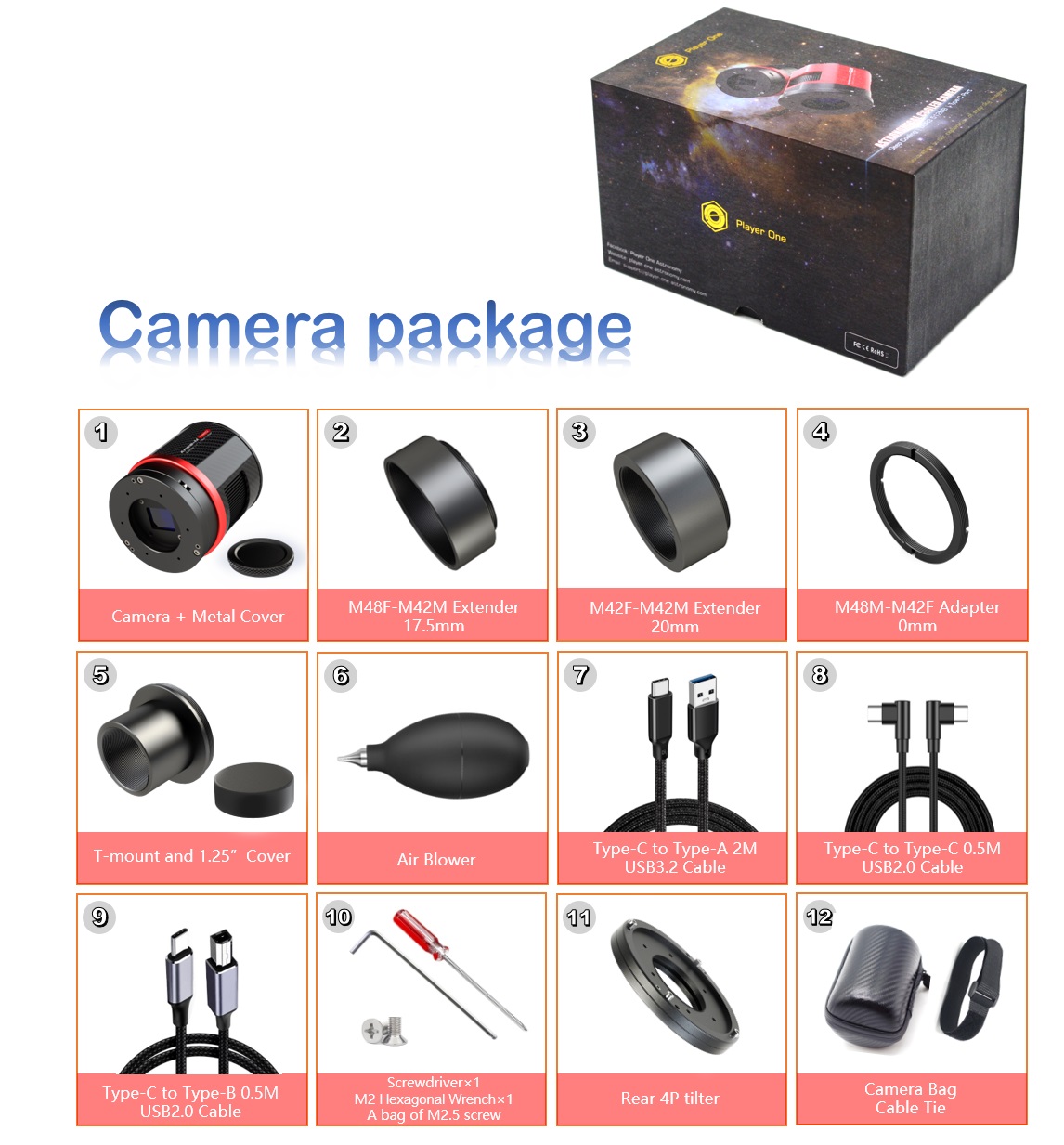
The camera includes both a front three-point sensor-tilt plate and an alternative rear four-point tilt plate. These allow the sensor’s alignment to be adjusted to help correct small differences in tilt between the sensor and the optical image plane. Incorrect alignment can cause stars near the edges or corners of an image to appear less round than those near the centre. Fine-tuning the sensor tilt can help improve star shapes across the frame, particularly when using optical systems that reveal alignment errors clearly. The rear tilt plate is especially useful in imaging trains that incorporate accessories such as a filter drawer or filter wheel and an off-axis guider in a fixed orientation.
Fast data transfer and buffer memory
The Uranus-C Pro has 512 MB of DDR3 buffer memory to help manage image-data transfer between the sensor and the connected computer. Its main data connection uses USB 3.0, and the camera can reach up to 47 frames per second in RAW8 mode according to the manufacturer. This faster readout can be useful for lunar and planetary imaging, where many frames may be captured and the sharpest selected during processing. Actual capture rates depend on the selected resolution, readout mode and the performance of the connected computer and storage device. For deep-sky imaging, the camera’s cooling and low-readout-noise capabilities are generally more important than its maximum frame rate.
Compact, lightweight construction
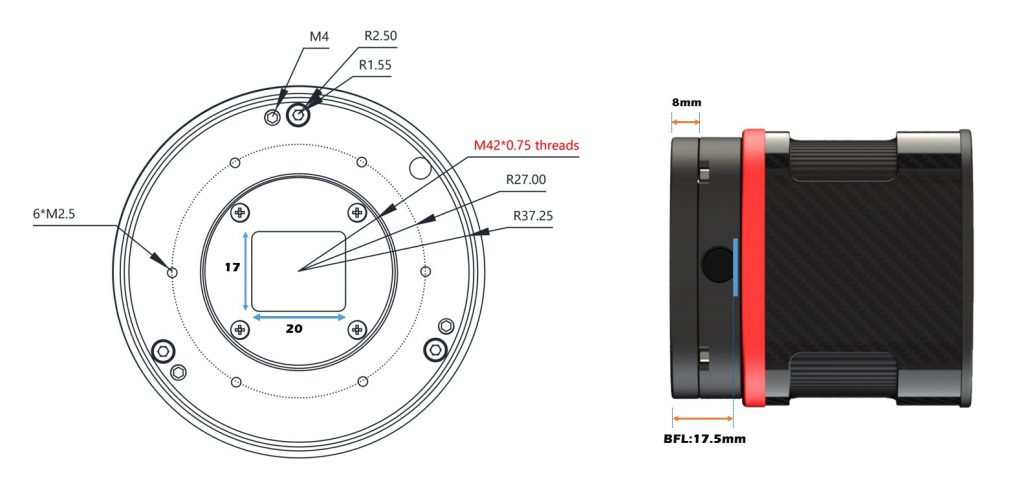
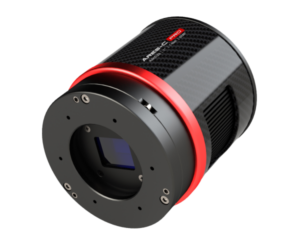
The Uranus-C Pro uses a carbon-fibre housing and weighs approximately 420 g. Its relatively low weight makes it a practical option for portable imaging setups and configurations where minimising the load on the telescope focuser is important. The protective front window has a multi-layer anti-reflection coating. The camera’s specified back focal distance is 17.5 mm, which is important when calculating the required spacing between the sensor and other optical accessories.
A versatile cooled colour camera
The Player One Uranus-C Pro combines a modern colour sensor, active cooling and features intended to support reliable deep-sky imaging in a compact body. It is a strong option for amateur astronomers looking for a lightweight cooled camera that can capture faint deep-sky targets while also offering the flexibility to image the Moon and planets.


 Cookie policy
Reviews
There are no reviews yet.