Designed for planetary, lunar and solar imaging
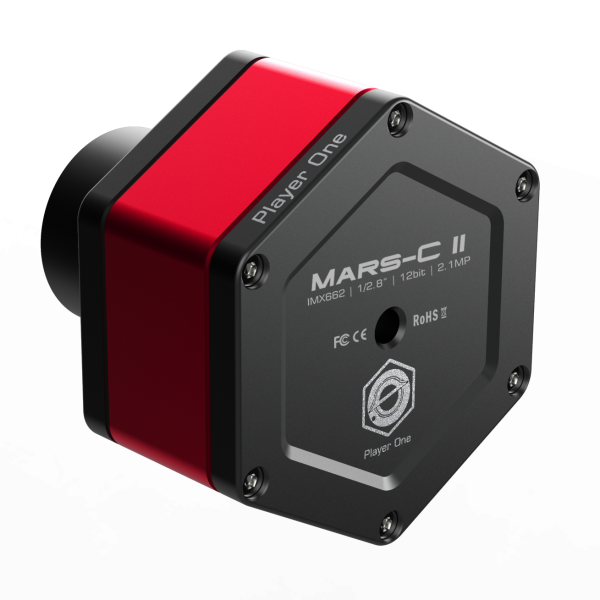
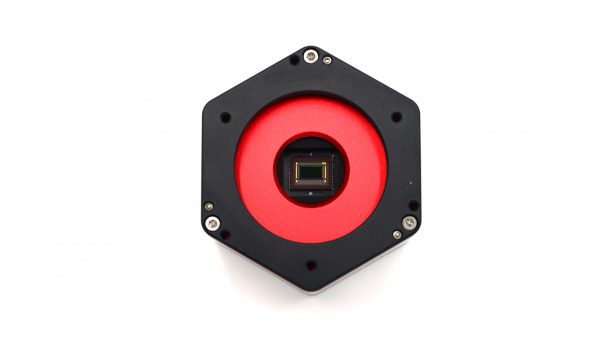
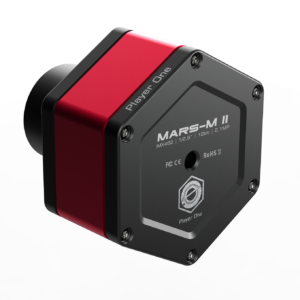
The Mars-C II uses Sony’s IMX662 colour CMOS sensor in a 1/2.8-inch format. Its 1936 × 1100 resolution provides approximately 2.1 megapixels, with 2.9 μm pixels and a sensor diagonal of 6.44 mm. This relatively small sensor is well suited to capturing a planet or a selected region of the Moon at high frame rates. Planetary imaging usually involves recording a video containing hundreds or thousands of frames. Dedicated software can then assess image sharpness, select the best frames and stack them to produce a detailed final image. Capturing many frames quickly increases the chance of recording moments when atmospheric turbulence briefly becomes less disruptive. The camera can also be used for solar imaging with a suitable, properly fitted solar filter. Never point a telescope at the Sun without appropriate solar protection.
STARVIS 2 sensitivity and full-well capacity
The IMX662 is a back-illuminated STARVIS 2 sensor, a design intended to improve the collection of incoming light. Player One specifies a peak quantum efficiency of approximately 91%, helping the camera record faint detail in planetary features and lunar regions. Its full-well capacity is specified at 54,000 electrons. Full-well capacity describes the amount of charge a pixel can hold before saturating. The high capacity gives the camera useful exposure headroom, especially when bright planetary features and darker regions appear in the same image. The camera also features a non-amp-glow design, helping keep the background clean in longer exposures. Although it is primarily a planetary camera, it can also be used for electronically assisted astronomy and selected short-exposure deep-sky applications.
High frame rates and USB 3.0
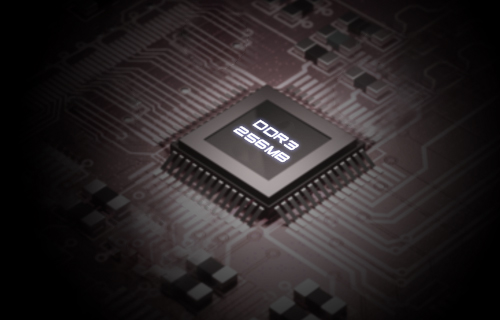
The Mars-C II supports USB 3.0 and USB 2.0 data connections. At full resolution of 1936 × 1100, Player One specifies up to 108fps in 10-bit mode over USB 3.0. The available frame rate depends on the selected bit depth, resolution, capture software, computer performance and data-writing speed. Reducing the capture resolution can increase the frame rate further. This is particularly useful when imaging a planet that occupies only a small portion of the sensor: a smaller capture region can increase the number of frames recorded during a limited observing window. The camera includes 256MB of DDR3 cache memory to help stabilise data transfer and reduce dropped frames. A USB 3.0 connection and a computer with adequate processing and storage performance are recommended to make the most of the camera’s high-speed capture capability.
DPS technology and sensor tilt adjustment
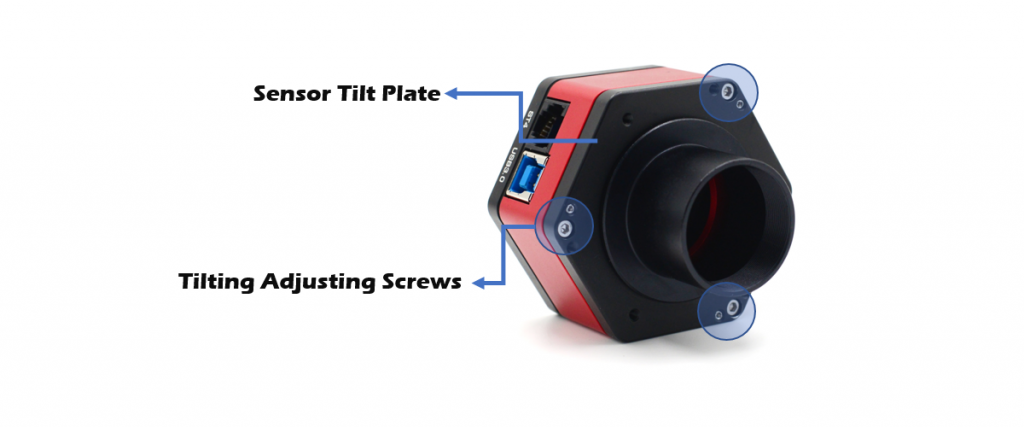
Player One’s Dead Pixel Suppression (DPS) technology maps fixed abnormal pixels using dark frames and replaces their values during imaging with a median value derived from neighbouring active pixels. This can help reduce the impact of persistent defective pixels in captured images. The camera also includes a sensor tilt plate. This allows the sensor’s alignment to be adjusted when necessary, which can help address uneven focus across the field in optical setups where sensor tilt is an issue. A built-in light-shading pad helps prevent stray light entering through side gaps. Overvoltage and overcurrent protection provide an additional safeguard for the camera and connected equipment.
Mounting and connectivity
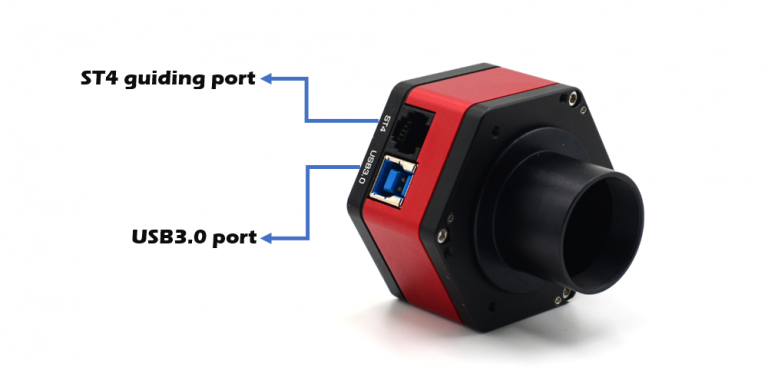
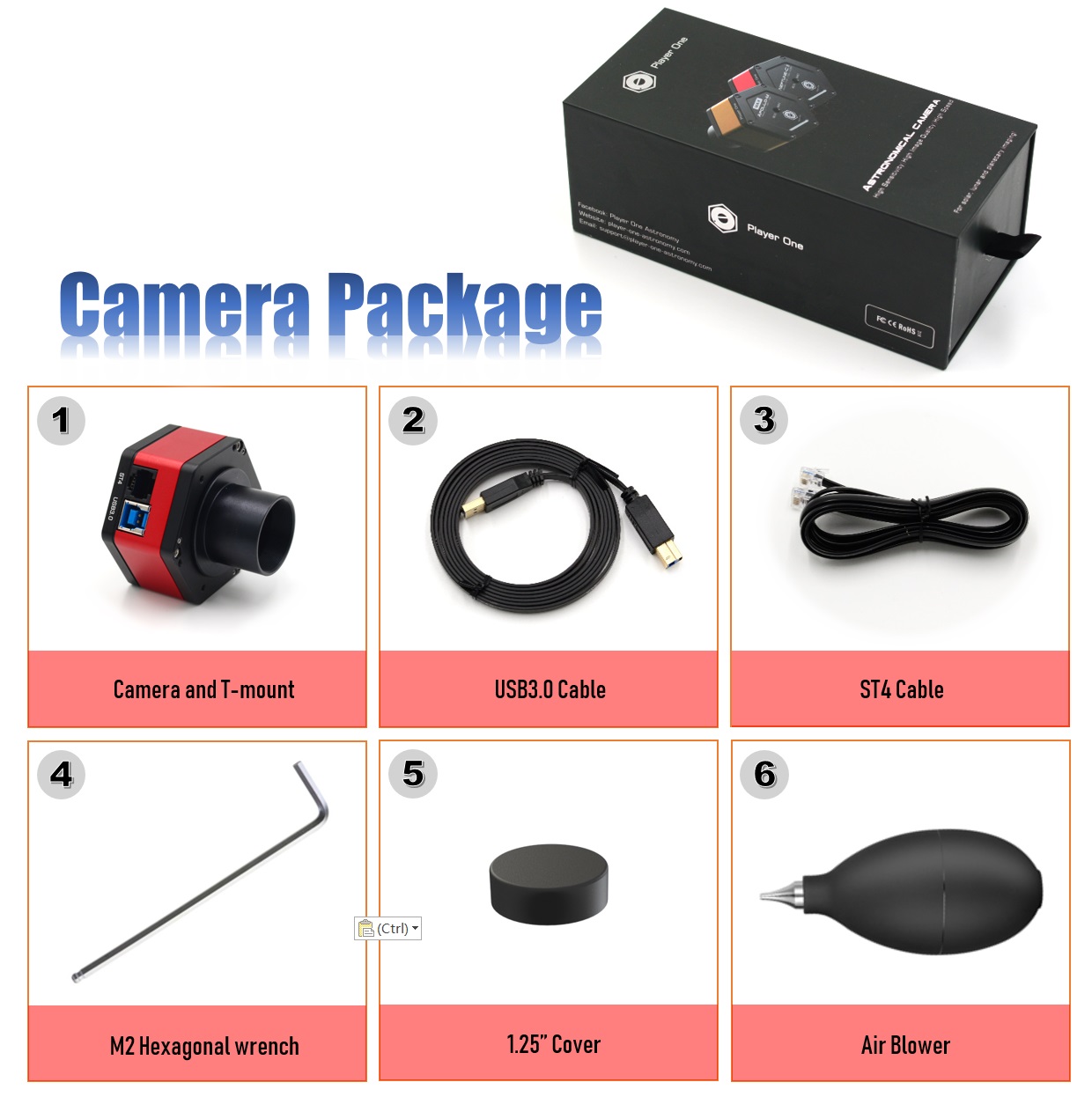
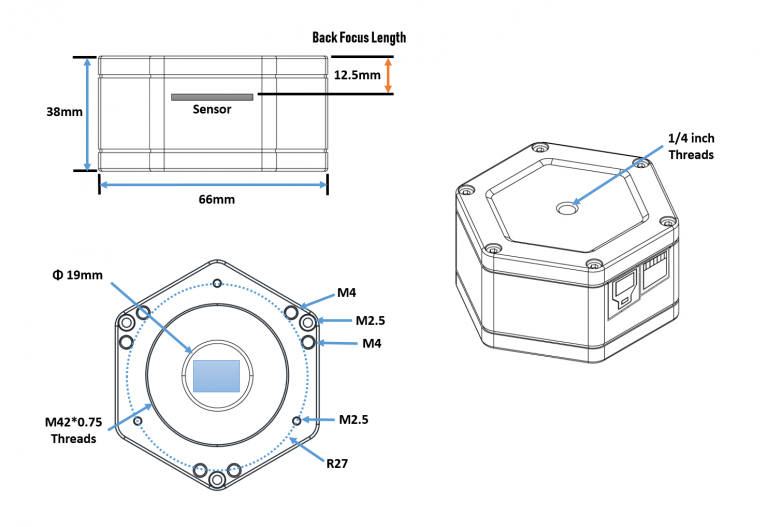
The Mars-C II has a 1.25-inch nosepiece and an M42 × 0.75 thread, allowing it to connect to a wide range of astronomical accessories. Its specified back focal length is 12.5 mm. The supplied T-mount and adapters should be used according to the required optical configuration. An ST4 guide port is included for connecting the camera to a compatible mount for guiding. The camera is powered through its USB connection, so no separate camera power supply is normally required.



 Cookie policy
Reviews
There are no reviews yet.