A compact astrograph for wide-field imaging
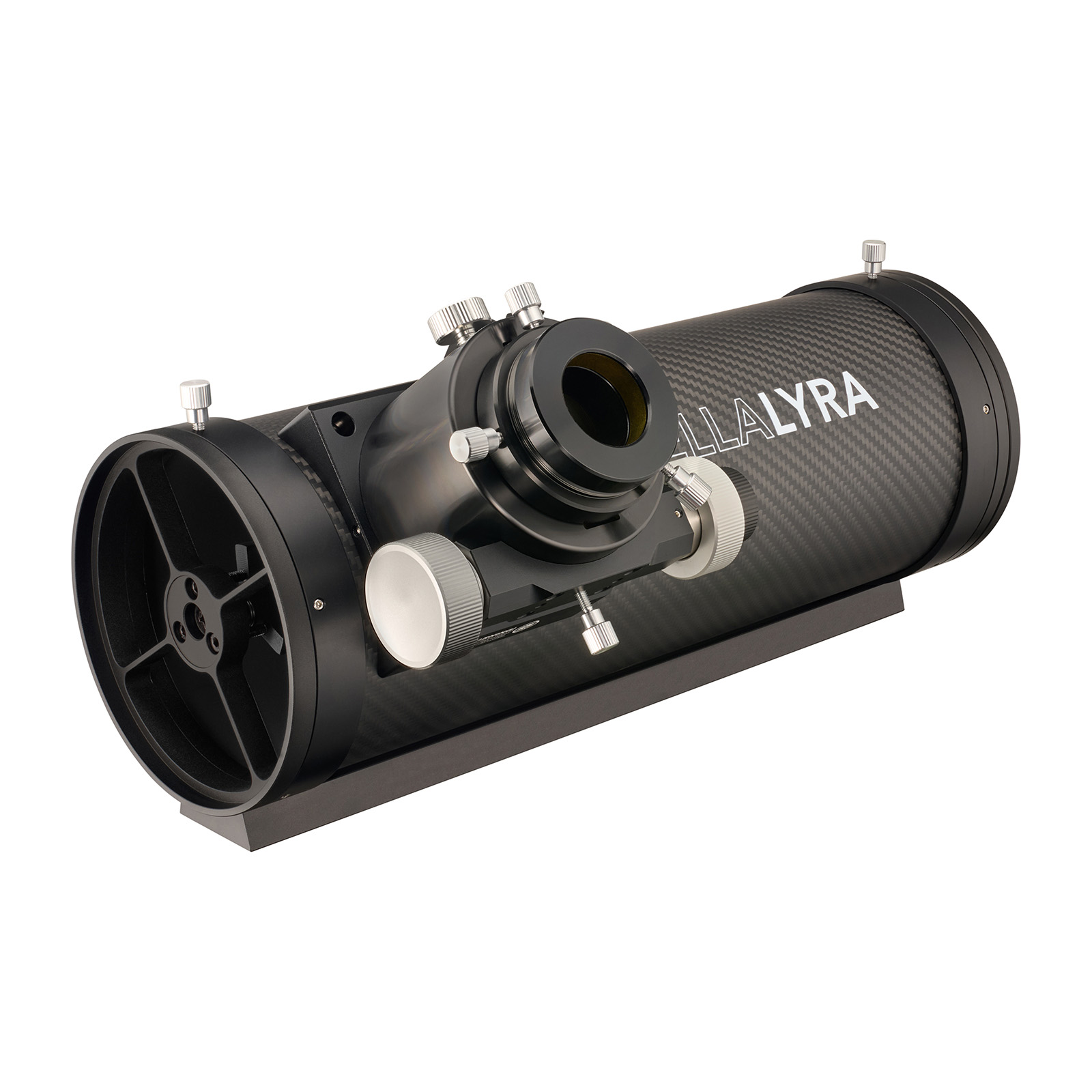
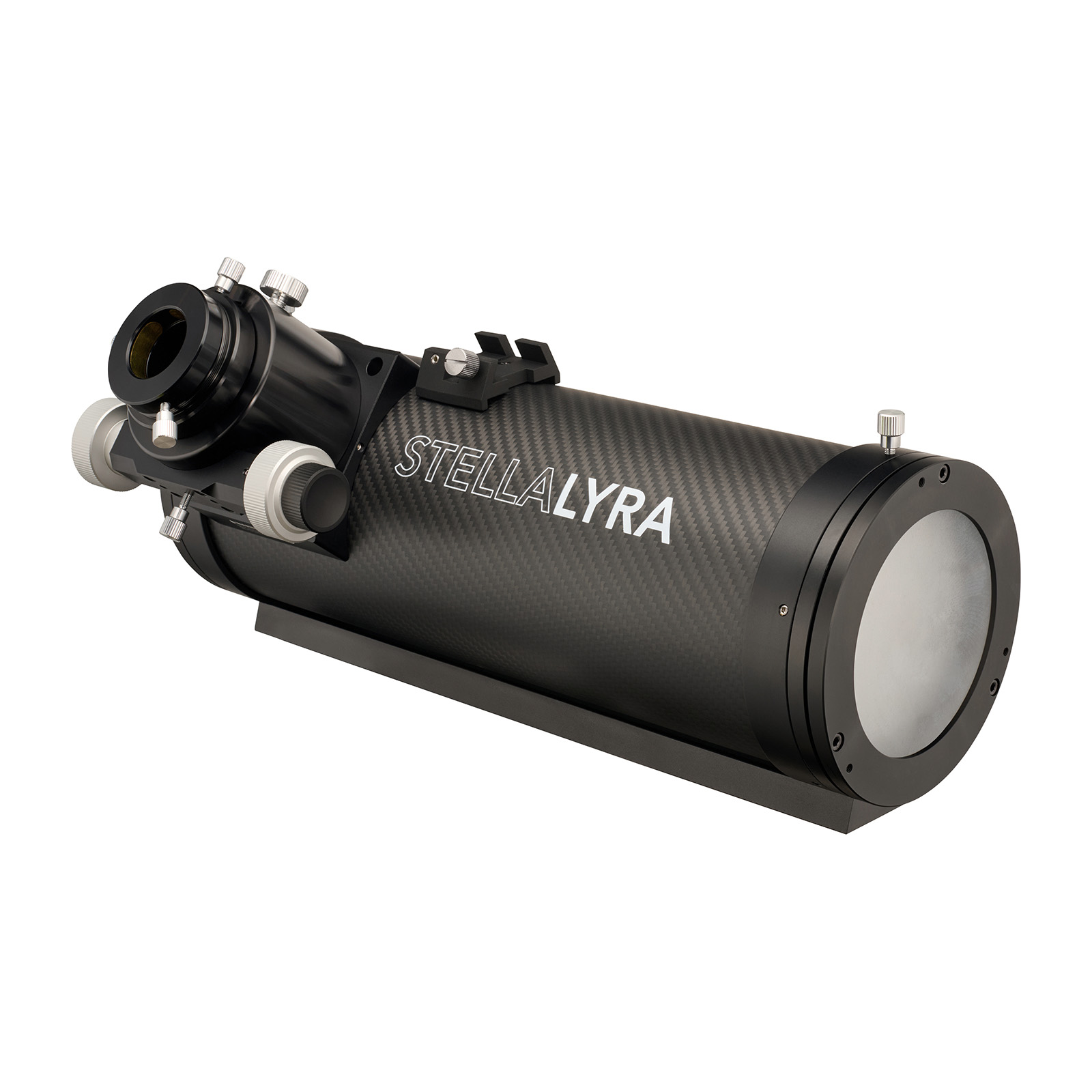
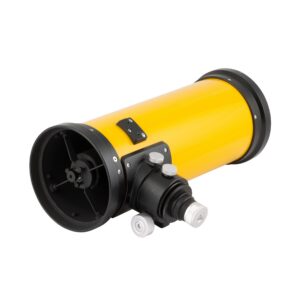
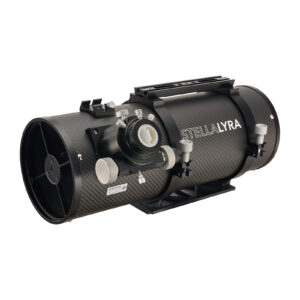
The StellaLyra M-LRN-D combines a 114mm aperture with a 456mm focal length in a fast f/4 Newtonian configuration. Its short focal length captures a broad area of sky, making it well suited to larger nebulae, open clusters and expansive star fields. Depending on the camera sensor, it can also frame many larger galaxies and nebular complexes without requiring a mosaic.
The parabolic primary mirror is designed to bring incoming light to a common focus. Both mirrors use enhanced-aluminium reflective coatings specified at approximately 94% reflectivity, with a protective silicon-dioxide overcoat. The secondary mirror has a 41mm minor axis, providing the illumination needed for the intended imaging configuration.
Carbon-fibre construction and mechanical stability
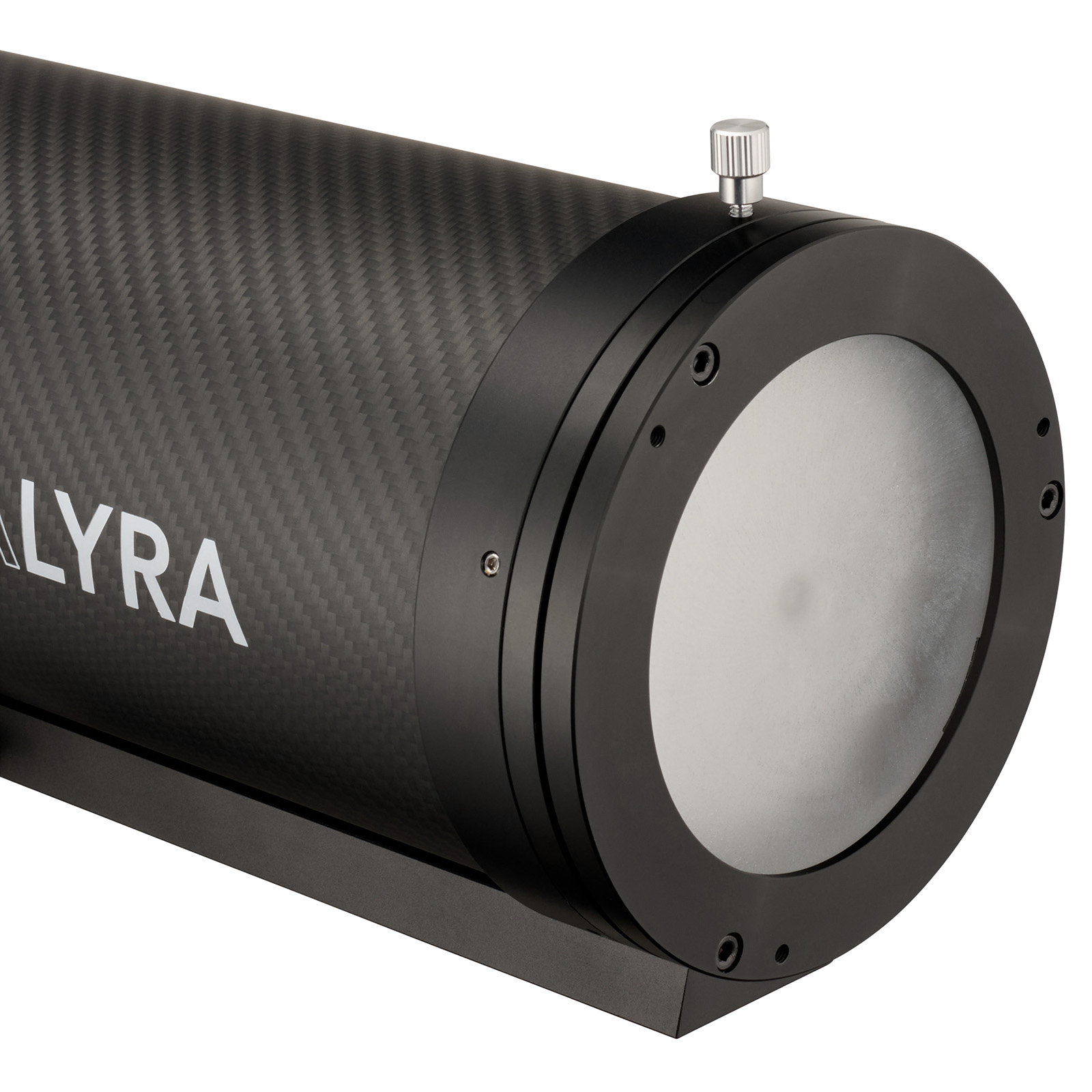
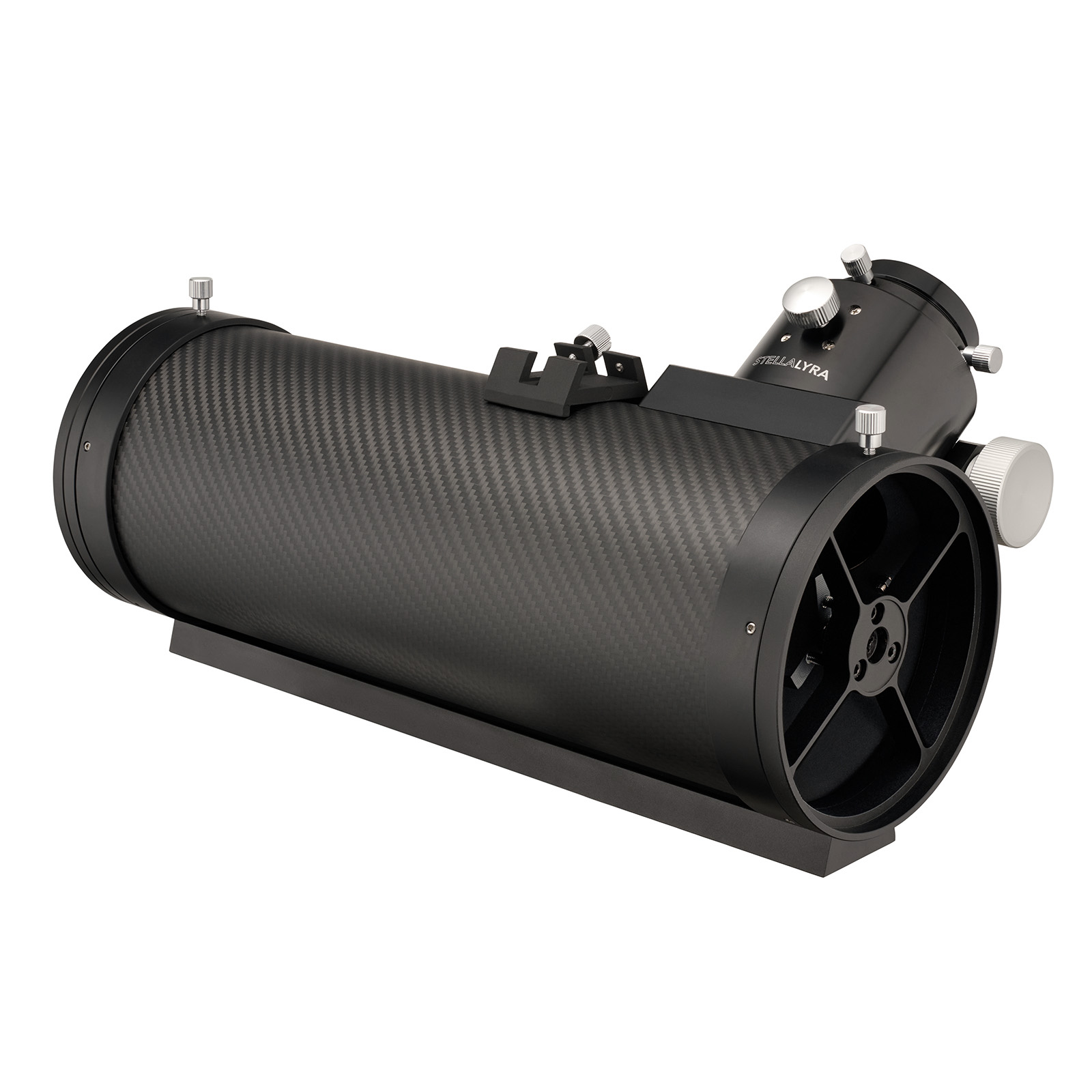
The carbon-fibre tube helps reduce changes in tube length as ambient temperature varies, which can make focus more stable over an imaging session. Its compact dimensions and published 2.8kg weight also make it an attractive choice for portable imaging systems.
The primary and secondary mirror supports use machined metal components. A central marking on the primary mirror assists collimation, while the baffled, internally blackened tube helps suppress stray light and improve contrast.
As with other fast Newtonians, precise collimation remains important. At f/4, small optical misalignments can noticeably affect star shapes and image quality, so checking alignment before an imaging session is recommended.
Fine focusing and camera rotation
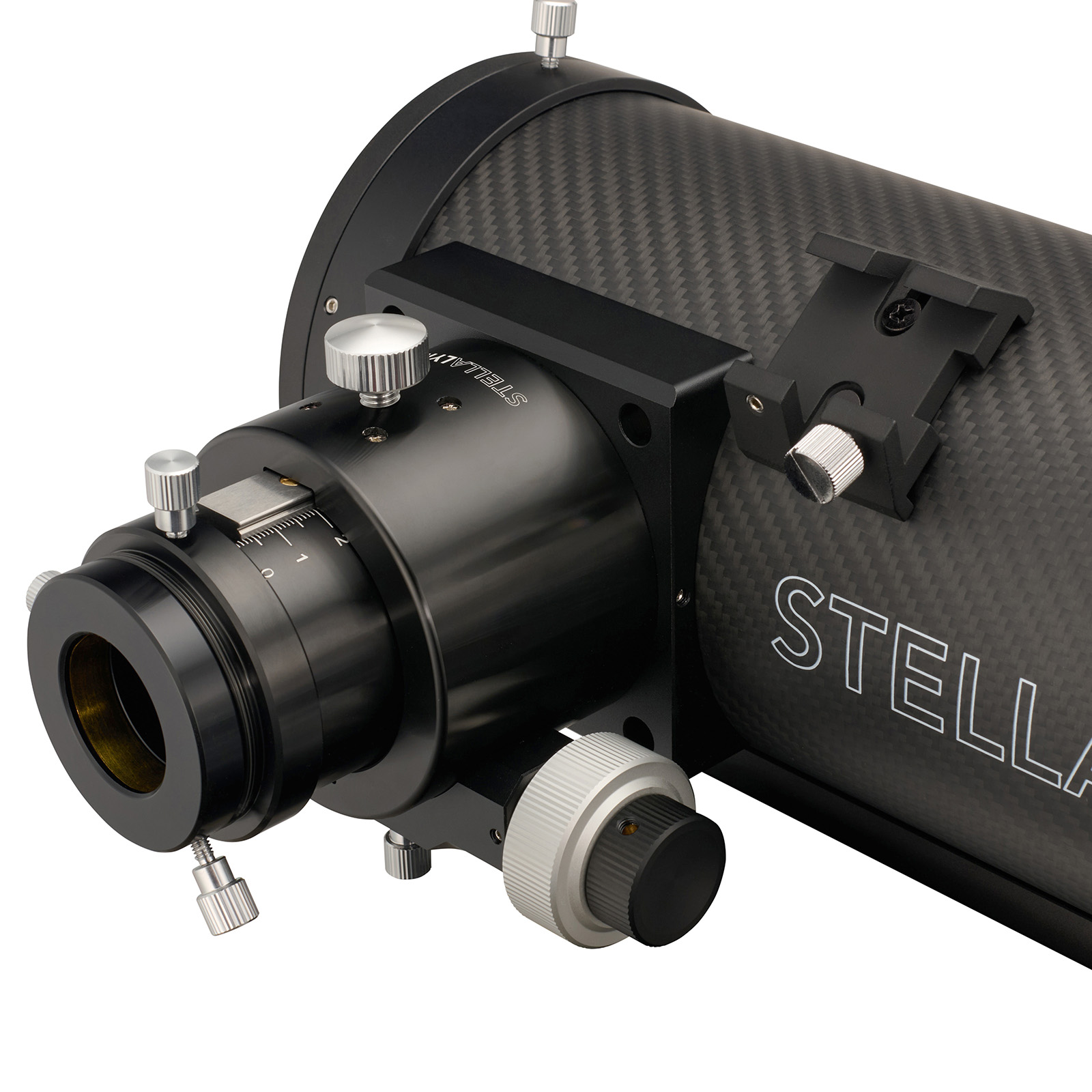
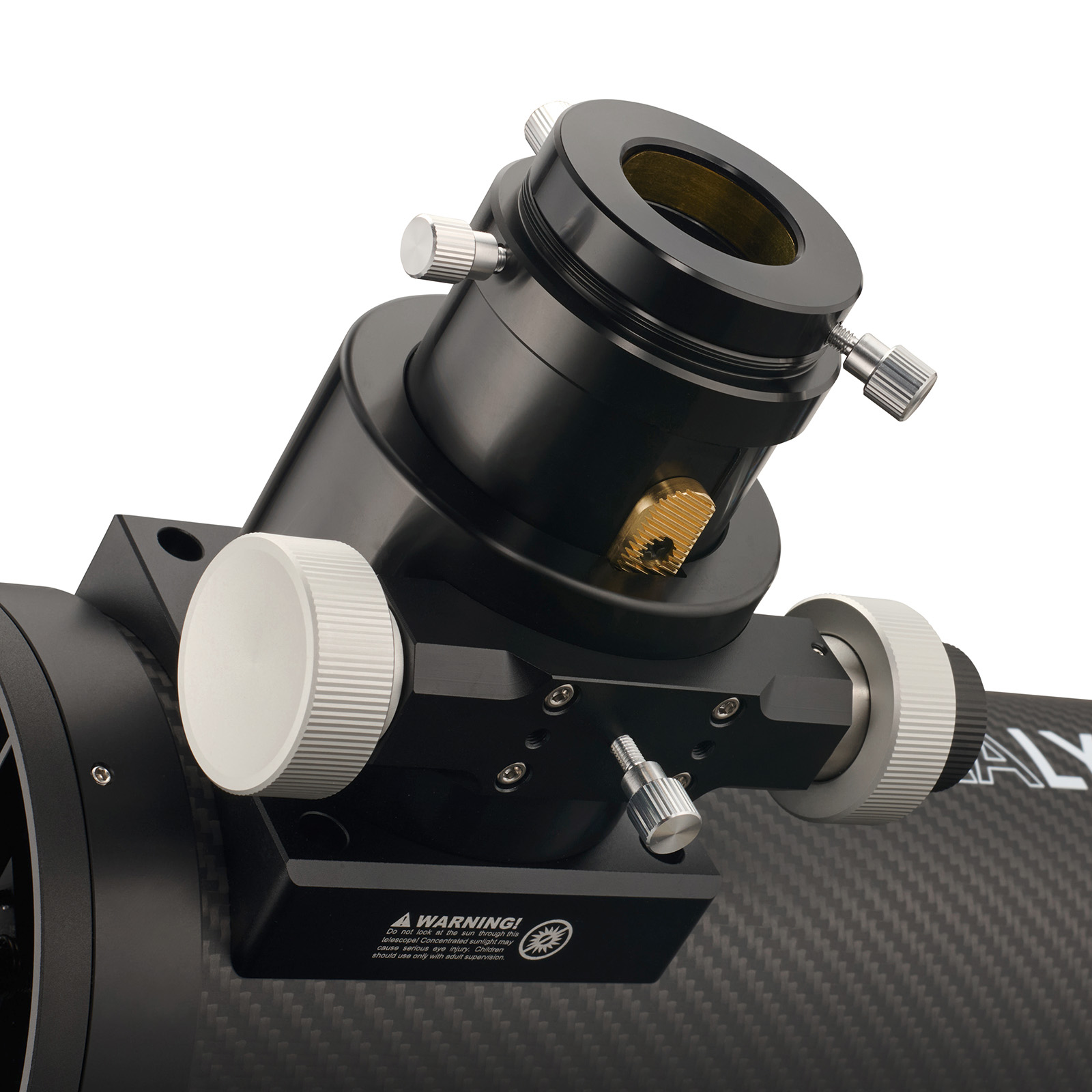
The 2-inch dual-speed rack-and-pinion focuser provides both coarse and fine focus adjustment. This is useful when working with cameras, where accurate focus is critical to achieving small, well-defined stars.
The integrated tube-rotation mechanism lets the imaging train be turned to adjust framing. This can be particularly useful when composing nebulae, rotating the camera for a preferred orientation or preparing a mosaic.
The current revised version, introduced in June 2026, uses a shorter tube configuration intended to improve compatibility with a wider selection of coma correctors. However, compatibility is not universal: the corrector’s required spacing, focuser travel and camera connection must still be checked together before purchase.
Optical correction for astrophotography
At f/4, off-axis coma can make stars appear increasingly distorted toward the edges of the image. A compatible Newtonian coma corrector is therefore strongly recommended for deep-sky imaging.
The corrector must suit the telescope’s mechanical configuration and the intended sensor size. The focuser’s 2-inch format alone does not guarantee that every 2-inch coma corrector will reach focus. Verify the optical spacing and available inward focus travel for the exact telescope revision and imaging accessories.
Intended use
The M-LRN-D is primarily an imaging-oriented optical tube, rather than a conventional visual telescope supplied with a full set of observing accessories. It can be used visually with compatible eyepieces and adapters, but its fast optical design, short focal length and imaging-focused mechanical features are intended chiefly for camera-based astronomy.
For deep-sky photography, pair it with a reliable equatorial tracking mount, a compatible camera, a suitable coma corrector and any required adapters or filter hardware. Guiding equipment may be beneficial depending on the mount and exposure duration.


 Cookie policy
Reviews
There are no reviews yet.