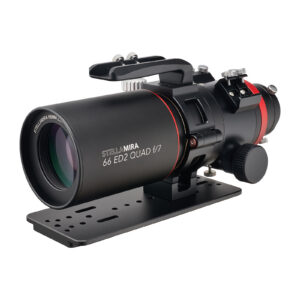
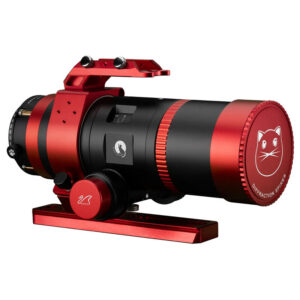
The William Optics RedCat 51 WIFD is a compact apochromatic astrograph designed for astrophotographers who want a wide field of view without moving all the way into the ultra-short focal lengths of the smallest wide-field telescopes.
At its heart is a 51 mm four-element Petzval optical system with a 250 mm focal length and f/4.9 focal ratio. The Petzval design incorporates field correction into the telescope itself, meaning that a separate field flattener is not required. The resulting 48 mm image circle is designed to support full-frame, APS-C and Micro Four Thirds camera formats. William Optics also lists APS-C compatibility alongside full-frame and Micro Four Thirds formats.
The 250 mm focal length gives the RedCat 51 a somewhat greater image scale than the shorter MiniCat 51. This remains a wide-field instrument, but the additional focal length can be useful when imaging objects that occupy a smaller area of the sky. It should still be regarded primarily as a wide-field deep-sky astrograph rather than a telescope intended for high-magnification planetary observing.
The f/4.9 focal ratio is fast enough to make the RedCat particularly well suited to astrophotography, while the 51 mm aperture keeps the telescope compact and portable. Its 48 mm image circle also gives photographers considerable flexibility when choosing a camera.
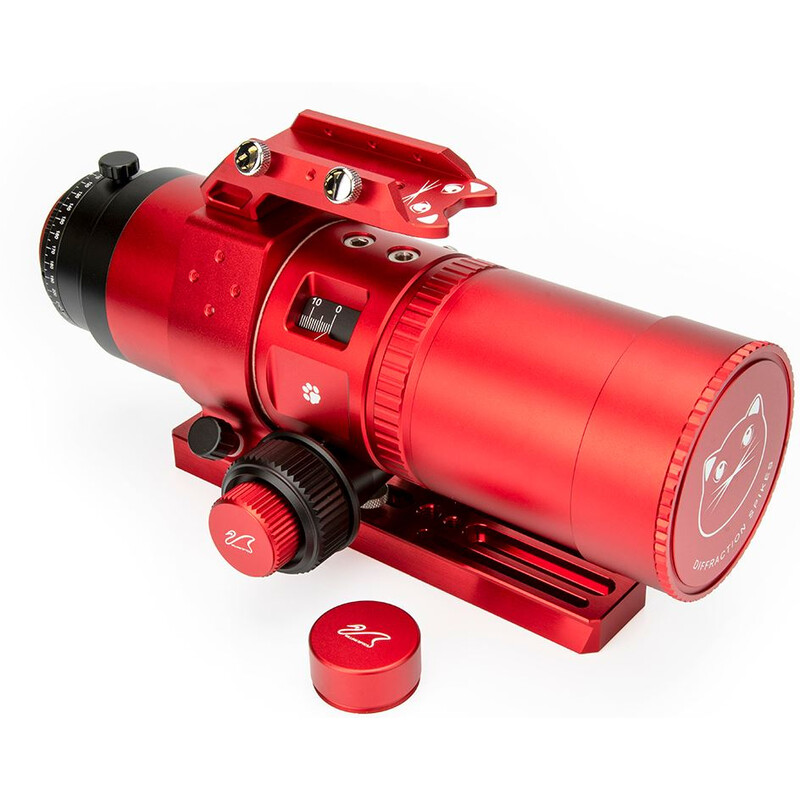
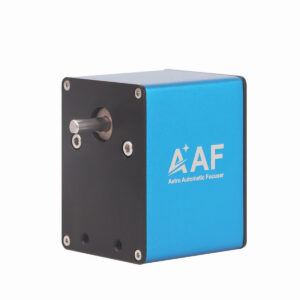
Focusing is handled by William Optics’ WIFD internal rack-and-pinion focuser. Unlike a conventional focuser where the drawtube extends behind the telescope, the WIFD system uses an internal focusing mechanism. The focuser provides 23 mm of specified travel, with a 1:10 fine-adjustment control, and is compatible with an electronic automatic focusing motor. The internal design is particularly useful for astrophotography because it keeps the focusing mechanism within the main optical assembly and is designed to reduce flexure associated with a conventional extended drawtube.
For camera positioning, the RedCat 51 WIFD includes both a camera angle rotator and a sensor tilt adjuster. The rotator allows the framing of the camera to be changed without having to rotate the entire telescope, while the tilt adjustment provides a means of fine-tuning the camera’s alignment with the optical system.
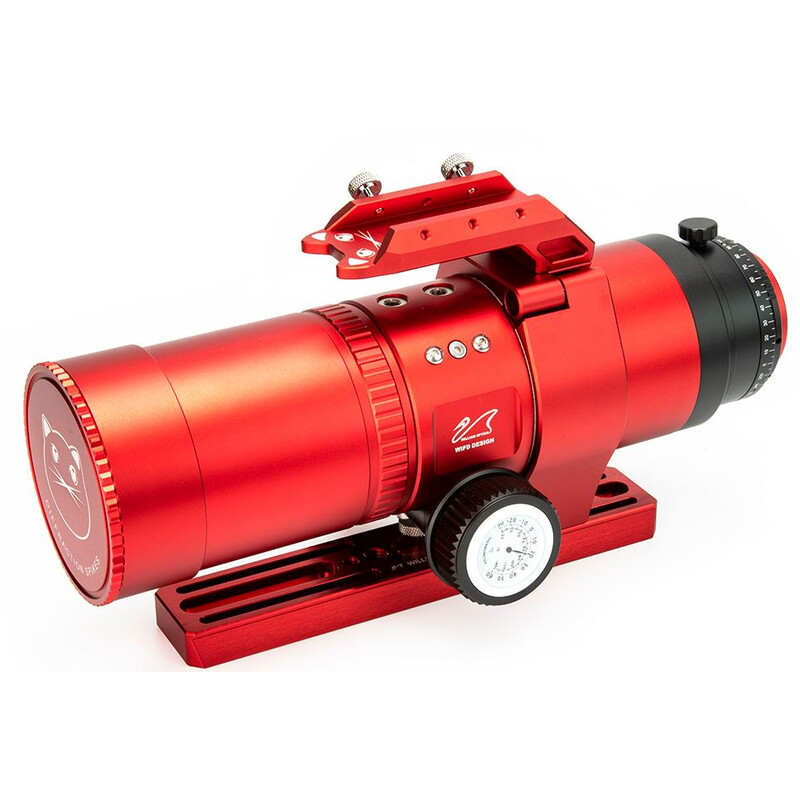
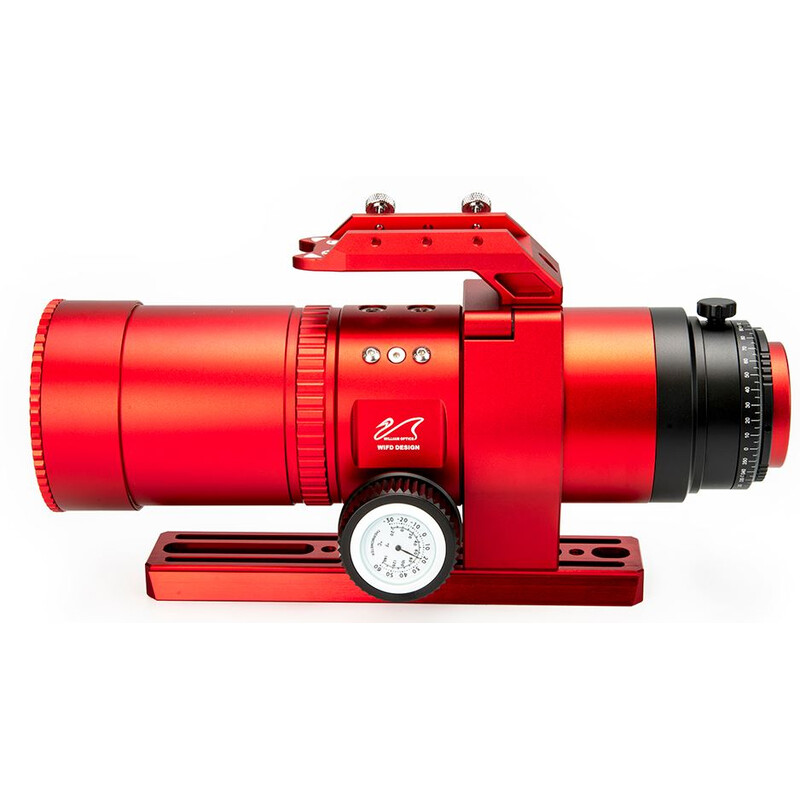
The telescope also comes supplied with a M54-to-M48 camera adapter, and the M48 side incorporates a filter thread. A dual-sided mounting plate supports both Vixen-style and Arca-Swiss mounting systems, while the mounting ring and handle provide a practical way to secure and carry the telescope.
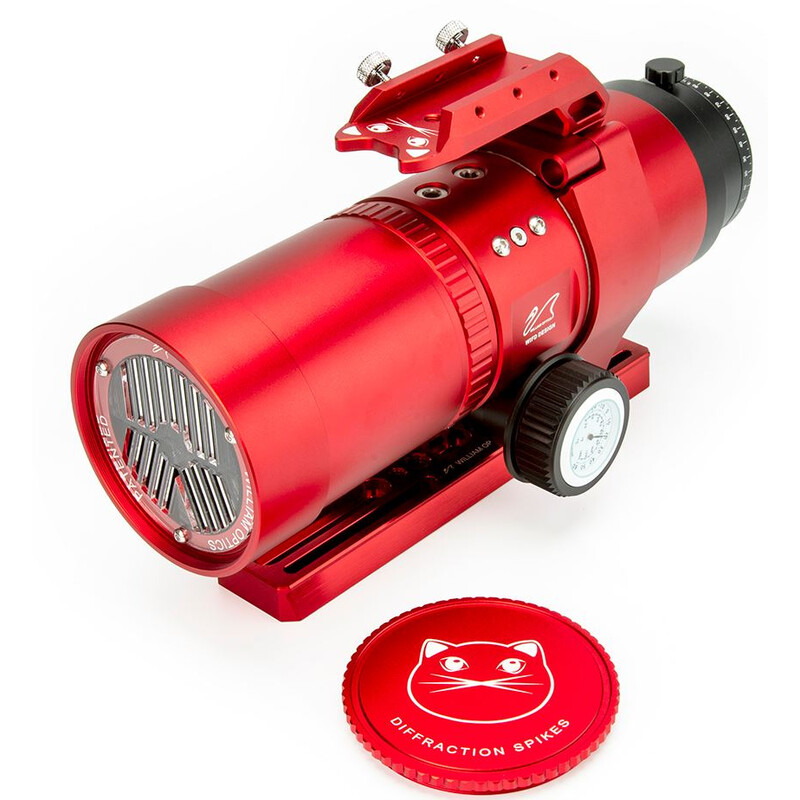
At just 1.77 kg for the optical tube assembly and 2.38 kg for the complete telescope, the RedCat 51 WIFD is particularly portable for an imaging telescope. A soft carrying case is included, along with the Bahtinov cap and the necessary basic accessories specified by William Optics.
What can you realistically image?
The RedCat 51’s 250 mm focal length gives it more image scale than an ultra-short wide-field astrograph, but its 51 mm aperture still places it firmly in the wide-field imaging category.
It is particularly well suited to large nebulae, emission regions, reflection nebulae, large open clusters and other extended deep-sky objects. Larger galaxies can also make attractive imaging targets, but many smaller galaxies will occupy only a small part of the frame. Similarly, globular clusters can be photographed, but the 51 mm aperture is not intended to provide the kind of stellar resolution associated with larger telescopes.
The telescope can also be used for solar photography when equipped with a proper front-mounted solar filter. The 250 mm focal length gives the Sun a larger image scale than the MiniCat’s 178 mm focal length, although the 51 mm aperture still limits the amount of fine solar detail that can be resolved.
For planetary imaging, the RedCat 51 is best regarded as a limited-purpose instrument. Its relatively short focal length and modest aperture are not intended for the high image scale normally used for detailed planetary photography.


 Cookie policy
Reviews
There are no reviews yet.